
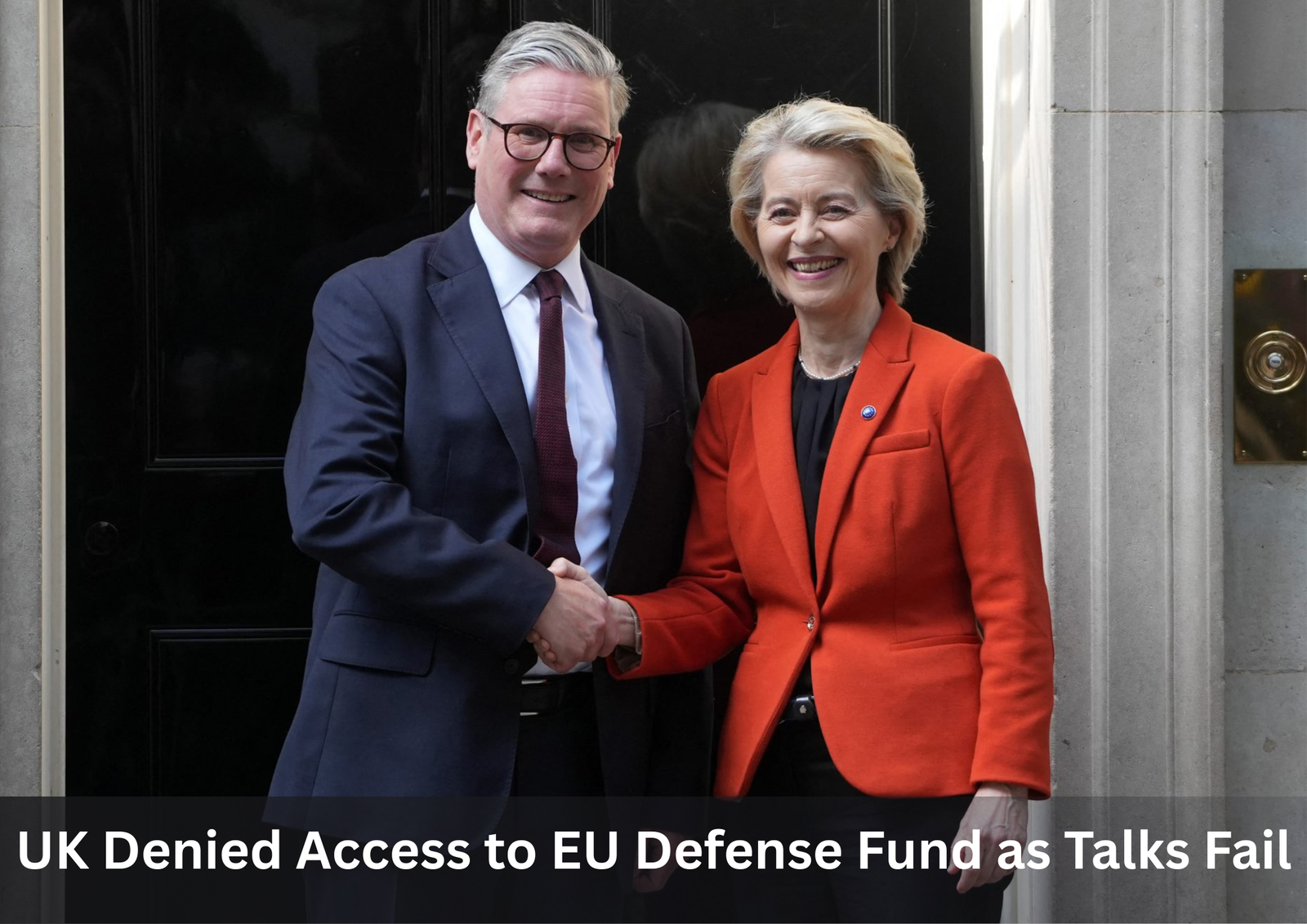
Talks between the United Kingdom and the European Union over London’s participation in the EU’s flagship European Defence Fund (EDF) have collapsed, marking a major setback for Prime Minister Keir Starmer’s effort to rebuild strategic ties with Brussels after years of post-Brexit turbulence.
EU officials confirmed on Thursday that discussions on UK association to the multibillion-euro defense research program had ended without a deal. The EDF, which operates with a budget close to €150 billion for the 2021–2027 cycle, supports joint development of advanced military technologies among EU member states and selected partners.
According to people familiar with the negotiations, the sticking points centered on financial contributions and the degree of access London expected for British companies. Brussels reportedly insisted that the UK would need to follow specific EU rules and contribute more funding if it wanted deeper involvement in sensitive projects-conditions the British side found unacceptable.
A spokesperson for the UK government said the decision to walk away was based on national interest. “We have been clear that we will only pursue agreements that support the UK’s strategic priorities. Although an association with the European Defence Fund was explored in good faith, the current terms do not meet those requirements,” the statement read. Officials added that Britain will redirect its focus toward expanding domestic defense research and strengthening bilateral ties with European allies.
The failure to secure a partnership is expected to significantly limit opportunities for UK defense firms, many of which had hoped to participate in EDF-funded collaborations. Industry analysts say exclusion from one of Europe’s primary defense innovation hubs could slow the sector’s access to emerging technologies and reduce potential revenue flows.
For Starmer’s government, the stalled talks represent a symbolic blow. Since taking office in 2024, the administration has worked to stabilize relations with the EU, positioning defense cooperation as a key pillar of its reset agenda. While both sides say they remain committed to working together through NATO and other multilateral formats, the end of the EDF negotiations highlights the ongoing complexities of rebuilding trust in the post-Brexit era.
Despite the setback, officials in London and Brussels stress that broader security cooperation remains intact. The UK continues to be a major NATO contributor, and both parties say they will pursue pragmatic collaboration on shared challenges-from military readiness to emerging threats in Europe’s neighborhood.


