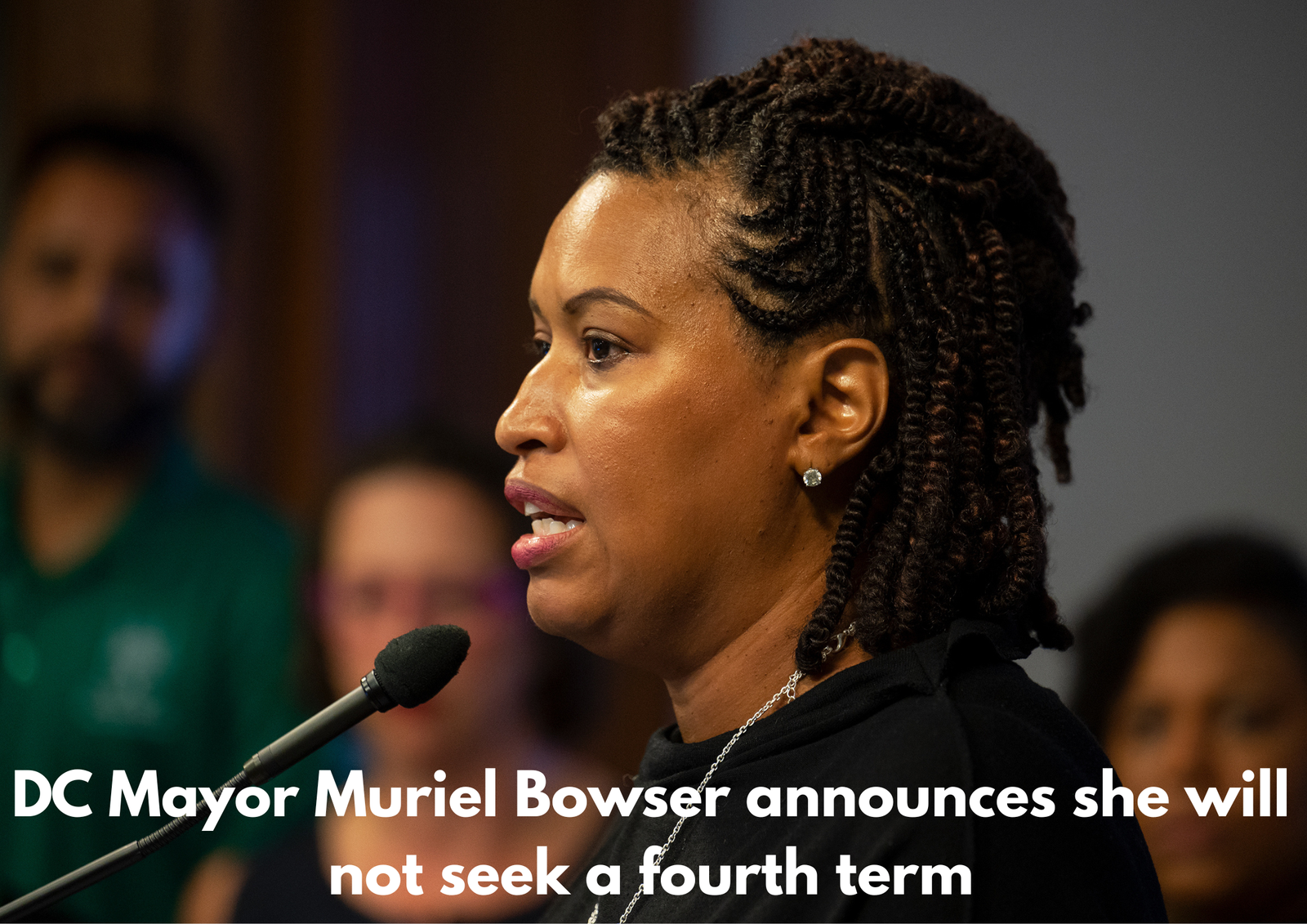
Washington, D.C., is preparing for a major political shift after Mayor Muriel Bowser announced she will not seek another term in office. The long-serving leader confirmed on Tuesday that she will step away at the end of her current term, bringing an end to a decade of influence over the nation’s capital.
Bowser’s decision closes a significant chapter in District politics. First elected in 2015, she went on to win two more terms and became one of the city’s most recognizable political figures. Her choice not to enter the upcoming mayoral race immediately reshapes Washington’s political landscape, creating the first truly open contest for the city’s top job in more than ten years.
During her tenure, Bowser confronted some of the most turbulent moments in recent American history. She steered the city through the COVID-19 crisis and its lasting economic consequences, while also navigating tense clashes with the Trump administration on issues ranging from public safety to federal oversight. Her leadership during the aftermath of the January Capitol attack – including security coordination and the deployment of the D.C. National Guard – drew national attention and cemented her profile beyond local politics.
Bowser also leaves behind a legacy of milestones. She was the first woman to win reelection as mayor of Washington, and her three terms were marked by debates over policing, housing affordability, school performance, and the long-running push for D.C. statehood.
As she steps aside, a new generation of political hopefuls is expected to compete for the position she held for a decade. Bowser has not yet announced her plans for life after the mayor’s office, leaving room for speculation about whether she will pursue national roles or return to private life.
Her departure marks the end of an era – and the beginning of one of the most wide-open political contests the District has seen in years.