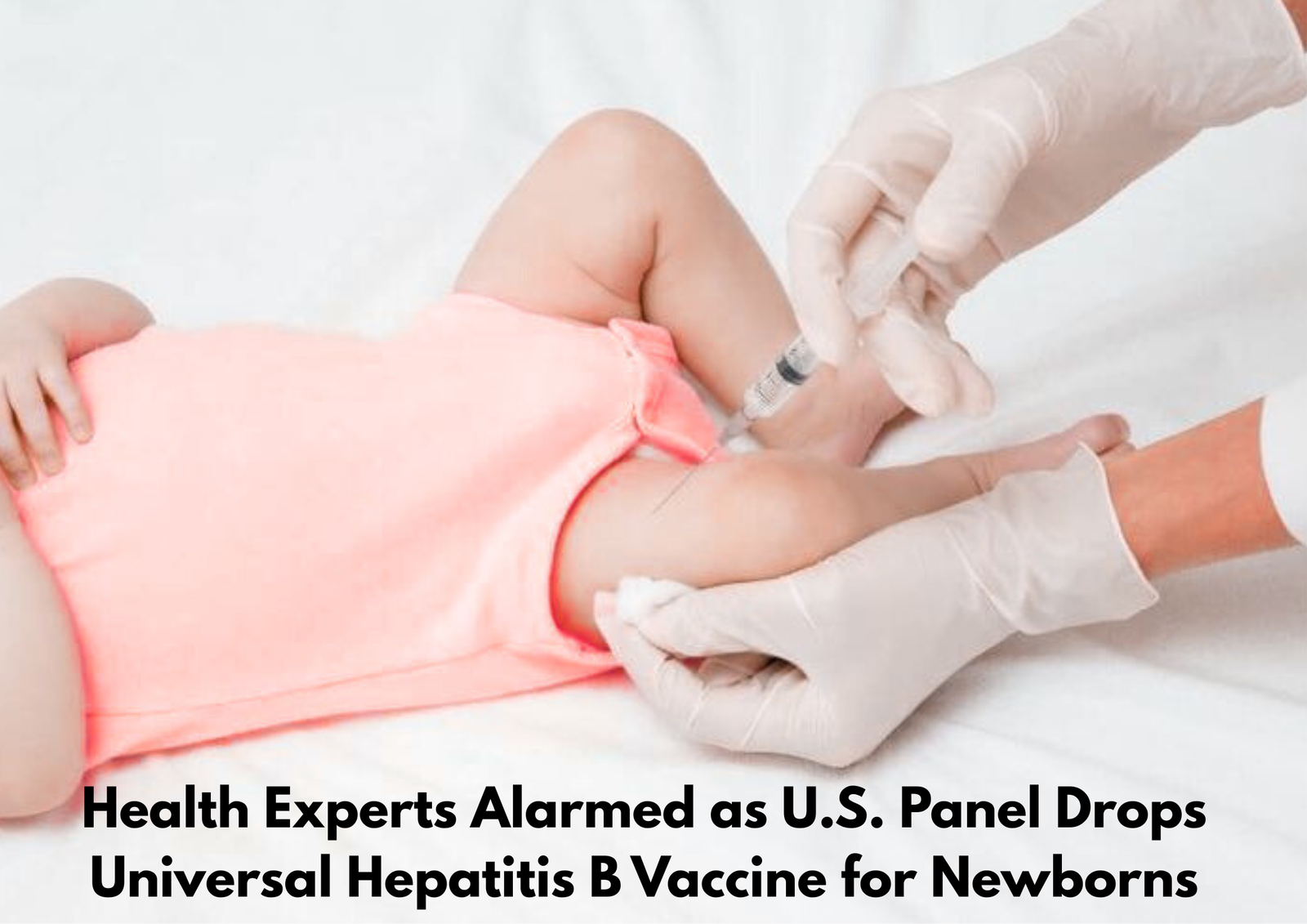
A recent decision by a federal vaccine advisory panel to end the long-standing recommendation for a hepatitis B shot at birth for all U.S. newborns has triggered sharp criticism from doctors and public health specialists, who warn the move could reverse decades of progress against a serious liver disease.
In a vote held on December 4, the Centers for Disease Control and Prevention’s Advisory Committee on Immunization Practices (ACIP) approved a shift away from universal vaccination toward a risk-based approach. Under the new guidance, only babies born to mothers who test positive for hepatitis B would automatically receive the vaccine and protective antibodies shortly after birth. For other infants, vaccination could be delayed until two months of age if parents choose to proceed.
Supporters of the change argue it reduces unnecessary medical interventions and gives families more flexibility. Critics, however, say the decision underestimates real-world gaps in testing and follow-up, putting infants at risk of preventable infection.
“Hepatitis B doesn’t wait for perfect systems,” said one infectious disease specialist, noting that even small delays or missed test results can have lifelong consequences for children exposed early in life.
Hepatitis B is a highly contagious virus that attacks the liver and can lead to chronic disease, cirrhosis, or liver cancer years later. It can spread not only during childbirth but also through everyday household contact, as the virus can survive on surfaces for days. Because infants infected at birth are far more likely to develop chronic illness, early protection has long been considered critical.
The U.S. adopted a universal hepatitis B birth dose policy in the early 1990s after earlier, targeted strategies failed to stop transmission. Since then, childhood hepatitis B infections have fallen dramatically, with federal data showing a decline of more than 99%. Health researchers estimate that routine childhood vaccination has prevented millions of infections and hundreds of thousands of hospitalizations.
Public health experts say the newly adopted approach repeats mistakes from the past. Risk-based policies rely on flawless prenatal screening and immediate action after delivery-conditions that are not always met. Infections acquired late in pregnancy may go undetected, test results can be delayed, and busy maternity units may miss narrow vaccination windows.
The decision also aligns with a broader federal review of childhood immunization schedules, which aims to compare U.S. recommendations with those of other developed countries. Some nations in Europe do not require a hepatitis B shot at birth, but medical leaders caution that such comparisons ignore key differences. Many of those countries have universal healthcare systems, stronger prenatal follow-up, and social policies that reduce infants’ exposure to infection.
Researchers warn that scaling back universal protection could have unequal effects. Communities where hepatitis B is more common-particularly among certain immigrant populations-could face higher risks if vaccination becomes optional rather than routine.
An independent review by vaccine policy researchers recently concluded that delaying the birth dose would weaken infant protection and likely result in avoidable infections and future cases of liver cancer.
With the policy change, the United States stands alone among nations that once endorsed universal newborn hepatitis B vaccination and then withdrew it. The debate now extends beyond a single vaccine, touching on broader questions about public health equity, prevention strategies, and trust in national mention policy.
As the guidance moves toward implementation, many healthcare professionals are urging parents and providers to remain vigilant, emphasizing that early vaccination remains one of the most effective tools to protect children from a lifelong, potentially deadly disease.