
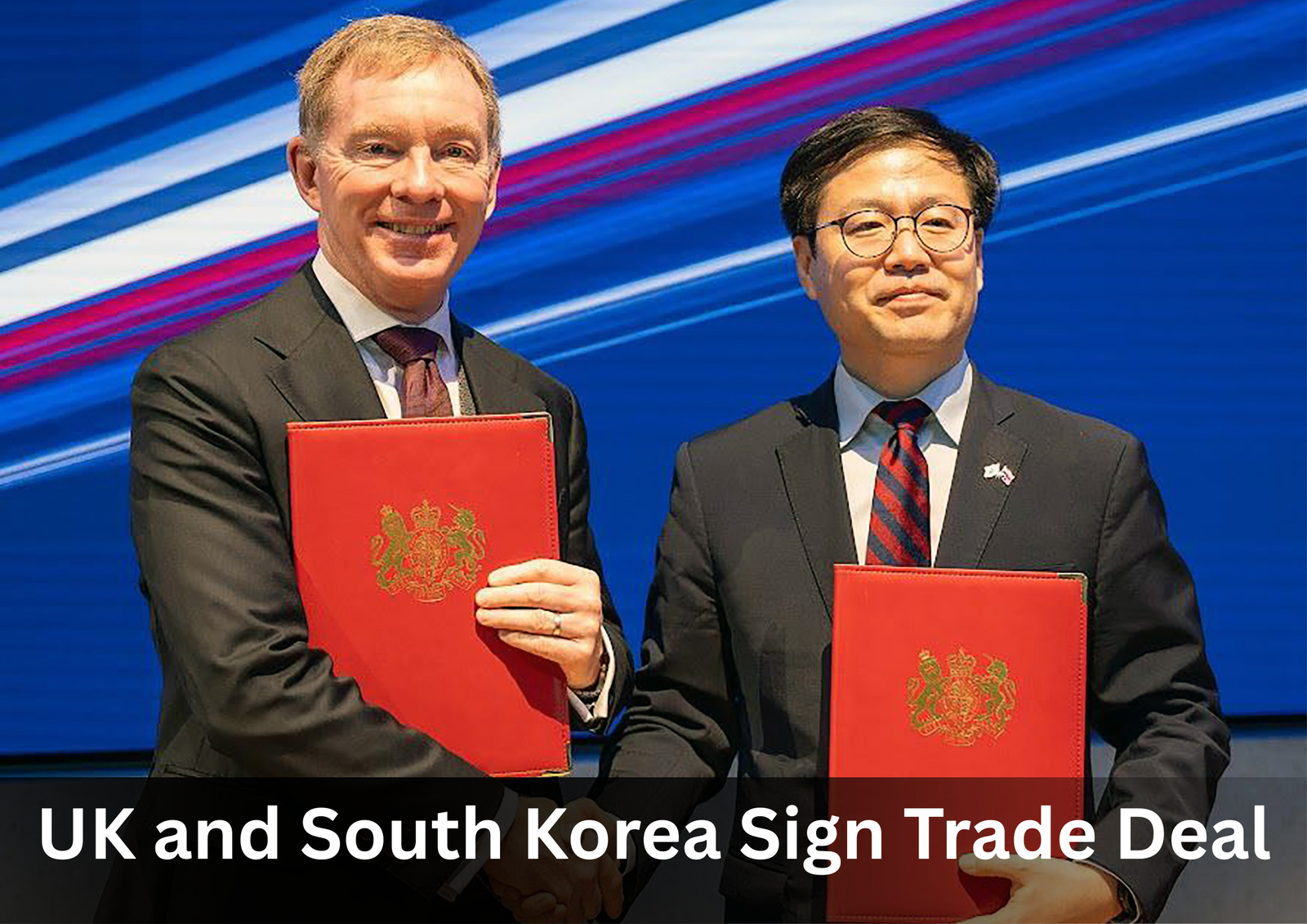
The United Kingdom and South Korea have signed a revamped free trade agreement designed to future-proof bilateral commerce, loosen manufacturing constraints for automakers, and create new safeguards against global supply disruptions. The pact was formally concluded in London this week by senior trade officials from both countries.
The new agreement replaces a transitional post-Brexit trade arrangement that was due to expire in early 2026. Under the updated terms, nearly all goods traded between the UK and South Korea will continue to move without tariffs, preserving existing market access while introducing modern rules for digital trade, services, and emerging technologies.
One of the most consequential changes affects the automotive industry. The threshold for how much of a vehicle must be sourced from the UK or Europe to qualify for zero tariffs has been sharply reduced. This adjustment gives manufacturers far greater flexibility in sourcing parts globally-an especially important shift for electric vehicle producers that rely on internationally sourced batteries and electronic components. UK-based luxury and performance carmakers have indicated that the new rules improve their competitiveness in the South Korean market.
Beyond cars, the agreement is expected to support British exports across a wide range of sectors, including pharmaceuticals, financial services, legal expertise, and food and beverage products. Industry representatives say the deal provides greater certainty for exporters seeking to expand in one of Asia’s most advanced consumer markets.
South Korean exporters also gain from the updated framework. Automobiles, cosmetics, and processed food products are among the sectors set to benefit from simplified trade requirements. The deal further expands access for South Korean firms to UK public procurement opportunities, including large-scale infrastructure projects, while easing mobility rules for specialized engineers and technical staff.
A notable addition to the agreement is a dedicated supply chain cooperation chapter. This mechanism allows both governments to coordinate quickly in the event of shortages or disruptions involving strategically important goods such as batteries, critical minerals, fertilizers, or medicines. Officials say the provision is intended to reduce vulnerability to global shocks by improving transparency and emergency coordination.
Leaders on both sides have framed the deal as a strategic partnership rather than a purely commercial one, emphasizing its role in reinforcing open trade at a time of economic uncertainty. UK officials described the agreement as a boost for exporters and skilled jobs, while South Korean representatives highlighted its potential to deepen economic ties between Europe and Asia.
The agreement marks another step in the UK’s recent push to update its trade relationships worldwide, as London seeks to balance continuity with modernization in a rapidly changing global economy.