
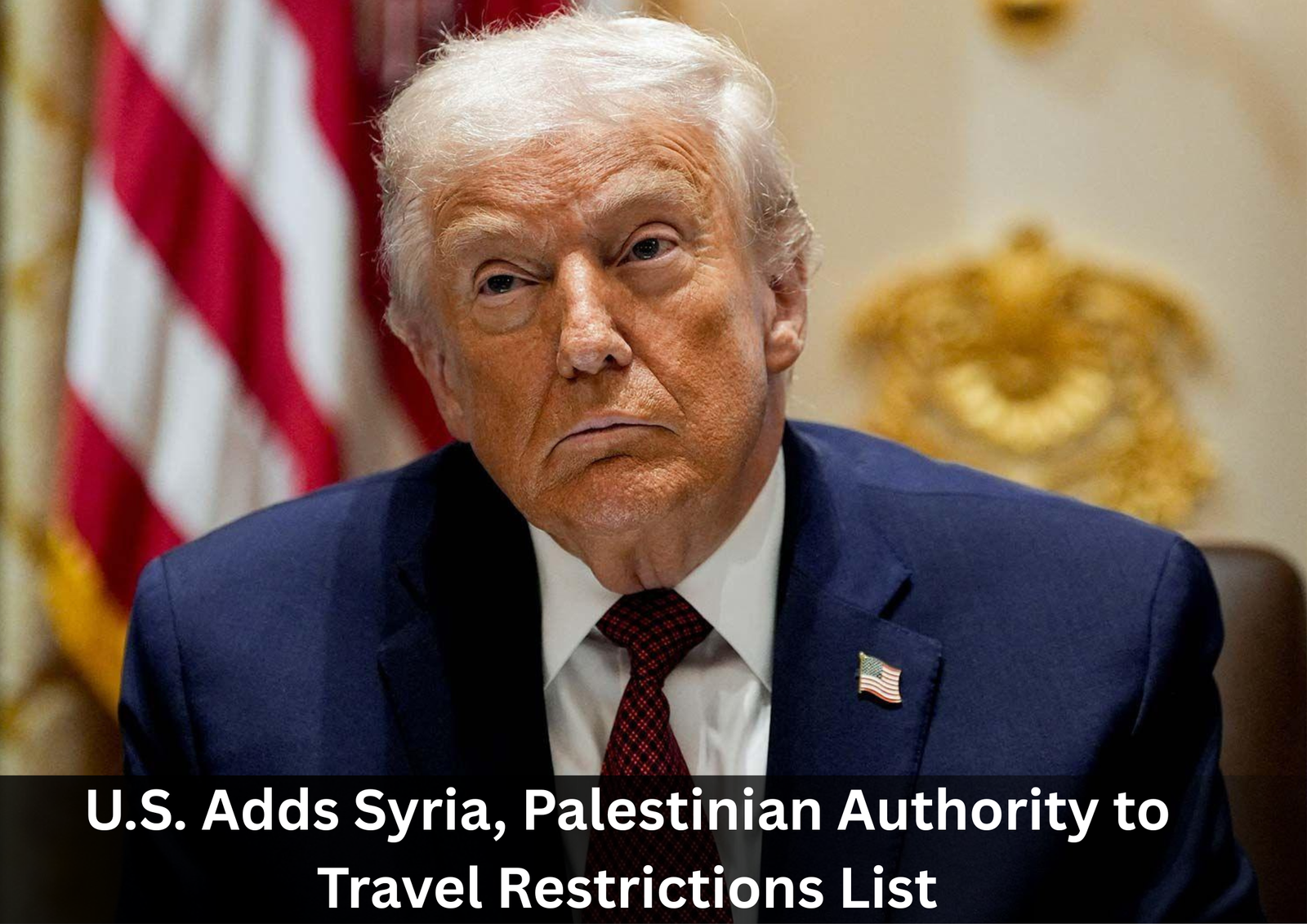
The United States government has announced a major expansion of its travel restriction policy, adding Syria and travelers using Palestinian Authority–issued passports to a list of entities facing a full suspension of entry. The updated measures, revealed Tuesday by the Trump administration, are scheduled to take effect on January 1, 2026.
Alongside Syria, five additional nations-Burkina Faso, Mali, Niger, and South Sudan-have been newly designated under the most restrictive category. The administration also escalated sanctions on Laos and Sierra Leone, shifting both countries from limited entry constraints to complete travel bans.
According to a White House statement, the decision is rooted in national security concerns. Officials cited ongoing issues such as unreliable identity verification systems, insufficient information-sharing with U.S. authorities, elevated visa overstay rates, and limited cooperation in accepting deported nationals.
In addition to the full bans, partial travel restrictions have been imposed on 15 countries, including Nigeria, Senegal, Tanzania, Angola, and Zambia. These measures may limit certain visa categories while allowing others under tighter scrutiny. Turkmenistan, meanwhile, will continue to face restrictions for immigrant visas, though non-immigrant travel limitations have been eased.
The latest policy marks the third major revision of U.S. travel controls since similar measures were first introduced in 2017. Since returning to office in early 2025, President Trump has emphasized stricter border and immigration enforcement, framing the strategy as essential to safeguarding domestic security.
Administration officials linked the timing of the announcement to recent security incidents, including a high-profile arrest in Washington, D.C., involving a foreign national. Homeland Security leadership indicated that the expanded restrictions were recommended following internal security reviews.
Despite the sweeping nature of the policy, several exemptions remain in place. Lawful permanent residents, current visa holders, diplomats, and athletes participating in international sporting events will not be affected. Authorities also confirmed that waivers may be granted on a case-by-case basis when entry is deemed to serve U.S. national interests.
The travel restrictions will remain active until affected countries demonstrate measurable improvements in document integrity, screening procedures, and cooperation with U.S. immigration enforcement. With the latest additions, more than 35 countries-representing roughly one-fifth of the global community-are now subject to either full or partial U.S. travel limitations.