
U.S. Tariff Measures Ignite Diplomatic Tensions
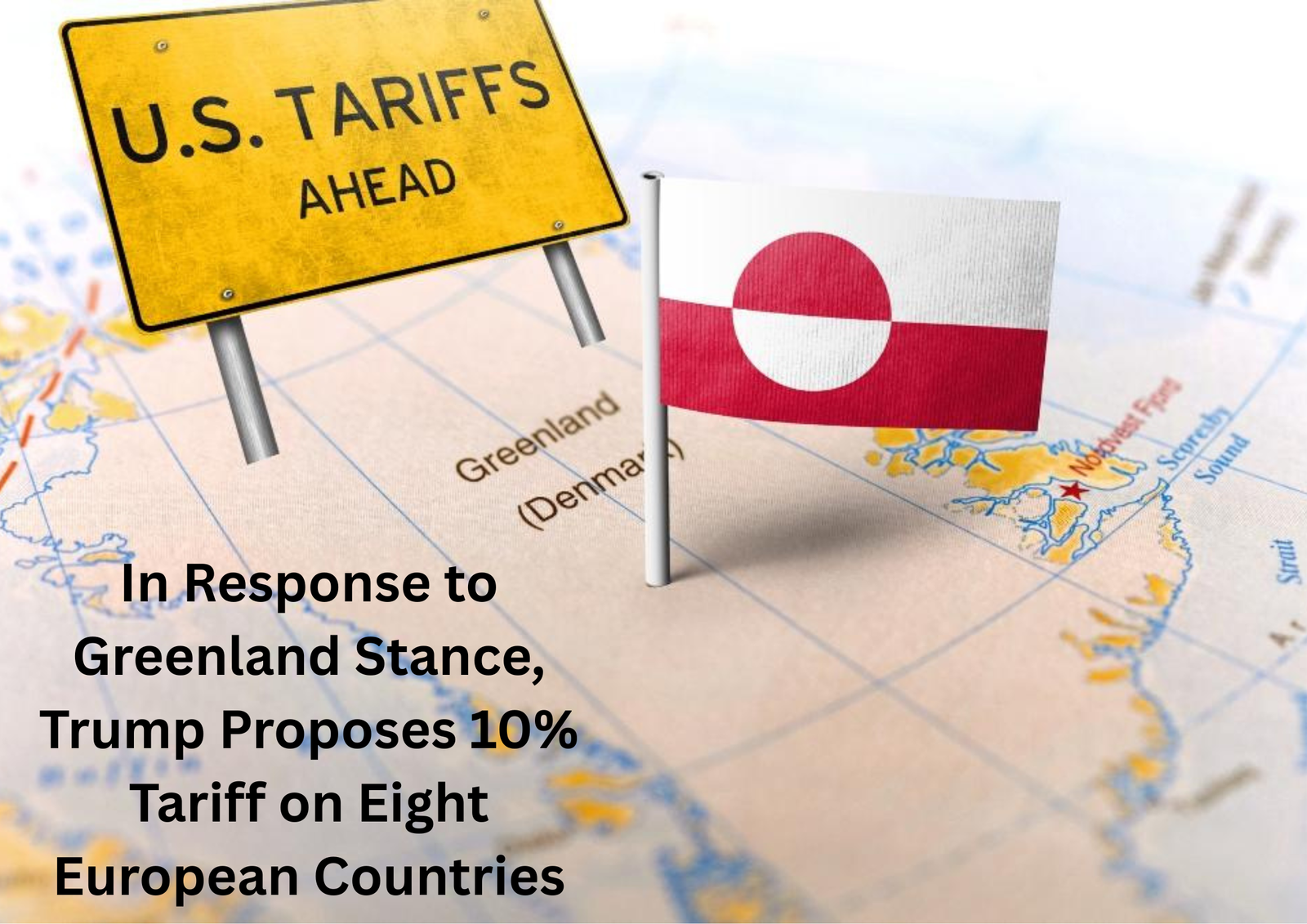
The White House announced new tariffs on a selection of European imports on Saturday, intensifying a long-simmering disagreement regarding the future of Greenland. The plan includes a 10% levy on goods from Denmark, Norway, Sweden, France, Germany, the United Kingdom, the Netherlands, and Finland, scheduled to begin on February 1. The rate would climb to 25% in early June if diplomatic progress does not occur.
Administration officials argued the move is tied to U.S. national security priorities in the Arctic. They claim growing Russian and Chinese interest in the region demands expanded American strategic control.
The tariff proposal was framed as leverage rather than punishment. Senior aides indicated the United States remains open to negotiations and expects European partners to “re-evaluate their position” related to Greenland’s future governance and strategic role.
European Governments Condemn Tariff Strategy
Leaders across Europe reacted sharply. EU officials described the escalation as “unjustified pressure” on allied governments and warned that transatlantic relations could enter their most fragile period in decades if the United States follows through.
Several heads of government stressed that the legal and political status of Greenland cannot be altered without the consent of its people and Denmark. Others framed the situation in broader terms, warning that coercive trade tools should not be used among NATO members.
Senior figures in the European Parliament called for a coordinated economic response, including a temporary freeze on ongoing trade negotiations with Washington. Calls also emerged for deployment of the EU’s anti-coercion framework, a mechanism designed to deter foreign economic pressure.
Protests in Greenland and Denmark Highlight Local Opposition
Mass demonstrations unfolded in Nuuk and Copenhagen following news of the trade measures. Marchers carried banners demanding non-interference in Greenland’s affairs and asserting that the territory is not available for purchase or transfer.
Greenlandic political leaders, including officials from multiple parties, addressed rally participants and reaffirmed that the territory’s long-term aim is eventual independence, not absorption by another nation. Many emphasized that cultural identity and natural resources are key to Greenland’s sovereignty ambitions.
Solidarity protests across Denmark expressed support for Greenland’s right to self-determination. Activists argued that the crisis exposes a larger international issue – smaller territories facing external strategic interest and economic pressure.
Military Exercises Add Security Dimension to Dispute
The tariff announcement coincides with an ongoing European Arctic training exercise taking place in Greenland. Defense officials involved in the drills stated the operation is designed to assess logistics and coordination in extreme conditions and is not directed against the United States.
Military commanders noted that the United States was invited to participate and maintains significant defense access on the island under a long-standing bilateral agreement with Denmark. Contrary to claims of escalating threats in the region, Arctic defense officials said no major Russian or Chinese naval deployments had been detected near Greenland in recent months.
Washington Divided Over Tariff Approach
The domestic reaction in the United States was mixed. Critics in both parties argued the strategy risks alienating allies at a moment of heightened global competition. Others questioned the economic rationale, warning the tariffs could raise consumer prices and disrupt supply chains.
A faction of lawmakers defended the Arctic focus, contending that Greenland’s geography and resources are central to U.S. national defense in the coming decades. Supporters acknowledged, however, that the route chosen by the White House carries diplomatic risks.
Legal and Trade Complications Ahead
The Supreme Court is expected to rule soon on whether the administration is legally empowered to impose such tariffs through emergency authorities. A ruling against the executive branch could halt or significantly delay implementation.
Economists note the plan does not clarify whether the new tariffs would override existing trade ceilings agreed between the United States and its European partners. Pharmaceutical products, energy components, and specialized manufactured goods are among imports that could be affected, potentially increasing production costs for U.S. industries.
Potential Impact on NATO and Global Markets
Analysts warn the crisis could reshape the wider transatlantic alliance. The dispute arrives as Europe and the United States attempt to coordinate security policy across multiple regions, including the Arctic, the Indo-Pacific, and Eastern Europe.
Trade experts described the situation as a “critical test” of NATO cohesion and European economic unity. If unresolved, they caution the issue could escalate into a trade conflict with consequences for global markets.
OpenAI to Test Sponsored Ads Inside ChatGPT for Free and Go Users – discover what this means for the platform in this detailed blog, read now!