
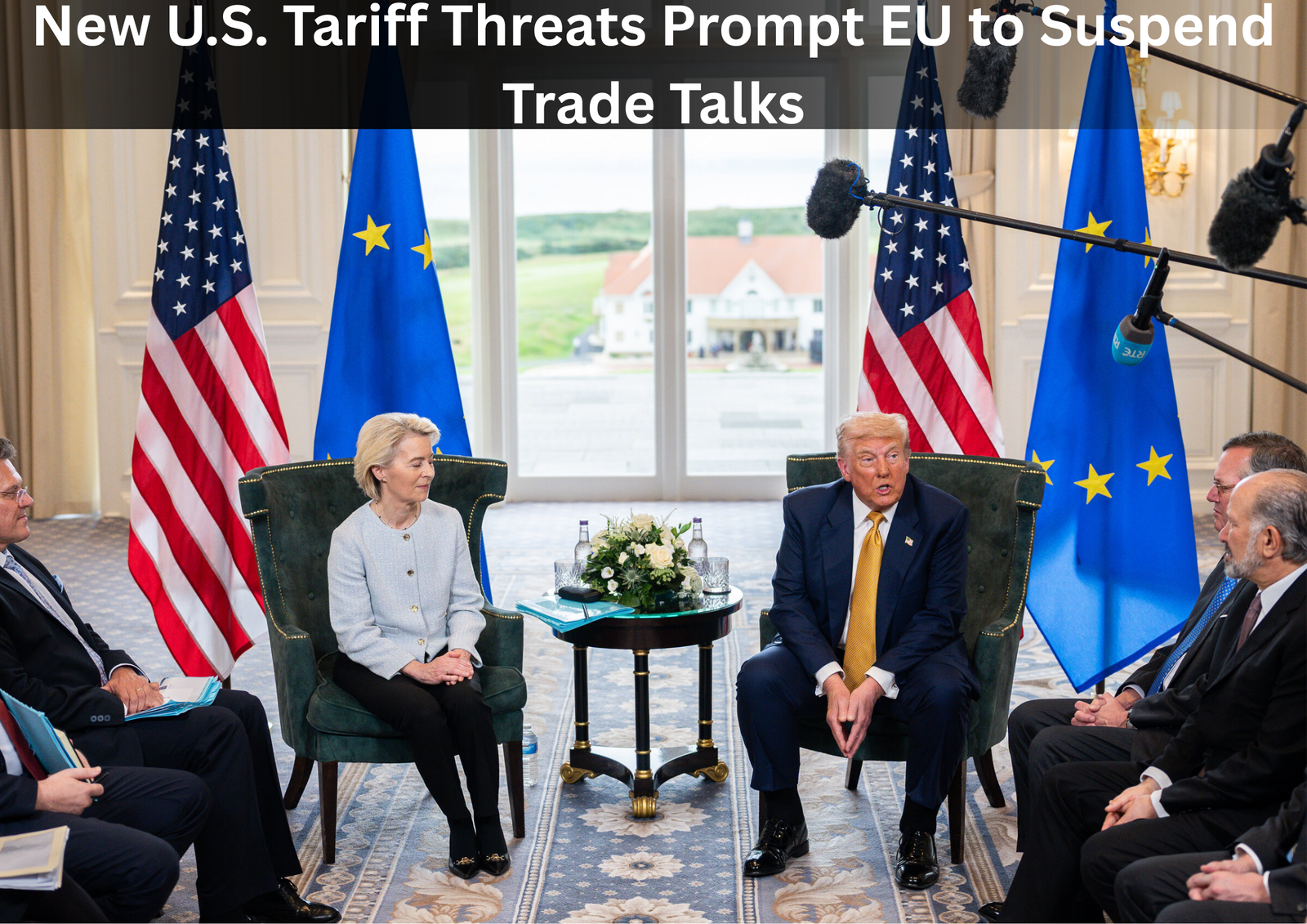
The European Union has moved to pause ongoing trade negotiations with the United States after President Donald Trump signaled a sweeping tariff strategy aimed at U.S. allies across Europe and the Arctic. Officials in Brussels confirmed the freeze late Friday, marking a significant escalation in transatlantic tensions only weeks after the U.S. election outcome reshaped expectations around trade and diplomacy.
According to senior EU figures familiar with the decision, negotiators will not resume talks until Washington clarifies its tariff intentions and the scope of potential trade measures affecting European exports. The pause represents one of the most concrete responses yet to Trump’s renewed push for aggressive tariff-based leverage against foreign partners.
One of the most unusual flashpoints involves Greenland, which has been singled out in U.S. political rhetoric over tariffs. The targeting prompted sharp criticism from Senate Majority Leader Chuck Schumer (D-N.Y.), who described the move as “counterproductive” and harmful to Arctic security interests. U.S. analysts argue that Greenland’s geostrategic position makes it a critical outpost for NATO monitoring and Arctic operations, adding further diplomatic weight to the debate.
Opposition on Capitol Hill has widened beyond partisan lines. A bipartisan bloc of lawmakers within the Senate NATO Observer Group issued a formal statement urging restraint, warning that broad tariffs against allies could destabilize long-standing economic and military partnerships. The group argued that taxing imports from NATO members would ultimately raise costs for American consumers, disrupt industrial supply chains, and weaken the cooperative frameworks that define Western security strategy.
European economic officials echoed similar concerns, noting that tariffs on sectors such as automotive, agriculture, and industrial goods could produce reciprocal actions from EU member states. Diplomatic voices in Brussels emphasized that the bloc prefers dialogue but will respond if necessary to protect European economic interests.
Trade analysts say the current standoff could reshape future U.S.-EU commercial relations if not resolved swiftly. Many had anticipated a period of stabilization following the election, but recent developments suggest that major trade agreements may be delayed indefinitely. The EU suspension and bipartisan pushback within the U.S. indicate that foreign policy, trade strategy, and security considerations are converging into a complex political dispute.
For now, European negotiators are adopting a wait-and-see posture as diplomatic channels remain open. However, officials cautioned that sustained tariff rhetoric from Washington could accelerate the EU’s pursuit of alternative trade alignments in Asia and Latin America, further shifting the balance in global commerce.
The weeks ahead are expected to reveal whether the incoming administration intends to pursue tariffs as a negotiating tactic or as a long-term policy instrument. Either scenario carries significant implications for transatlantic cooperation, global supply chains, and the future stability of Western alliances.
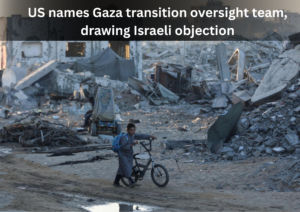
Read this blog to learn more. Israel pushes back against the U.S. plan for a Gaza oversight committee, highlighting ongoing diplomatic tensions.