
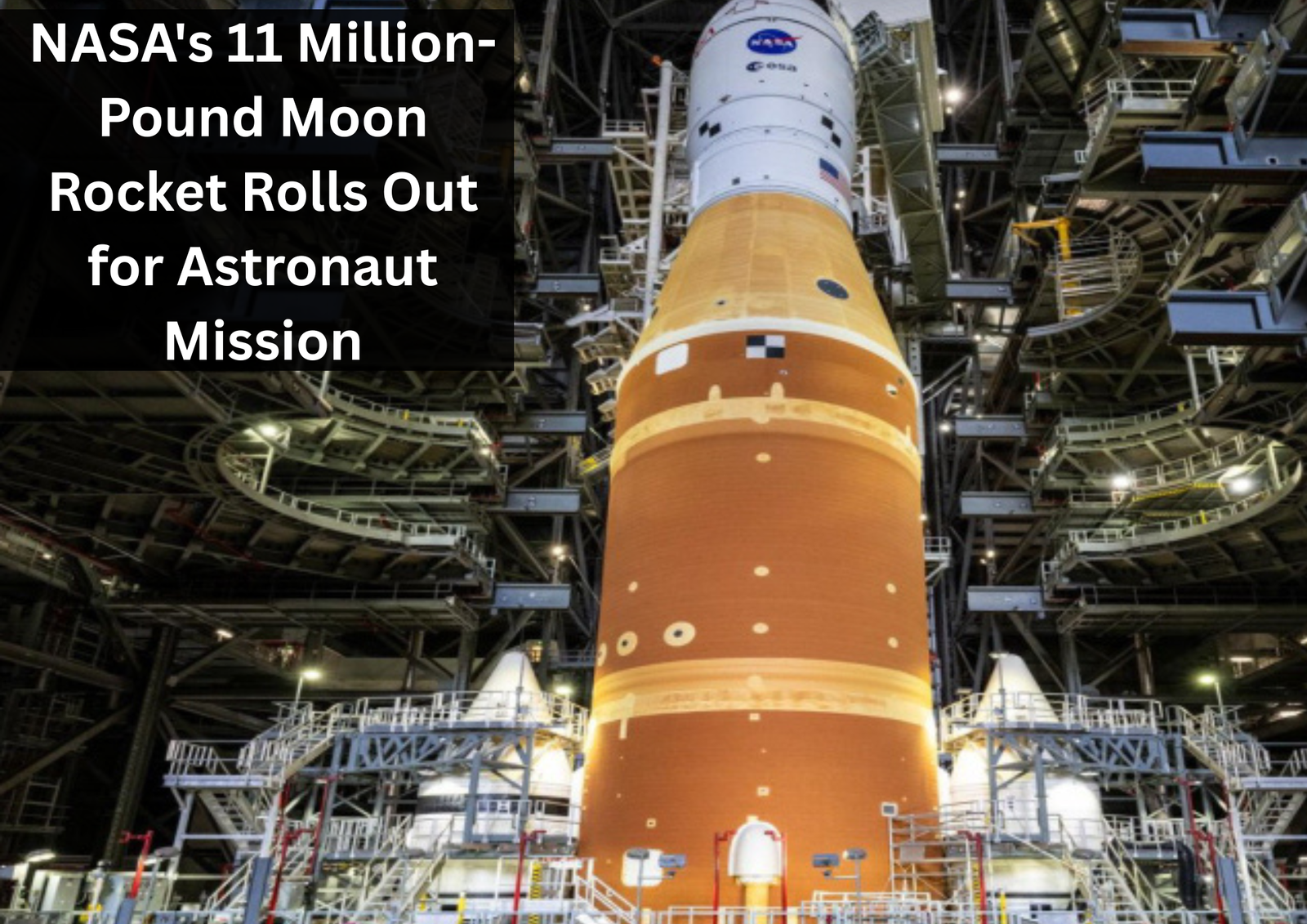
NASA has taken another decisive step toward returning astronauts to the Moon. On Saturday, January 17, 2026, the towering Artemis II Space Launch System (SLS) rocket completed its slow, highly choreographed rollout from the Vehicle Assembly Building to Launch Pad 39B at the Kennedy Space Center in Florida. The milestone marks the first time a crew-rated lunar rocket has sat on an active pad since the Apollo era.
The rollout began just after sunrise at 7:04 a.m. ET (1204 UTC) and concluded nearly 12 hours later at 6:42 p.m. ET (2342 UTC), after the 322-foot-tall booster made the four-mile (6.4-kilometer) trip atop NASA’s massive Crawler Transporter-2. Moving at roughly one mile per hour, the behemoth vehicle carried both the SLS rocket and the Orion crew capsule into position for final pad testing. NASA employees, family members, and the four Artemis II astronauts gathered to witness the moment, joined by NASA Administrator Jared Isaacman.
Artemis II will carry Commander Reid Wiseman, Pilot Victor Glover, Mission Specialist Christina Koch, and Canadian Space Agency Mission Specialist Jeremy Hansen on a 10-day flight around the Moon no earlier than February 2026. The mission will not include a lunar landing, but it represents NASA’s first crewed trip beyond low-Earth orbit since Apollo 17 in 1972 – and the debut of Orion’s full life-support capabilities during flight.
Program officials say the mission is focused on safety and validation. Unlike the uncrewed Artemis I test flight in 2022, Artemis II must support controlled cabin temperatures, moisture balance, food provision, water supply, and waste management throughout the mission. “Putting a crew on board changes everything. This one feels much different,” said mission management chair John Honeycutt while discussing upcoming system checks.
Once launched, the spacecraft will execute a free-return trajectory around the Moon, using lunar gravity to sling back toward Earth without requiring a major engine burn after translunar injection. Depending on the exact launch date, the mission could potentially surpass the Apollo 13 record for the farthest distance humans have traveled from Earth – a benchmark Artemis I exceeded without astronauts aboard.
With the vehicle now at the pad, teams are preparing for a full “wet dress rehearsal” scheduled for February 2. This test involves filling the rocket with cryogenic propellants and practicing the countdown up to T-minus 29 seconds. If the systems perform as expected, NASA will evaluate launch opportunities between February 6–10, with additional windows available in the spring. If issues arise, engineers may roll the vehicle back into the Vehicle Assembly Building for repairs, delaying the schedule.
A successful Artemis II flight would clear the way for Artemis III, the mission targeted for 2027 that aims to land astronauts near the Moon’s south pole using SpaceX’s Starship Human Landing System. That mission intends to make history by placing the first woman and first person of color on the lunar surface, as well as the first non-American astronaut to participate in a lunar landing campaign.
NASA leaders have stressed that they will not lock in a final launch date until the wet dress rehearsal has concluded. “We have no intention of racing the clock,” Isaacman said on Saturday, emphasizing that the mission represents the agency’s most ambitious crewed campaign in decades.
“Trump Announces Planned Lawsuit Against JPMorgan, Rejects Report of Fed Chair Offer to Dimon – read the full detailed breakdown in my blog for the complete story.”