
Guatemala has entered a month-long state of emergency after a weekend of violence involving coordinated prison riots, hostage situations, and deadly retaliatory attacks targeting law enforcement. President Bernardo Arevalo signed the decree late Sunday following emergency cabinet consultations, describing the moment as a “direct challenge to national security.”
Prison Siege Ignites Crisis
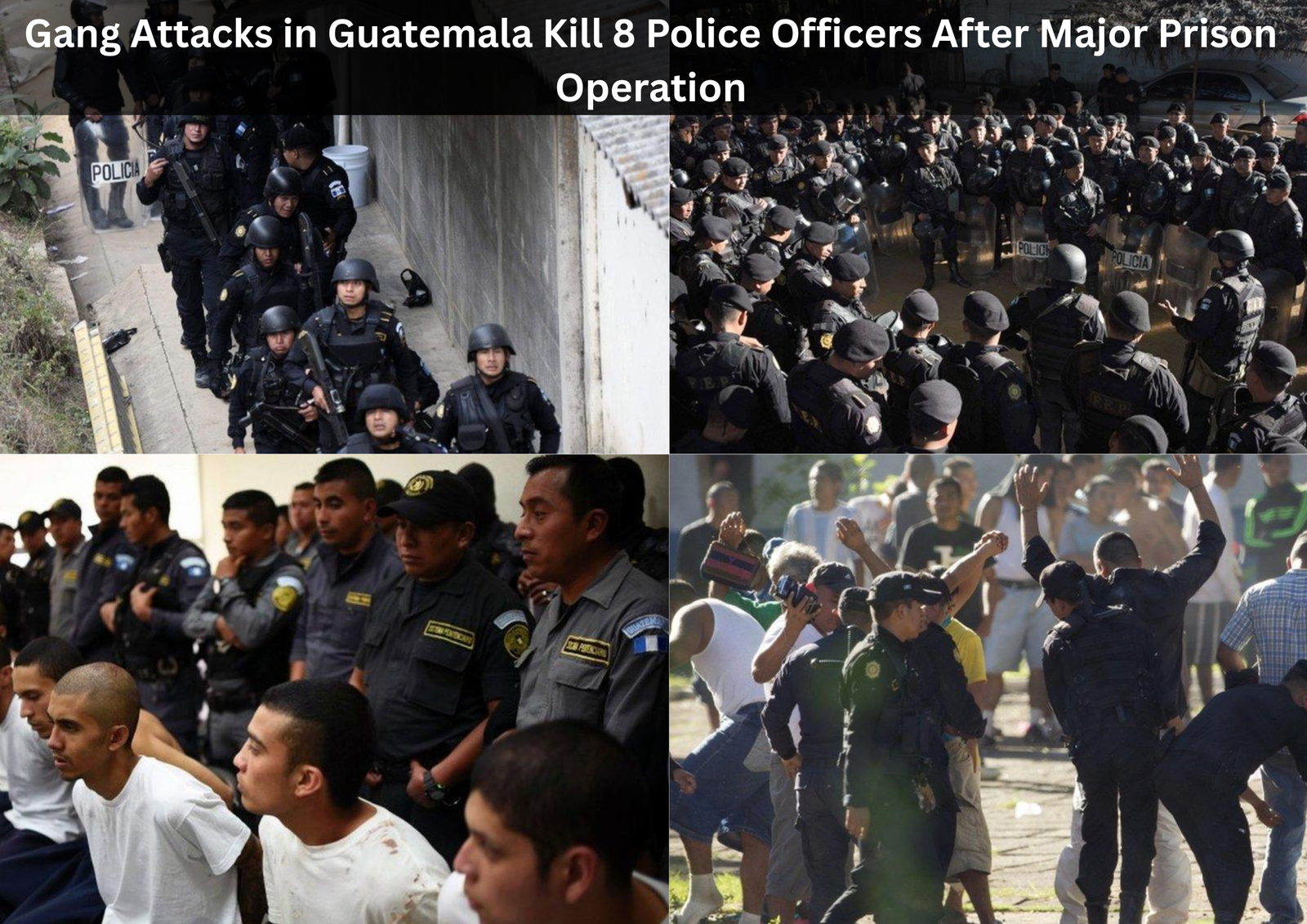
The unrest began early Saturday when inmates with suspected ties to the Barrio 18 gang seized dozens of prison employees across three detention centers. Authorities reported that 46 guards and civilian staff were initially taken hostage in an effort to pressure the government into restoring privileges for incarcerated gang leaders. Security officials have linked the riots to broader disputes over containment policies enacted in mid-2025.
By Sunday afternoon, security forces supported by military units stormed the Renovacion I maximum-security facility south of the capital. Armored vehicles, tear gas, and tactical units were deployed, leading to the release of nine captives and the recapture of Barrio 18 figure Aldo Dupie, better known as “El Lobo.” Officials confirmed no hostages were injured during the 15-minute incursion. Negotiations for hostages at two other prisons continued into Monday, involving 28 captives at Fraijanes II and nine at the Preventivo complex on the city’s outskirts.
Police Targeted in Coordinated Attacks
As the operation unfolded, gunmen launched near-simultaneous assaults on police patrols around Guatemala City. Eight officers were killed and ten wounded in the attacks, according to the National Civil Police. Authorities believe the killings were retaliation for the prison raid and Dupie’s capture. One suspected assailant was also reported dead. Interior Minister Marco Antonio Villeda condemned the assaults as an attempt by criminal organizations to “instill fear and erode state authority.”
President Arevalo echoed the sentiment, stating the attacks sought to intimidate both security forces and the wider population. “They want society to step back from confronting the power of these groups,” he said during a televised address. “That will not happen.”
State of Siege and Public Precautions
With the state of siege now active for 30 days, police and military units have expanded powers to conduct searches, restrict movement, and detain suspects linked to organized crime. The government declared three days of national mourning for the fallen officers and ordered all schools closed on Monday. The U.S. Embassy issued a regional alert advising personnel to shelter in place and avoid gatherings.
National Civil Police director David Boteo urged residents in the capital region to remain indoors while operations continue. Defense Minister Henry Saenz confirmed that soldiers would maintain a visible presence “for as long as necessary.”
Gang Violence and Previous Incidents
The latest unrest fits into a larger cycle of gang-related violence involving Barrio 18 and rival network MS-13. Both organizations are active in narcotics trafficking and extortion across Central America and are designated as terrorist entities by the United States. Guatemala’s Congress added Barrio 18 to its own terrorist registry in October 2025 after a string of prison breakouts, including a dramatic escape involving twenty senior gang members. Only six were later recaptured.
Experts note that Guatemala’s homicide rate in 2025 reached an estimated 16.1 per 100,000 inhabitants-more than twice the global average-highlighting the depth of the security challenge. Dupie, the captured gang leader, is serving cumulative sentences totaling roughly 2,000 years for murder and organized crime-related offenses.
Trump’s Proposed ‘Board of Peace’ Sparks Debate Over $1 Billion Permanent Seat Requirement, a story that’s stirring global attention-don’t miss my detailed breakdown, read this blog!