
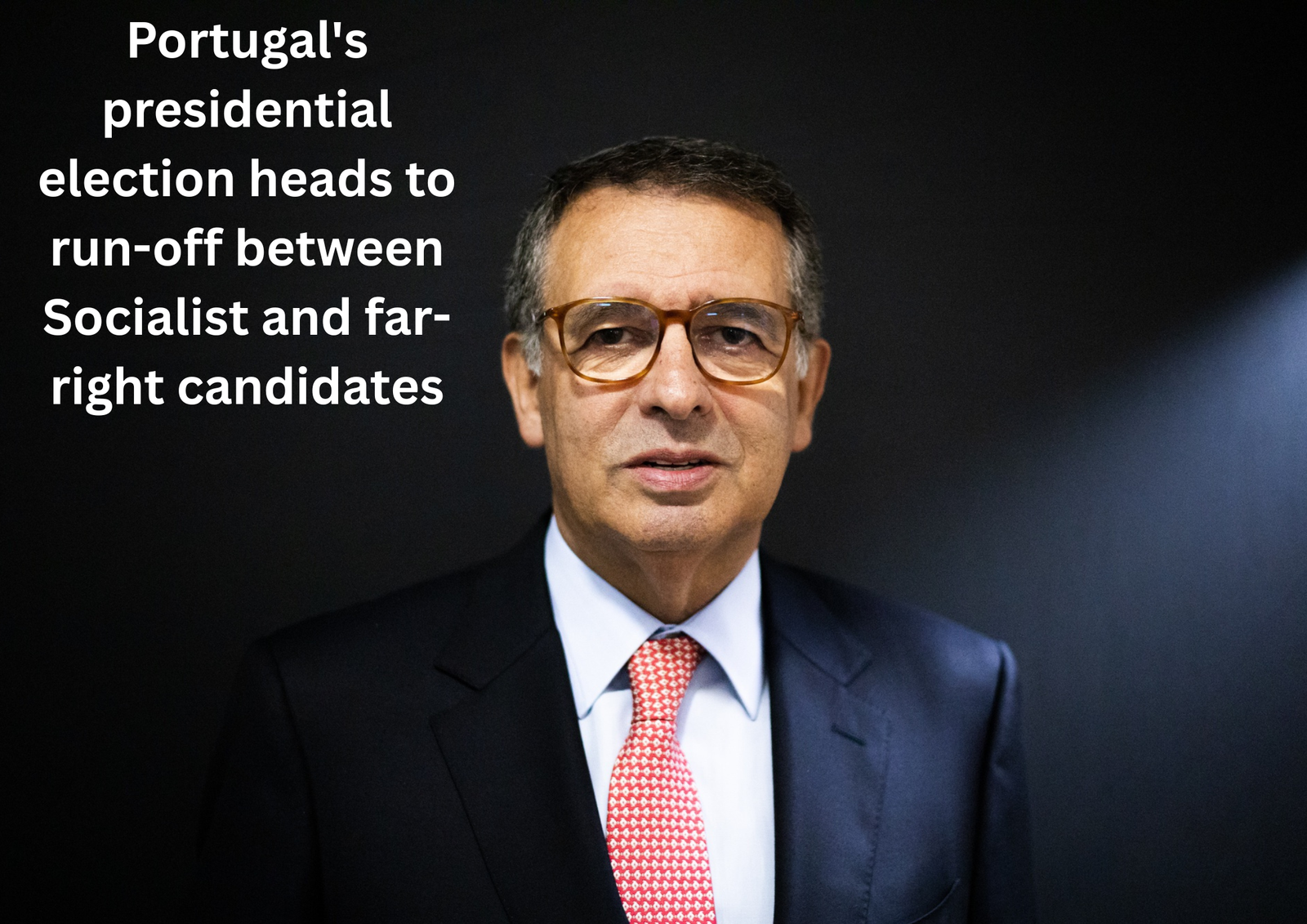
Portugal is heading into a decisive second round of voting after the country’s presidential election produced no outright winner in the first round, setting up an unusually competitive showdown between center-left candidate António José Seguro and far-right leader André Ventura on February 8.
The first round, held on January 18, delivered a notable shift in the political landscape. Preliminary results placed Seguro, a former leader of the Socialist Party, in first place with a little over 31% of the vote. Ventura, who heads the fast-growing Chega party, secured roughly 24%, ensuring his advance to the head-to-head runoff. The outcome marks only the second presidential runoff since Portugal’s democratic transition in the mid-1970s and the first time a far-right contender has reached this stage.
First-Round Dynamics
Eleven candidates competed on the ballot, following the disqualification of three hopefuls earlier in the campaign for failing procedural requirements. João Cotrim de Figueiredo of the Liberal Initiative finished in third place with close to 16%, while other high-profile contenders such as Admiral Henrique Gouveia e Melo and Luís Marques Mendes of the governing Social Democratic Party trailed further behind.
Despite the crowded field, voter engagement appeared stronger than expected. After several national elections in recent years, analysts had anticipated fatigue among the electorate. Instead, abstention dropped to its lowest point in two decades, with turnout significantly higher than in the 2021 presidential contest.
Far-Right Surge and Campaign Themes
Ventura’s performance illustrates the rapid growth of Chega, a party founded less than seven years ago. Once a fringe movement, Chega now stands as Portugal’s primary opposition force and occupies more than a quarter of parliamentary seats. Immigration and national identity featured heavily in Ventura’s messaging, pushing themes that only recently entered mainstream debate in a country long resistant to far-right politics.
Broader Political Context
The victor in February will succeed President Marcelo Rebelo de Sousa, who completes his second and final term after ten years in office. Although Portugal operates under a semi-presidential system in which the prime minister oversees the government, the head of state wields notable authority, including the ability to dissolve parliament, appoint the prime minister, veto legislation, and serve as commander-in-chief of the armed forces. The position also plays an important role in mediating political crises – a recurring feature in recent years as Portugal navigated multiple elections and coalition realignments.
Looking Toward the Runoff
With the governing Social Democratic Party choosing not to endorse either finalist, attention now turns to how centrist and left-leaning voters will respond. Analysts expect an effort to consolidate support around Seguro to prevent a far-right victory, though Ventura insists he can unify conservative factions and mount a competitive challenge. The runoff is set for February 8, placing Portugal among a growing list of European nations where populist and far-right movements are testing the limits of traditional party structures.
Guatemala enacts emergency security measures after a prison uprising and police killings. Read this essential analysis on my blog.