
The European Union has scheduled an emergency summit following a sudden German military deployment to Greenland and newly imposed U.S. trade tariffs, a one-two sequence that has sharply increased diplomatic friction between Washington and Brussels.
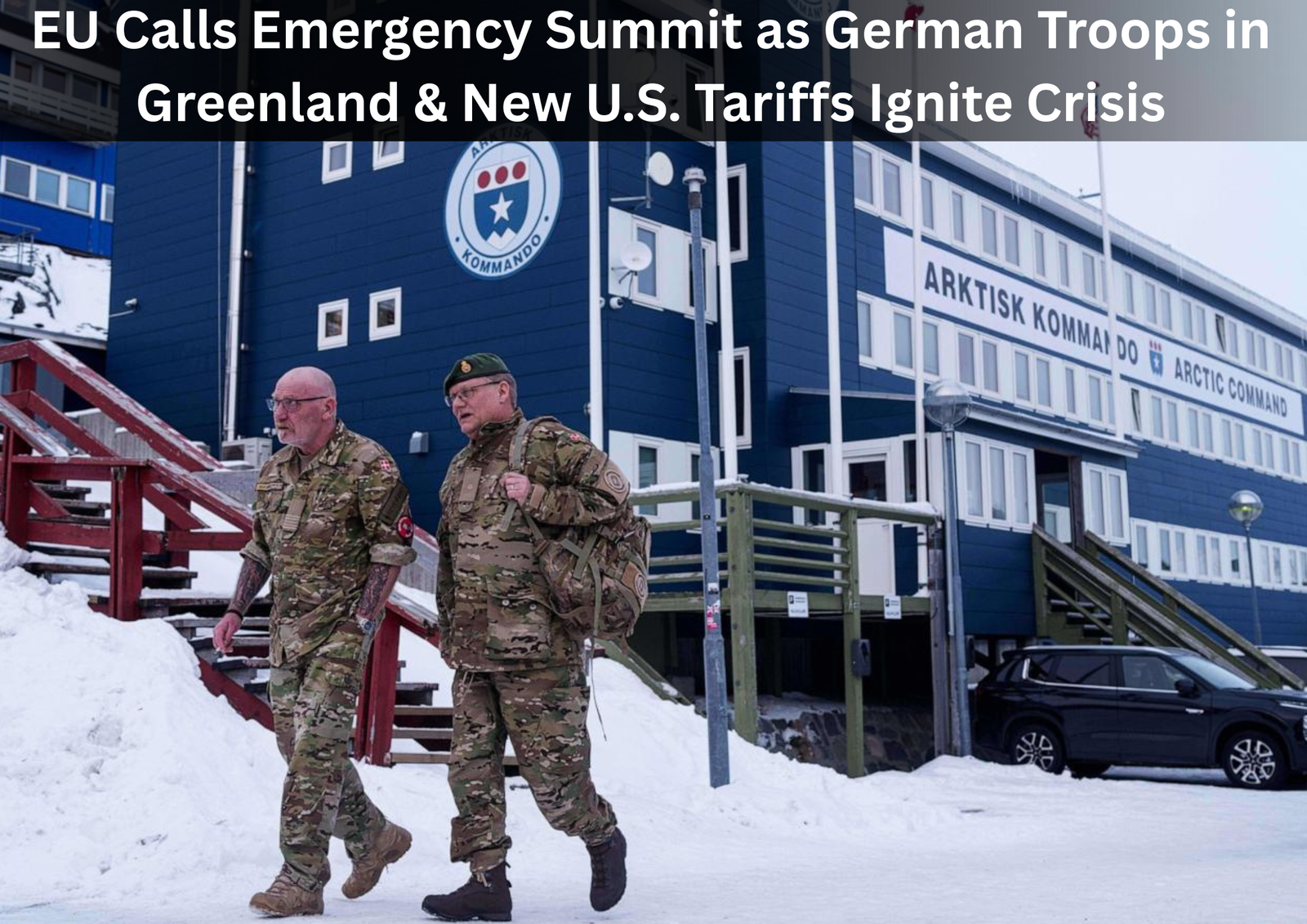
The situation escalated early this week after German media reported that Bundeswehr soldiers arrived in Greenland and remained on the island for roughly 44 hours before returning home. Greenland, a strategically located Arctic territory, remains part of the Kingdom of Denmark but enjoys significant domestic autonomy. German authorities have not offered clarification regarding the mission’s objectives, prompting speculation about a possible link to emerging Arctic security concerns.
The troop operation coincided with a major new trade move by the United States. The administration of President Donald Trump, now back in office, unveiled tariff measures targeting European products from nations that Washington claims have not met NATO spending commitments. Similar arguments were raised during Trump’s previous term, but European officials say the latest measures carry far broader economic implications.
French President Emmanuel Macron reacted swiftly, urging Brussels to activate the EU’s so-called “anti-coercion instrument,” a mechanism designed to retaliate against foreign governments accused of using economic tools for political leverage. Macron described the U.S. tariffs as an attempt to pressure the bloc on defense funding and signaled that Europe should respond collectively.
EU diplomats say the emergency summit will focus on establishing a coordinated strategy, with discussions expected to include potential counter-tariffs and broader trade responses. Analysts note that using the anti-coercion instrument against the United States would represent a historic escalation, given that the tool was originally envisioned for handling disputes with China and other emerging powers.
Beyond trade, the brief German presence in Greenland has added a geopolitical twist. The Arctic region has drawn increasing attention from world powers due to its military positioning and resource potential. Danish officials declined to publicly comment on the German mission, while several European lawmakers called for transparency ahead of the summit.
The combination of military ambiguity and aggressive trade maneuvering has left European leaders facing overlapping diplomatic challenges. The summit is expected to take place within days as capitals prepare for what could become the most serious transatlantic standoff in years.
Portugal’s Presidential Election Moves to Rare Runoff as Left and Far Right Face Off – a dramatic political showdown you truly shouldn’t miss. Read this full blog for the complete story!