
The European Union has paused progress on a key trade agreement with the United States, signaling a sharp escalation in tensions after renewed tariff threats from Donald Trump linked to Greenland.
EU officials confirmed Wednesday that formal approval of the so-called Turnberry trade framework has been suspended, citing mounting pressure from Washington and what Brussels describes as an unprecedented challenge to European sovereignty. The decision was announced as global leaders gathered at the World Economic Forum in Davos.
EU Considers Strong Countermeasures
Bernd Lange, chair of the European Parliament’s trade committee, said relations could not continue “as normal” while tariff threats remain on the table. He indicated growing support for activating the EU’s Anti-Coercion Instrument, a legal mechanism that allows the bloc to respond forcefully to economic pressure from foreign governments.
Often described by EU officials as a last-resort tool, the measure could enable restrictions on U.S. investments, suspension of market access, limits on intellectual property protections, and other economic responses. Alongside this, European leaders are weighing a more traditional retaliation package that could target billions of dollars’ worth of American exports.
Tariff Threats Linked to Greenland Standoff
The dispute centers on President Trump’s warning that tariffs would be imposed on several European countries and the United Kingdom after Denmark rejected U.S. overtures related to Greenland. The proposed duties would begin at a lower rate in early February and rise sharply by the summer if no agreement is reached.
Speaking in Davos, Trump ruled out the use of military force regarding Greenland but declined to withdraw the tariff plan. The remarks followed a limited military exercise in Greenland involving Denmark and other NATO members, an event U.S. officials cited as part of the broader disagreement.
European Commission President Ursula von der Leyen said the situation reflects a serious erosion of trust between long-standing partners, stressing that alliances rely on mutual respect and reliability.
US Response Downplays Financial Impact
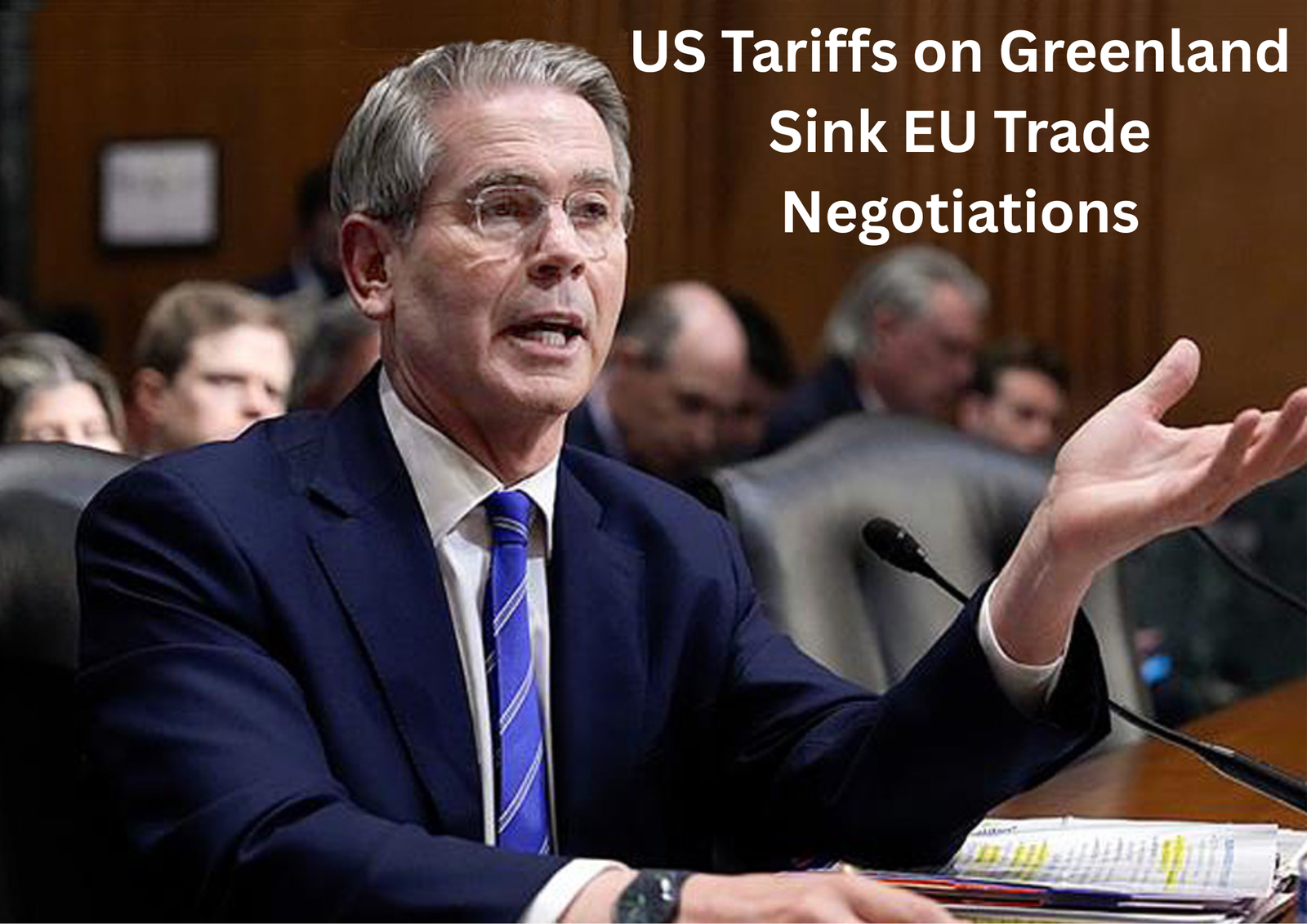
U.S. Treasury Secretary Scott Bessent, also attending the Davos forum, dismissed concerns raised by European financial institutions about potential shifts away from U.S. government debt. He characterized recent divestment announcements from Danish funds as limited in scale and unlikely to affect broader markets.
Bessent also rejected warnings from European analysts suggesting the standoff could prompt a wider reassessment of U.S. assets, calling such scenarios overstated.
High Stakes for Transatlantic Trade
The frozen trade framework was designed to stabilize tariff levels and ease barriers across one of the world’s largest economic relationships, which encompasses trade in goods and services worth well over a trillion dollars annually. Its suspension adds uncertainty for businesses on both sides of the Atlantic already navigating fragile global markets.
European commentators say the episode has intensified debate within the EU about strengthening independent economic and strategic defenses. As leaders prepare for further talks, diplomats on both sides acknowledge that resolving the dispute will be critical to preventing long-term damage to transatlantic relations.
For now, the standoff remains unresolved, with markets and policymakers watching closely to see whether negotiations resume-or whether economic retaliation becomes a reality.
To understand the full impact behind “Israeli Strike in Central Gaza Kills Three Journalists, Raises Press Safety Concerns,” read this detailed blog uncovering critical facts, reactions, and why it matters globally.