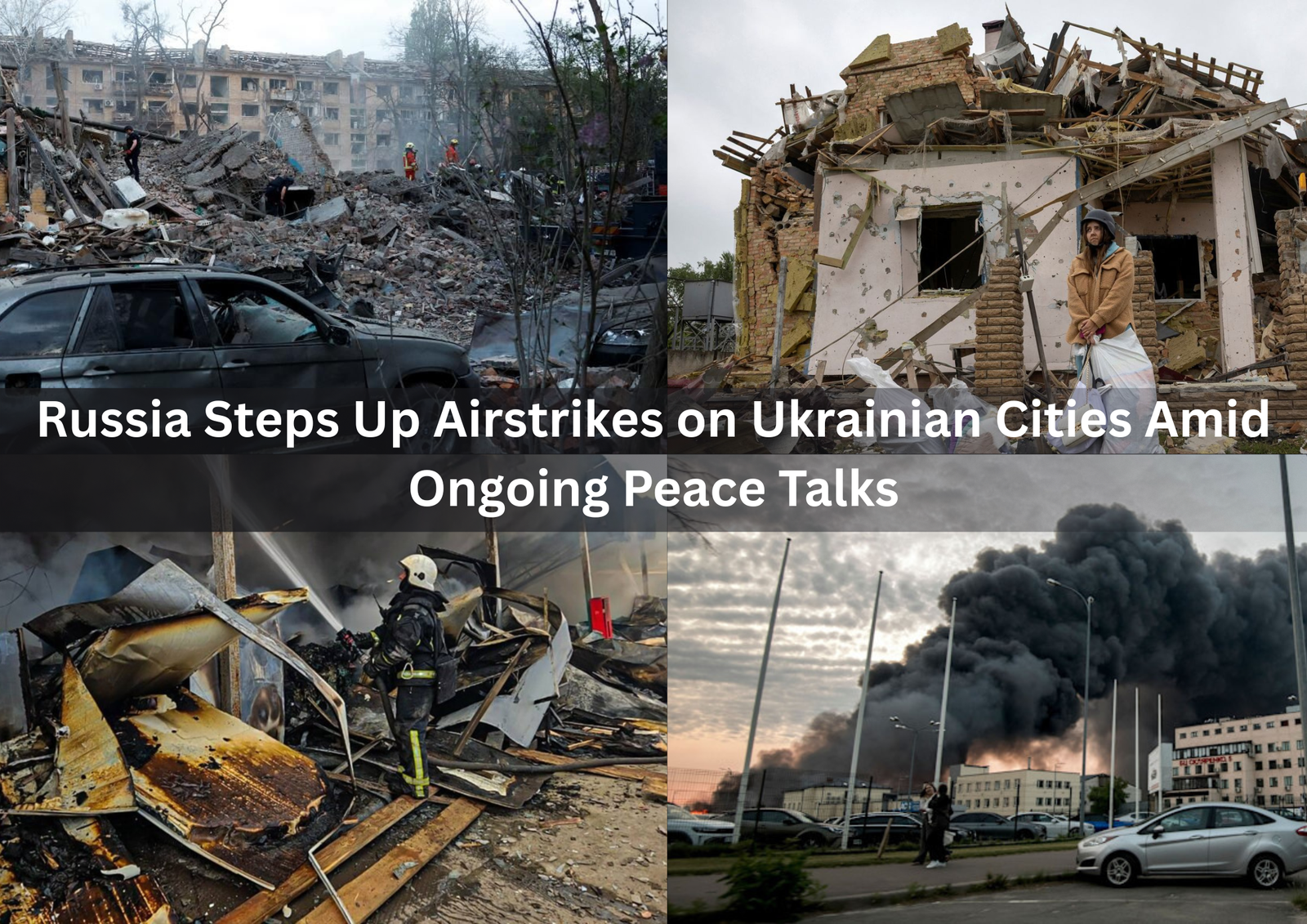
Ukraine faced one of its heaviest aerial bombardments of the year overnight after Russian forces launched a large-scale attack on major cities, including Kyiv and Kharkiv, even as diplomatic negotiations were underway in the Middle East aimed at ending the conflict.
According to Ukrainian officials, the assault involved hundreds of drones and dozens of missiles fired across multiple regions. At least one civilian was killed, while more than twenty others were injured as explosions and falling debris struck residential neighborhoods and critical infrastructure. The attacks caused extensive damage to hospitals, energy facilities, and housing at a time when much of the country is experiencing severe winter conditions.
In the capital, Kyiv Mayor Vitali Klitschko confirmed that emergency services responded to fires in several districts after air defenses intercepted incoming targets. Damage was reported on both sides of the Dnipro River, with some neighborhoods temporarily losing access to heating and water as temperatures dropped well below freezing overnight.
Kharkiv, located close to the Russian border, also endured sustained drone strikes over several hours. City officials said dozens of unmanned aerial vehicles hit civilian areas, wounding nearly twenty people, including a child. Among the damaged sites were a hospital, a maternity facility, and a dormitory housing displaced residents.
Ukrainian President Volodymyr Zelensky stated that the attacks extended beyond the two largest cities, with strikes also reported in Sumy and Chernihiv. He warned that Russia appeared to be deliberately targeting the country’s energy system during winter, worsening an already fragile power situation. Ukraine’s grid operator later confirmed that emergency power outages were imposed in many regions due to the damage.
Energy sector leaders cautioned that continued attacks on infrastructure could push parts of the country toward a humanitarian emergency unless protections are included in any future ceasefire agreement.
The escalation came just hours after representatives from Ukraine, Russia, and the United States wrapped up the first day of high-level talks in Abu Dhabi. The discussions marked the first known trilateral meeting of this scale since the start of the war nearly four years ago. Talks are expected to continue for a second day.
Ukraine’s lead negotiator described the meeting as focused on achieving a lasting and honorable peace, while emphasizing that further discussions are necessary. President Zelensky urged caution, saying it was too soon to assess Russia’s intentions. U.S. and Emirati officials described the talks as constructive, noting the goal of identifying political paths toward de-escalation.
Russia has reiterated demands that Ukrainian forces withdraw from parts of eastern Ukraine still under Kyiv’s control, a position Ukraine has repeatedly rejected. Moscow currently occupies roughly one-fifth of Ukraine’s internationally recognized territory.
International reaction to the overnight attacks was swift. The European Union condemned the strikes on civilian and energy infrastructure, accusing Russia of attempting to weaken civilian morale. EU officials announced the deployment of hundreds of emergency generators to help Ukraine stabilize essential services.
As rescue crews continue clearing debris and restoring utilities in affected cities, attention now turns back to Abu Dhabi, where negotiators face mounting pressure to turn dialogue into meaningful progress while fighting continues on the ground.
Read “Pentagon Releases 2026 Defense Strategy Prioritizing U.S. Homeland and Regional Security” for key insights and analysis-don’t miss this detailed breakdown, shared here for readers seeking deeper understanding.