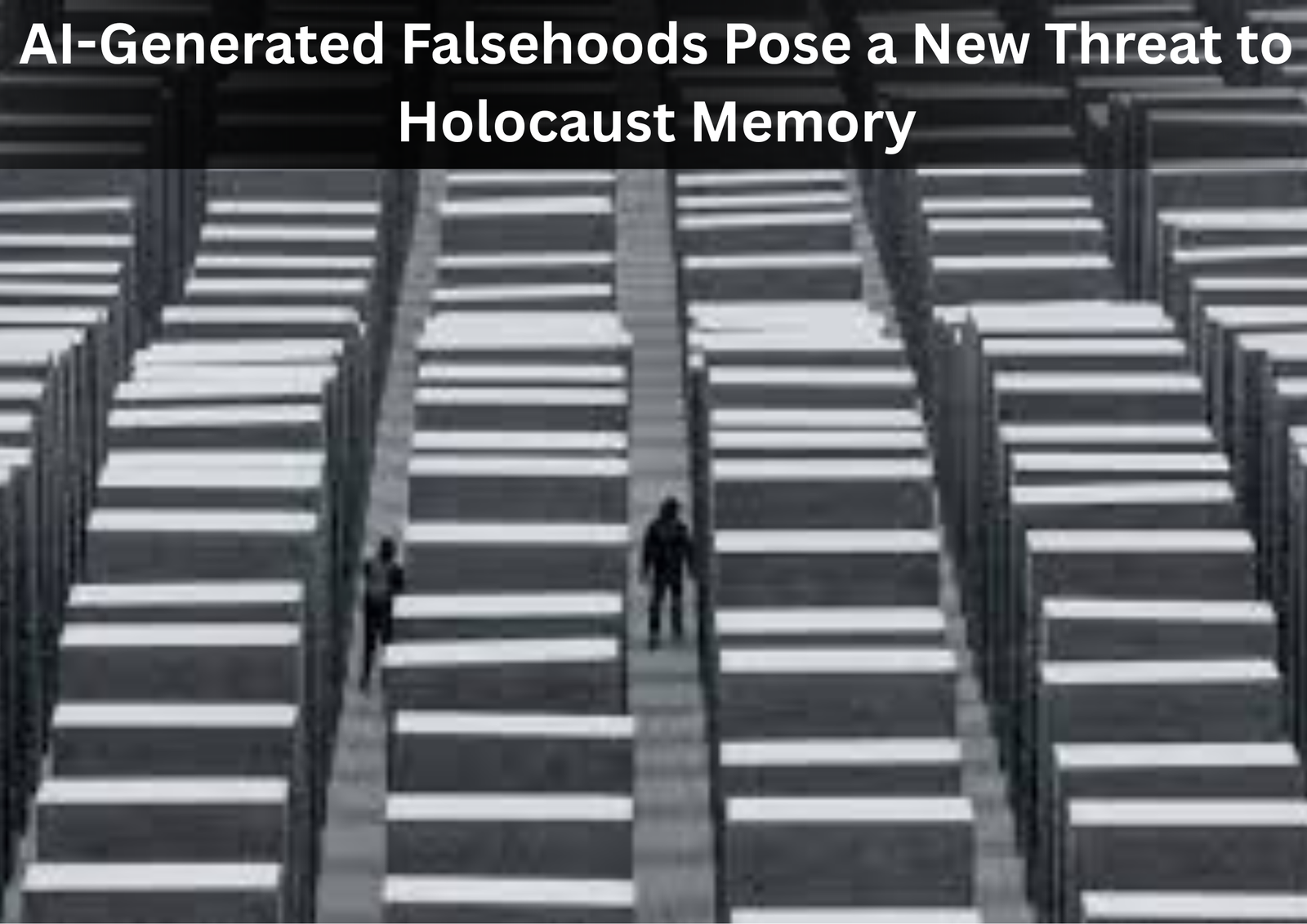
As the world marks International Holocaust Remembrance Day, historians, educators, and memorial institutions are raising alarms over a new and rapidly evolving threat to historical truth: the spread of AI-generated fake content that distorts the memory of the Holocaust. With the number of living survivors shrinking each year, experts warn that fabricated images and narratives are increasingly filling digital spaces once grounded in verified testimony and archival evidence.
Holocaust memorial organizations have cautioned that artificial intelligence tools are being misused to generate emotionally charged but historically false images and stories. These materials circulate widely on social media platforms, blogs, and video-sharing sites, often without clear labeling to indicate they are synthetic. The concern is not only the volume of this content, but its ability to blur the line between documented history and manufactured fiction.
A Growing Flood of Digital Falsehoods
Researchers monitoring online platforms report that fabricated Holocaust-related material is appearing at an unprecedented pace. Some sites publish manipulated or entirely artificial imagery repeatedly throughout the day, capitalizing on emotional shock to drive clicks and engagement. In other cases, AI-generated visuals are used more deliberately to promote political narratives that minimize or revise the crimes committed during the Nazi era.
Among the most troubling examples cited by historians are images portraying concentration camp prisoners as healthy or well-nourished, subtly undermining well-documented evidence of starvation, disease, and systematic brutality. Other widely shared visuals invent individual victims or falsely attribute deaths to real locations, creating fictionalized stories that appear authentic at first glance.
According to memorial experts, the sophistication of generative AI makes these fabrications increasingly difficult for untrained viewers to identify. As image-generation tools improve, false visuals can closely mimic historical photography, further complicating efforts to preserve factual accuracy.
Challenges Inside the Classroom
The impact of this digital distortion is being felt acutely in schools. Educators say students often encounter Holocaust-related content first through social media rather than textbooks or formal instruction. Without clear indicators that an image or video is artificial, many learners assume visual material is inherently trustworthy.
Teachers involved in Holocaust education report spending more time addressing misconceptions fueled by online misinformation. In some cases, students arrive with beliefs shaped by manipulated images or misleading memes, requiring educators to first dismantle false narratives before introducing verified historical sources.
Surveys discussed at recent educational seminars suggest that misinformation has already influenced public understanding, particularly among younger generations. Experts stress that this trend underscores the urgent need for stronger media literacy and critical thinking skills, especially when dealing with emotionally charged historical subjects.
Preserving Testimony in a Digital Age
The misuse of AI contrasts sharply with legitimate efforts to use technology responsibly in Holocaust remembrance. Several educational initiatives employ artificial intelligence and immersive tools to preserve survivor testimonies, allowing future generations to engage with recorded accounts long after firsthand witnesses are gone.
These projects are carefully curated, transparent about their methods, and grounded in verified documentation. However, historians warn that the coexistence of ethical preservation efforts and malicious fabrications creates confusion, potentially leading audiences to question the authenticity of all digital Holocaust content.
Survivors and scholars alike have expressed concern that excessive fictionalization, even when well-intentioned, risks diluting the gravity of lived experience. When fabricated narratives proliferate unchecked, genuine testimony can become harder to distinguish and easier to dismiss.
Calls for Platform Accountability
In response to the growing problem, Holocaust memorial institutions and cultural organizations have urged technology companies to take a more active role in limiting the spread of distortive AI content. Recommendations include clearer labeling of AI-generated material, removal of content that misrepresents historical facts, and exclusion of offending accounts from monetization programs.
European cultural officials have echoed these concerns, pointing to existing digital regulations that require platforms to address harmful and misleading content. Advocates argue that respecting the memory of Holocaust victims is not only a moral responsibility but also a legal and societal obligation in many jurisdictions.
The Stakes for Collective Memory
Historians describe the current moment as a critical test for collective memory. The Holocaust is one of the most extensively documented genocides in history, yet experts warn that volume and repetition can erode truth if false material dominates online discourse.
Distorted representations do more than misinform; they shape how societies understand the past and draw lessons from it. Educators at memorial sites report encountering visitors whose perceptions of the Nazi era appear influenced by misleading digital imagery, highlighting the real-world consequences of online falsehoods.
Despite these challenges, scholars emphasize that the solution is not to retreat from digital remembrance. Instead, they call for more rigorous standards, stronger education, and thoughtful engagement with technology. By combining verified sources, transparent digital tools, and critical analysis, historians believe it is still possible to safeguard authentic Holocaust memory in an increasingly AI-driven world.
“Doomsday Clock Moves to 85 Seconds Before Midnight, Signaling Heightened Global Risk” explores urgent global threats in depth-don’t miss this blog for critical insights and context shaping today’s world.