


European capitals are intensifying diplomatic efforts to find a path toward ending the war in Ukraine, with Berlin emerging next week as a central venue for high-level talks involving Ukraine, key European powers, and senior U.S. representatives. The discussions come amid unresolved territorial disputes, growing financial strain on Kyiv, and mounting pressure to define credible long-term security guarantees.
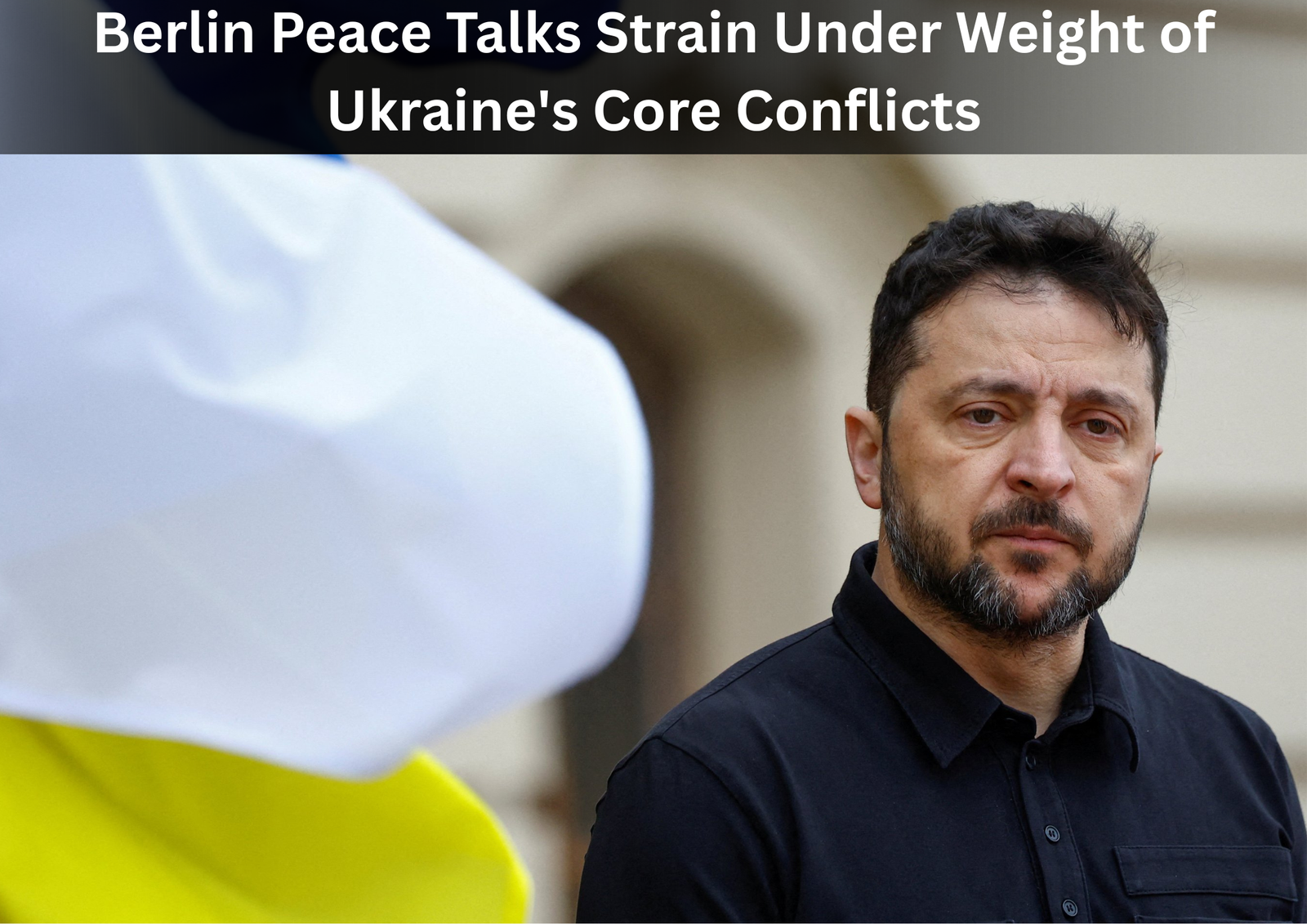
Ukrainian President Volodymyr Zelenskyy is expected in Berlin in December for consultations hosted by German Chancellor Friedrich Merz. Leaders from France and the United Kingdom are also set to participate, alongside other European and NATO officials. The meetings are designed to align European positions ahead of further engagement with Washington on a U.S.-supported peace framework.
At the same time, Steve Witkoff, a senior overseas envoy for U.S. President Donald Trump, is due to hold separate meetings in Germany with Ukrainian and European officials. Witkoff has played a central role in Washington’s recent attempts to broker a settlement between Kyiv and Moscow and is expected to outline the latest revisions to a proposed agreement.
A Deal Sought, but No Breakthrough in Sight
The Berlin talks are part of a broader diplomatic surge aimed at producing at least a preliminary deal before the end of the year. Ukrainian officials have recently submitted an updated version of a multi-point peace proposal to the United States, building on drafts circulated since late November. Despite the urgency, diplomats caution that expectations should remain modest, as core disagreements persist.
German officials say negotiations are taking place at an unusually intense pace, with particular focus on how any ceasefire could be enforced and what guarantees would prevent renewed fighting. European leaders are also keen to ensure the United States remains closely involved, given its decisive role in security and financial support for Ukraine.
Donbas Remains the Central Obstacle
The status of eastern Ukraine continues to be the most difficult issue. Kyiv maintains that it cannot legally or politically give up territory occupied by Russian forces. Moscow, by contrast, insists that any ceasefire must be preceded by Ukraine’s full withdrawal from the Donbas region.
One element reportedly discussed in U.S.-led proposals involves Ukrainian forces pulling back from parts of Donbas, with the area reclassified under a special economic or demilitarized arrangement. President Zelenskyy has publicly questioned how such a plan would prevent Russian troops from moving in once Ukrainian forces leave. He has also stressed that any change to Ukraine’s borders would require public approval through a vote, as mandated by the country’s constitution.
Russian officials have signaled skepticism of the evolving proposals, indicating that they have yet to fully review the latest drafts and warning that several elements may be unacceptable from Moscow’s perspective.
Parallel Initiatives and the EU Track
Diplomacy has also extended beyond Berlin. Turkey has proposed a limited ceasefire focused on safeguarding energy infrastructure and port facilities, an idea Kyiv says it is willing to discuss. Meanwhile, the European Union is quietly advancing Ukraine’s membership process at a technical level, despite political resistance from some member states.
EU officials increasingly frame future membership as a cornerstone of Ukraine’s security architecture. Some proposals circulating among diplomats envision accelerated accession within the next few years, contingent on reforms in Ukraine and unanimous approval from existing EU members.
Battlefield Pressure and Financial Strain
As talks continue, fighting on the ground shows no sign of fully subsiding. President Zelenskyy recently visited frontline units in northeastern Ukraine, where Ukrainian forces report localized gains. Russia, however, claims advances elsewhere, underscoring the fluid and contested nature of the battlefield.
Beyond the military situation, Ukraine faces severe budgetary pressure. Government estimates suggest the country will require well over €100 billion in external support over the next two years to sustain its economy and defense.
In response, European governments have taken steps toward keeping Russian state assets frozen indefinitely. Roughly €210 billion held in Europe remains immobilized, with discussions underway on how proceeds from those funds could be leveraged to support Ukraine. Russia has sharply criticized the move and initiated legal action against institutions holding the assets.
Political Friction Ahead
Political tensions add another layer of complexity. President Trump has voiced frustration with the pace of negotiations and has renewed calls for Ukraine to hold elections. Ukrainian authorities say elections could be organized within months if robust international security guarantees are in place, but stress that current wartime conditions make such a step risky.
With Berlin hosting the next round of talks, diplomats acknowledge that expectations should be cautious. Still, many see the meetings as a critical test of whether international momentum can be translated into a credible framework for ending Europe’s most devastating conflict in decades.


