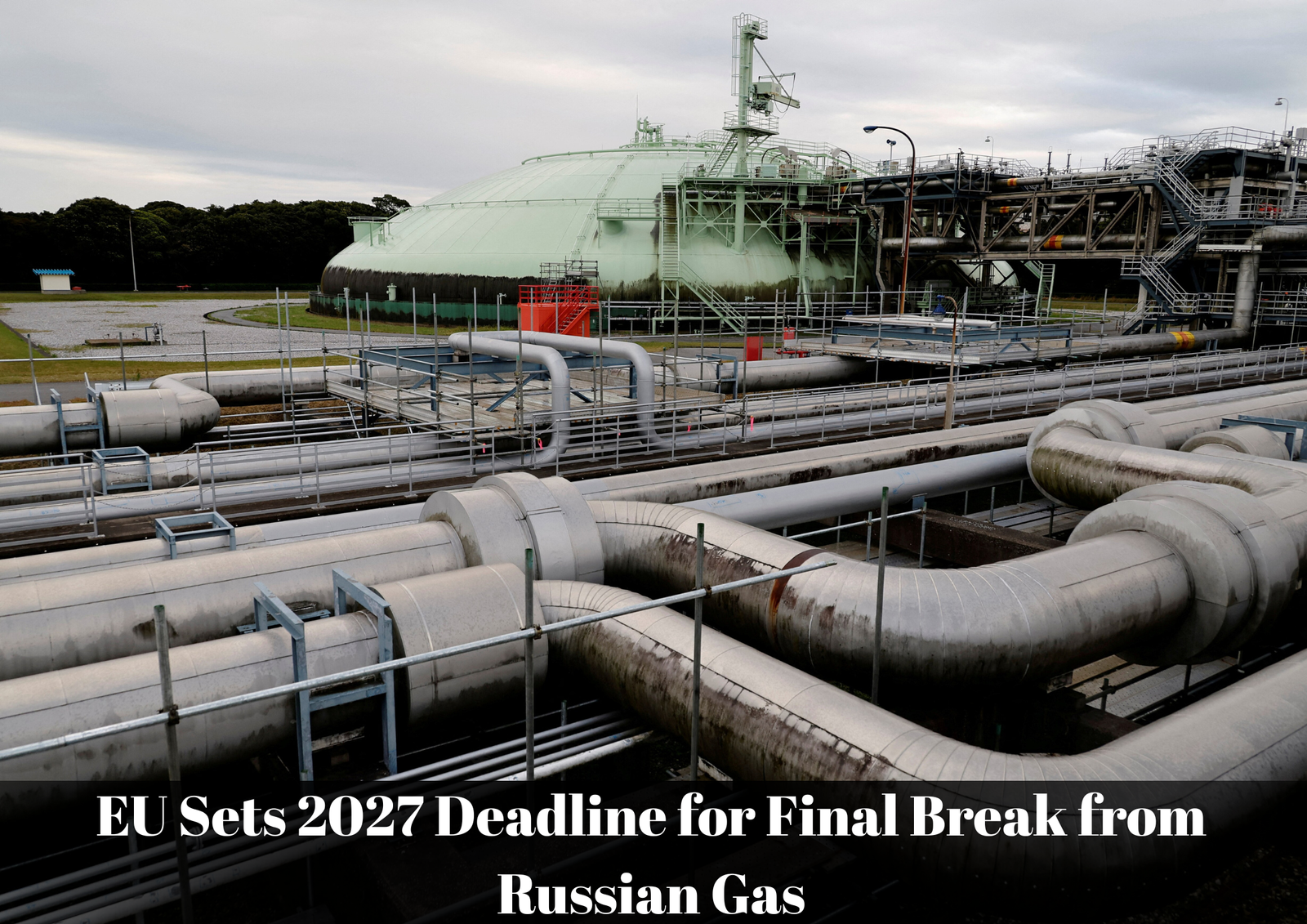
The European Union has taken a decisive step toward reshaping its energy future, formally adopting a binding law that will eliminate all imports of Russian natural gas across the bloc by 2027. The regulation, approved by the Council of the European Union on January 26, marks the most concrete legal action yet to sever energy ties with Moscow following Russia’s invasion of Ukraine.
Under the new framework, the phase-out will occur in stages. Imports of Russian liquefied natural gas (LNG) are scheduled to end by December 31, 2026, while pipeline gas deliveries will be prohibited from September 30, 2027. A limited flexibility clause allows the pipeline deadline to be extended to November 1, 2027, if a member state can demonstrate serious difficulties securing adequate gas storage levels ahead of winter demand.
The law was passed using reinforced majority voting under EU trade and energy legislation, allowing it to bypass the need for unanimous consent. Hungary and Slovakia voted against the measure, with Bulgaria abstaining. Both Hungary and Slovakia have announced plans to challenge the regulation before the European Court of Justice, arguing that it unfairly burdens countries with limited alternative energy access.
Hungarian Foreign Minister Péter Szijjártó criticized the decision as legally questionable and economically damaging, claiming it would drive up domestic energy costs. Slovakia echoed similar concerns, stating that the regulation does not sufficiently account for national differences in infrastructure and supply diversification capacity.
The regulation introduces strict contractual restrictions for companies operating within the EU. New gas contracts with Russian suppliers are banned outright, while existing agreements must be terminated in line with the phase-out timetable. Short-term contracts signed before June 17, 2025, will be prohibited for LNG imports starting April 25, 2026, and for pipeline gas beginning June 17, 2026. Long-term contracts must comply with the final 2026 and 2027 deadlines.
To enforce compliance, the EU has established significant financial penalties. Companies that violate the ban may face fines of at least 3.5 percent of their total global annual turnover or a minimum of €40 million, whichever is higher. EU officials say these measures are designed to ensure the regulation has immediate and tangible impact.
Member states are also required to submit national strategies by March 1, 2026, outlining how they plan to diversify gas supplies and address potential risks during the transition. These plans must identify infrastructure gaps, alternative suppliers, and emergency response measures.
Recognizing the possibility of unforeseen disruptions, the regulation includes a safeguard mechanism. If the European Commission determines that gas supply security is “seriously threatened,” it may temporarily suspend the import ban for up to four weeks. This provision is intended to prevent severe shortages during extreme conditions, such as unusually harsh winters or global supply shocks.
The decision underscores a dramatic shift in Europe’s energy landscape. Before Russia’s invasion of Ukraine in 2022, Russian gas accounted for more than 40 percent of the EU’s total supply. By 2025, that share had dropped to roughly 13 percent, driven by increased imports from alternative suppliers and accelerated investment in renewables. Despite the reduction, EU countries were still spending billions of euros annually on Russian gas and LNG, a reality officials say posed ongoing economic and security risks.
In a statement, the Council emphasized that continued reliance on Russian energy exposed the bloc to market manipulation and geopolitical pressure. The new law, it said, aims to close that vulnerability permanently.
Looking ahead, the European Commission has signaled that the gas ban is only part of a broader strategy. Additional legislative proposals are expected later this year to phase out Russian pipeline oil imports by the end of 2027 and reduce dependence on Russian nuclear fuel.
Once published in the Official Journal of the European Union, the regulation will take effect the following day and apply directly across all member states, marking a historic turning point in Europe’s energy policy and its response to geopolitical risk.
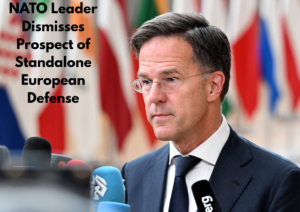
Don’t miss this in-depth analysis on “NATO Leader Rejects Idea of Europe Defending Itself Without U.S. Support”-a must-read blog unpacking the implications shaping Europe’s security future.