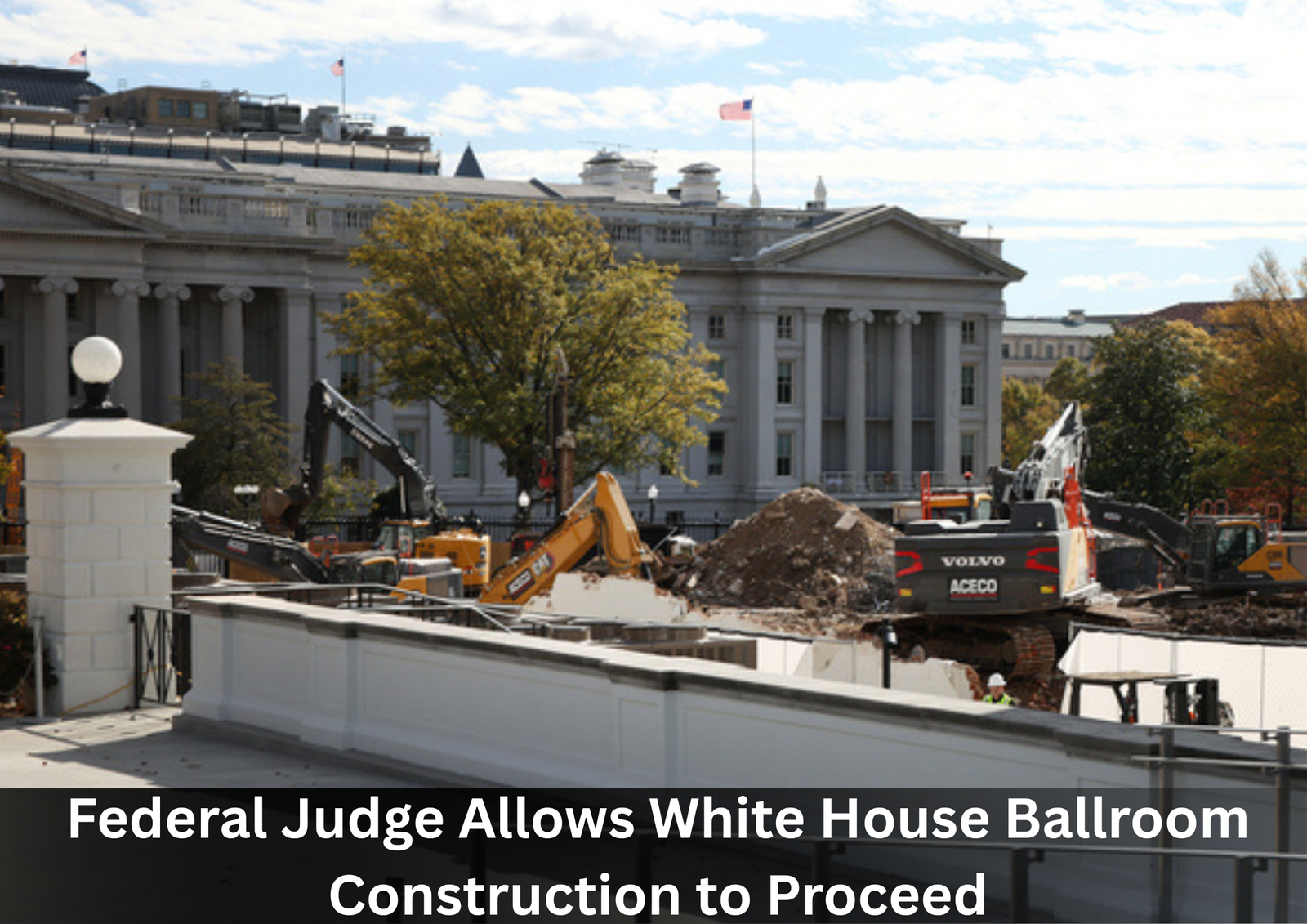
A federal judge has signaled that construction activity related to a proposed White House ballroom may proceed for now, rejecting calls for an immediate halt while a legal challenge moves forward.
During a court hearing on Tuesday, U.S. District Judge Richard Leon indicated that opponents of the project had not met the legal threshold required for an emergency injunction. Specifically, the court found insufficient evidence that continuing limited construction would result in immediate or irreversible damage. As a result, underground preparation work may continue while the administration submits additional documentation.
Judge Leon instructed the White House to provide unfinished architectural plans within two weeks and restricted ongoing work to areas not dependent on final designs. A follow-up hearing is scheduled for January, at which point the court is expected to issue a more comprehensive ruling.
The lawsuit was filed by the National Trust for Historic Preservation, which argues that the administration failed to follow required federal procedures before dismantling the historic East Wing earlier this year. The group contends that no adequate consultation occurred with oversight bodies or the public prior to demolition.
In response, the Department of Justice maintains that the president holds long-standing authority to modify the executive residence, citing precedent set by previous administrations. Government lawyers also argued that since the East Wing has already been removed, portions of the lawsuit no longer present a viable legal dispute.
National security considerations have emerged as a central argument in the administration’s defense. According to court filings, the U.S. Secret Service supports the project, stating that planned structural improvements are necessary to meet modern safety requirements. Officials warned that delaying construction could interfere with protective operations, offering to share classified details privately with the court.
The proposed ballroom is expected to span approximately 90,000 square feet and accommodate up to 1,000 guests. Cost estimates place the project at around $300 million. Officials say the new venue would eliminate the need for temporary structures used during large state events.
Preservation advocates remain critical, arguing that the process undermines historic safeguards and public accountability. The project has also drawn attention due to recent changes in federal arts oversight panels, some of which remain unfilled.
For now, the court’s decision allows limited progress while broader legal questions surrounding authority, procedure, and preservation remain unresolved.