
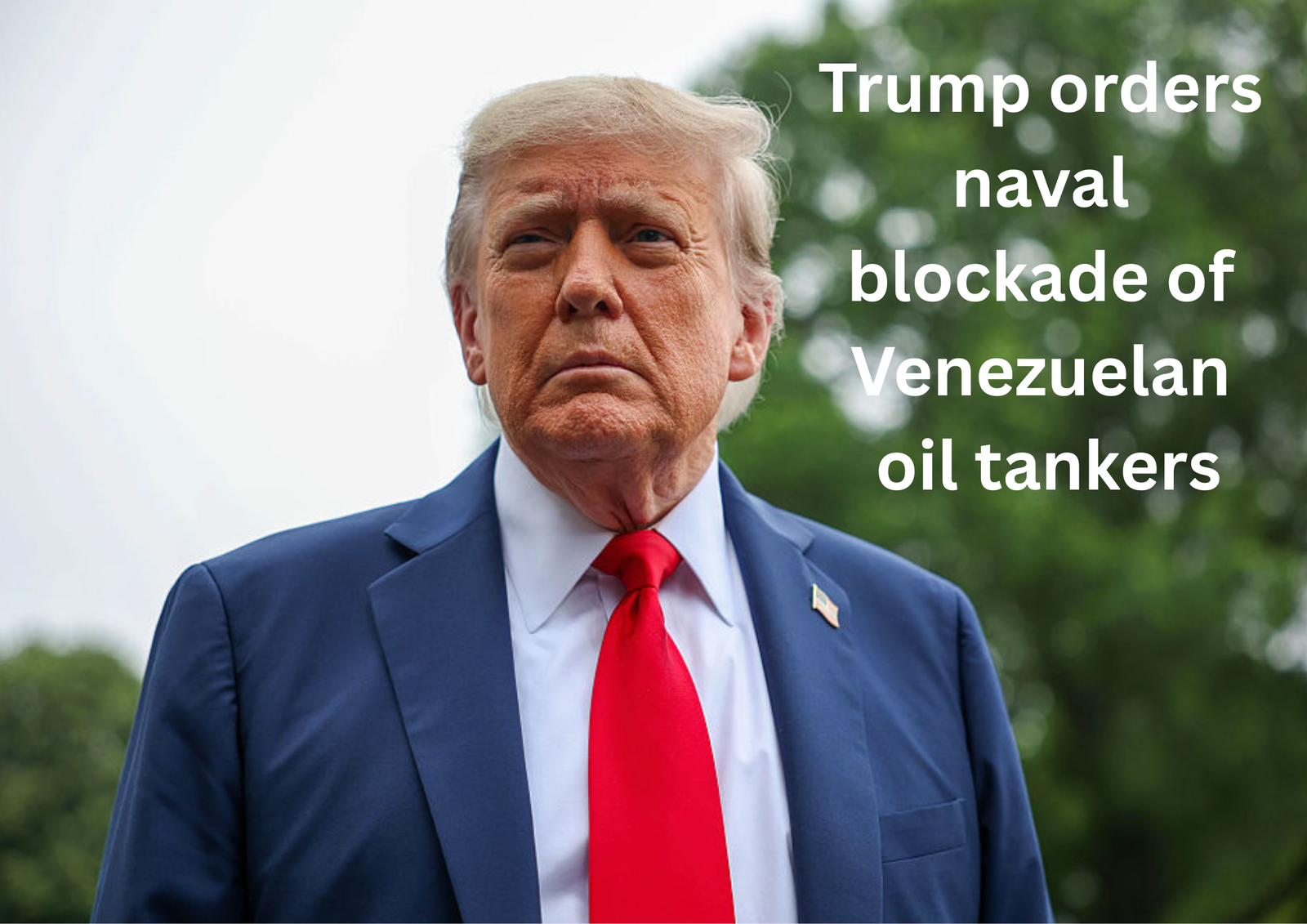
The United States sharply intensified its confrontation with Venezuela this week after President Donald Trump announced a sweeping maritime blockade targeting sanctioned oil shipments and formally labeled the Venezuelan government a Foreign Terrorist Organization. The move represents one of the most aggressive actions Washington has taken against Caracas in decades, signaling a major escalation in an already tense geopolitical standoff.
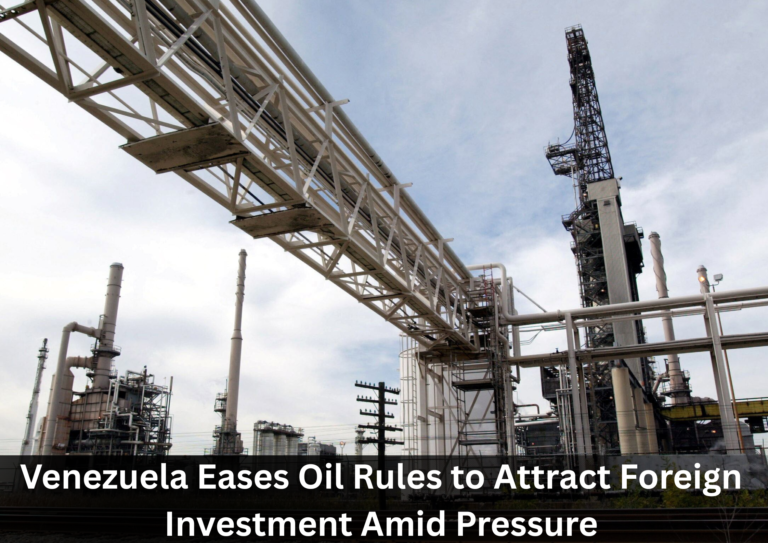
The announcement was made late Tuesday, when President Trump declared that all oil tankers linked to sanctioned Venezuelan exports would be barred from entering or leaving the country. In the same statement, the administration designated President Nicolás Maduro’s government as a terrorist entity, a classification that significantly expands U.S. legal authority to enforce penalties and seize assets.
U.S. officials framed the decision as a response to what they described as long-standing criminal activity by Venezuela’s leadership. The administration accused the Maduro government of using oil revenues to support international crime, including drug trafficking, human smuggling, and organized violence. Officials also reiterated claims that American-linked assets had been unlawfully taken by the Venezuelan state.
The blockade announcement follows a series of recent enforcement actions in the Caribbean. Earlier this month, U.S. authorities seized an oil tanker operating off Venezuela’s coast, alleging that the vessel was part of a sanctions-evasion network transporting restricted oil supplies. The tanker, officials said, had engaged in deceptive shipping practices designed to obscure the origin and destination of its cargo.
According to U.S. officials, such vessels are part of a broader fleet often referred to as “ghost ships,” which allegedly rely on tactics such as flag-switching, disabled tracking systems, and ship-to-ship transfers at sea. These methods, authorities claim, allow sanctioned oil to reach global markets despite international restrictions.
In parallel with maritime enforcement, the U.S. military has stepped up interdiction operations in the region. Since early autumn, American forces have conducted multiple actions against suspected drug-trafficking routes near Venezuelan waters. Officials say these efforts are aimed at disrupting narcotics flows believed to be connected to criminal organizations operating with state protection.
The Venezuelan government responded with strong condemnation, rejecting the blockade and terrorist designation as unlawful and politically motivated. In official statements, Caracas accused Washington of attempting to seize national resources and undermine Venezuela’s sovereignty. Venezuelan leaders have long argued that U.S. sanctions are designed to cripple the country’s economy rather than promote democratic reforms.
International reaction has been mixed. Some U.S. allies have expressed concern about rising tensions in the Caribbean and the potential impact on global energy markets. Venezuela possesses some of the world’s largest proven oil reserves, and any disruption to its exports could further strain already volatile supply chains.
Analysts note that the designation of a sitting government as a terrorist organization is highly unusual and carries far-reaching consequences. The classification allows for broader financial restrictions and increases the legal risks for foreign companies and governments that maintain dealings with Caracas.
Military experts also point to the growing U.S. naval presence in the region as a significant signal. Recent deployments suggest Washington is prepared to enforce the blockade if challenged, raising the stakes for any attempt to bypass restrictions.
While the administration has framed the measures as necessary to combat crime and protect national interests, critics warn that the actions could provoke retaliation and deepen regional instability. Diplomatic observers say the coming weeks will be critical in determining whether the pressure campaign forces negotiations or pushes relations closer to open confrontation.
For now, the announcement underscores a clear message from Washington: the United States is prepared to use its economic and military leverage to isolate Venezuela and tighten enforcement against what it views as persistent violations of international norms.