

Hamas has acknowledged that one of its top military commanders was killed in an Israeli airstrike in Gaza, an incident the group says could undermine the fragile ceasefire in place since October.
According to Hamas officials, Raed Saad, a senior commander within the group’s armed wing, died on Saturday when a missile struck a vehicle in Gaza. Three other people traveling with him were also killed. The confirmation came during a televised address by Khalil al-Hayya, a senior Hamas leader based outside Gaza and a key figure in ceasefire negotiations. He described the strike as one of the most significant targeted killings since the truce began.
Al-Hayya accused Israel of repeatedly breaching the ceasefire agreement and warned that such actions risk derailing the deal entirely. He urged international mediators to intervene, calling on the United States to ensure that the terms of the truce are upheld by all parties.
In a separate statement, the Qassam Brigades, Hamas’s military wing, said Saad was killed alongside several fellow fighters. The group stated that a successor had already been appointed and emphasized that the killing would not alter its broader strategy.
The Israeli military said Saad was a senior figure responsible for weapons development and for rebuilding Hamas’s military capabilities. An Israeli defense official described him as a central figure in the group’s arms production efforts and linked him to planning past attacks against Israel, including the October 2023 assault that sparked the latest war.
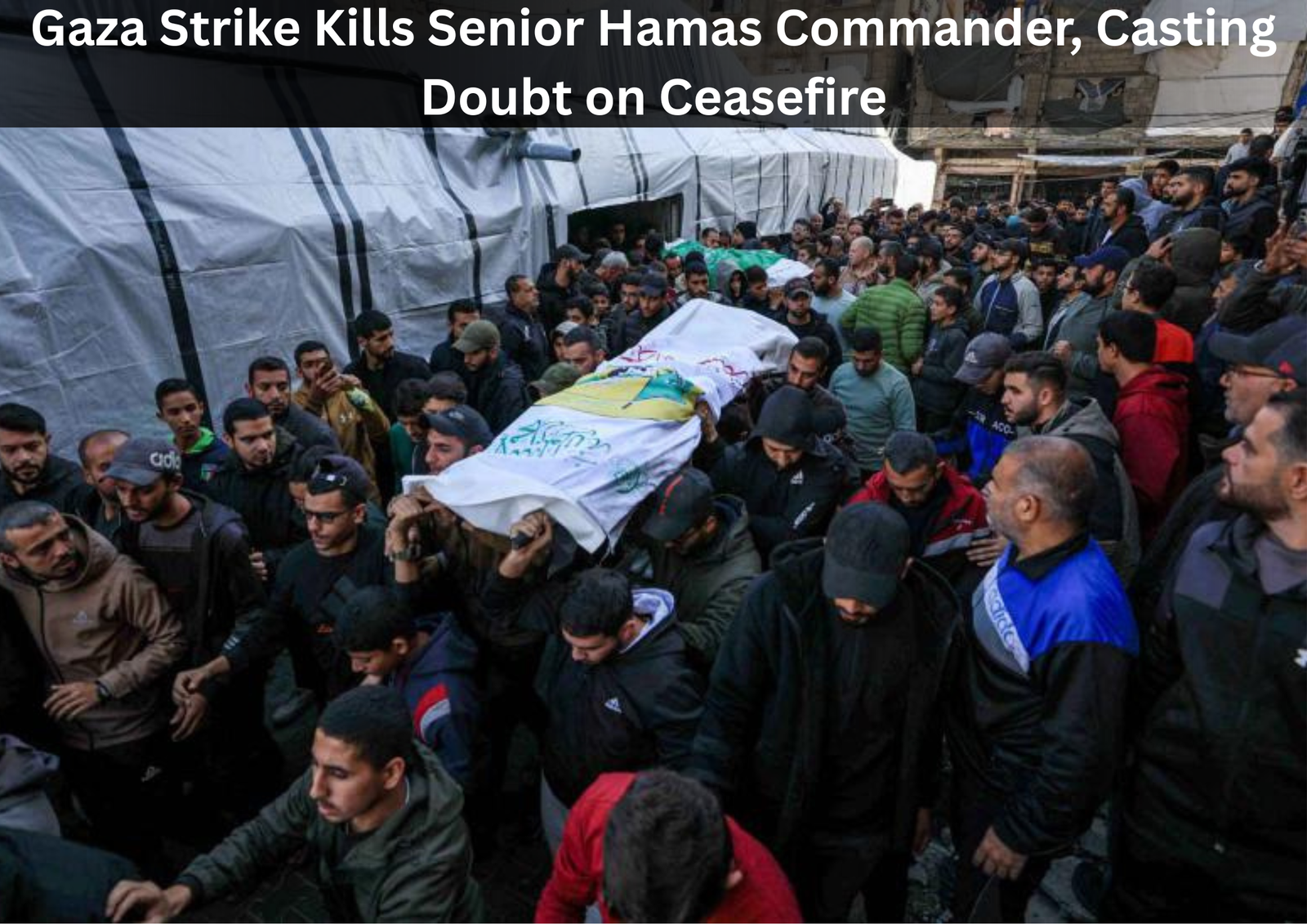
On Sunday, large crowds gathered in central Gaza City for funeral processions honoring Saad and the others killed in the strike. Coffins draped in green flags were carried through the streets in one of the most visible public rallies by Hamas supporters since the ceasefire took effect.
The killing comes at a sensitive moment, as talks over the next phase of the truce have stalled. The existing agreement envisions major changes to Gaza’s security arrangements, including the possible deployment of an internationally backed stabilization force and discussions over the future of armed groups in the territory. Hamas leaders have rejected full disarmament, saying they would only consider limited measures such as storing weapons during the ceasefire period.
Tensions were further heightened by a separate shooting in central Gaza, where a senior officer in a Hamas-run internal security service was killed. Gaza authorities blamed collaborators acting on Israeli instructions, while an anti-Hamas group operating from Israeli-controlled areas claimed responsibility.
As negotiations remain deadlocked, Israel continues to demand the complete disarmament of Hamas and an end to its rule in Gaza. Hamas, for its part, insists it will not surrender its weapons and calls for a full Israeli withdrawal from the territory. With both sides holding firm, the future of the ceasefire remains uncertain as regional and international actors push to prevent a return to full-scale fighting.