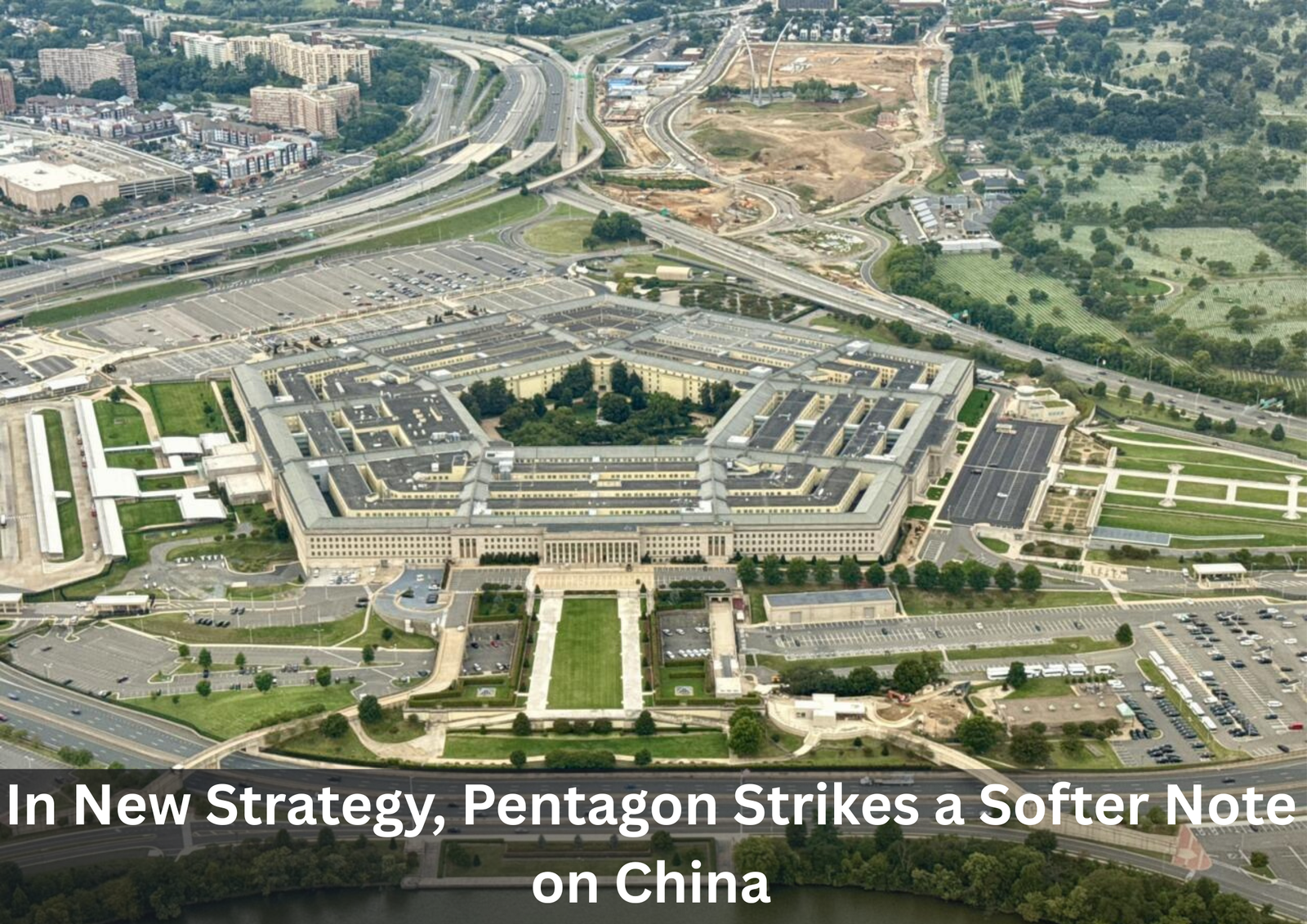
The U.S. Department of Defense has released its 2026 National Defense Strategy, signaling a major change in how Washington defines its global security priorities. Unlike previous strategies that centered heavily on China as the dominant strategic rival, the new document places the protection of the U.S. homeland and the Western Hemisphere at the top of the national security agenda.
The 34-page strategy reflects a shift toward what Pentagon officials describe as a more pragmatic and interest-driven approach to defense planning. Rather than framing U.S. security around broad global leadership ambitions, the strategy emphasizes concrete national interests, arguing that past administrations often overextended American military commitments.
A Departure from Previous Defense Frameworks
Earlier defense strategies released in 2018 and 2022 identified China’s expanding military and economic influence as the primary long-term challenge to U.S. security. The new strategy moves away from that framing, criticizing earlier post–Cold War policies for what it characterizes as unrealistic expectations about global cooperation and shared values.
The Pentagon now argues that U.S. security planning should avoid assuming responsibility for stabilizing every region of the world. Instead, the strategy focuses on protecting areas deemed vital to American economic and strategic interests, particularly within the Western Hemisphere.
Focus on the Western Hemisphere
Under the new framework, defending access and influence over key geographic areas such as the Panama Canal, the Gulf of Mexico, and parts of the Arctic receives heightened attention. The document states that the United States will no longer allow rival powers to gain strategic leverage in these regions, which are viewed as essential to trade, energy security, and military mobility.
Europe remains an important partner, but the strategy notes that its share of global economic power is declining relative to other regions. As a result, European nations are encouraged to take primary responsibility for managing security challenges closer to their borders.
Russia is described as a continuing concern, particularly for NATO’s eastern members, but the document stops short of portraying Moscow as an existential threat. Instead, it labels Russia a long-term but manageable risk that regional allies are increasingly capable of addressing.
A Softer Tone Toward China
One of the most notable changes in the 2026 strategy is its language on China. Rather than emphasizing confrontation or dominance, the document states that U.S. policy aims to prevent conflict while protecting American interests. The Pentagon stresses that the goal is stability achieved through strength and deterrence, not escalation.
The strategy does not directly reference Taiwan, a departure from earlier documents, and instead focuses on building defensive capabilities across the Pacific to discourage unilateral changes to the regional balance of power. Officials involved in drafting the strategy have acknowledged that internal debates over how to characterize China contributed to delays in its release.
Greater Expectations for Allies
Another central theme of the new strategy is burden-sharing. The Pentagon argues that many U.S. allies have relied too heavily on American military support and are now expected to invest more in their own defense capabilities.
This approach is particularly evident in the strategy’s discussion of the Korean Peninsula. While reaffirming its alliance with South Korea, the United States outlines a more limited role in deterring North Korea, stating that Seoul is well positioned to take primary responsibility with continued U.S. support. Notably, the document does not restate previous commitments to the complete denuclearization of North Korea.
International Reactions and Broader Context
The release of the strategy aligns closely with recent statements from President Donald Trump, who has repeatedly called on allies to contribute more to collective defense arrangements. His remarks have drawn responses from international leaders, some of whom warn that the global security environment is entering a period of greater uncertainty.
The strategy also follows several assertive U.S. actions over the past year, including operations in Latin America and increased diplomatic pressure related to strategic territories.
Overall, the 2026 National Defense Strategy marks a clear recalibration of U.S. defense policy. By narrowing its focus and redefining alliance expectations, the Pentagon signals a future approach centered less on global dominance and more on regional security and national interests.
Trump’s Winter Storm Remarks Spark Renewed Climate Debate as Scientists Push Back-read this in-depth blog for full context, expert responses, and insights you won’t want to miss.