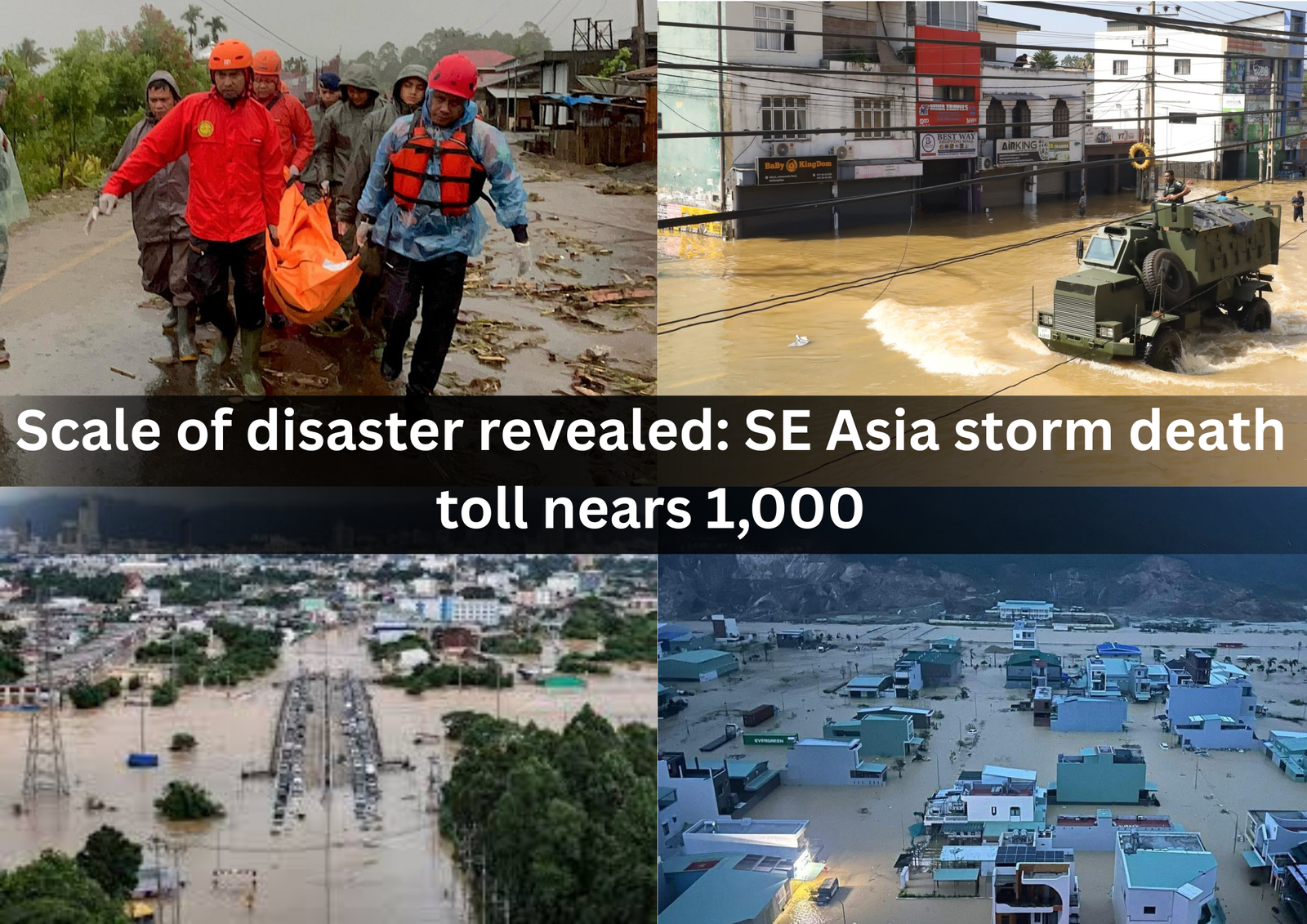
Southeast Asia is confronting one of its most destructive natural disasters in recent years, as extreme flooding and landslides triggered by powerful monsoon rains and a severe tropical system have left nearly 1000 people dead across multiple countries. Millions more are struggling with displacement, infrastructure collapse, and widespread power outages as governments rush to respond.
Indonesia Hit Hardest
Indonesia is bearing the brunt of the catastrophe. Officials from the national disaster agency reported that at least 604 lives have been lost, while more than 320 residents remain unaccounted for. Floodwaters and landslides have engulfed neighborhoods in Java, Sumatra, and Sulawesi, forcing over one million people to evacuate.
Military units have been deployed to assist exhausted rescue teams, many of whom have been navigating submerged towns, unstable slopes, and debris-filled streets. Tens of thousands of homes are damaged, leaving families with little more than temporary shelters.
Sri Lanka Declares Emergency as Rains Intensify
Sri Lanka is also facing an escalating emergency. Torrential downpours-described by meteorologists as the most intense in decades-have caused deadly landslides and flash floods. Authorities confirmed at least 366 deaths, with 99 residents still missing and over 150,000 people displaced. The Sri Lankan military has joined evacuation efforts, using boats and heavy equipment to reach stranded communities.
Regional Impact Spreads Across Multiple Countries
The storm system has carved a destructive path across Thailand, Malaysia, and the Philippines as well:
- Thailand has recorded 176 deaths, with the southern provinces still facing significant flooding.
- Malaysia earlier reported 54 fatalities, many resulting from rapid flooding in rural regions.
- Parts of the Philippines continue to battle rising waters and road closures.
According to regional tallies compiled from national agencies, the overall death toll across Southeast Asia is nearing 1000.
Infrastructure Struggles Under Massive Damage
Roads, bridges, and communication lines have collapsed in numerous locations. Entire villages in West Java, including the hard-hit town of Cianjur, remain partially submerged. Power outages and blocked access routes are slowing rescue and relief operations.
Emergency teams warn that the number of casualties could still climb as they gain access to remote areas cut off since the storm began.
A Growing Reminder of Climate Vulnerability
Climate scientists say the magnitude of the disaster reflects a pattern of increasingly severe weather events affecting vulnerable regions across Asia. Rising global temperatures, they note, have intensified monsoon cycles and increased the likelihood of destructive storms.
Governments across Southeast Asia are now facing renewed pressure to strengthen disaster preparedness and long-term climate resilience as communities begin the long journey toward recovery.