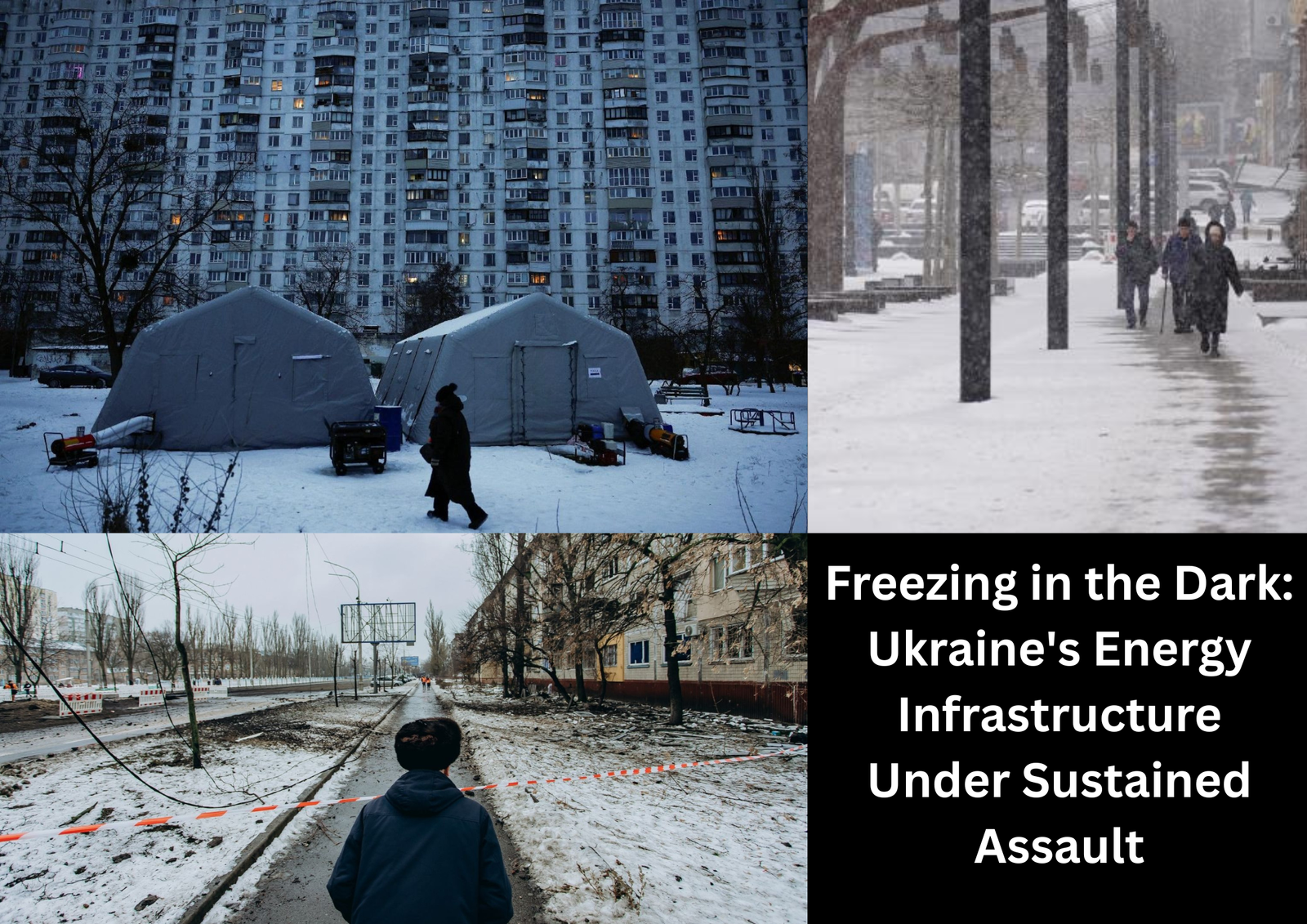
As winter tightens its grip on Ukraine, millions of civilians are confronting prolonged power outages and heating failures following repeated strikes on the country’s energy infrastructure. With nighttime temperatures plunging far below freezing, daily life in major cities has become a test of endurance, adaptability, and collective resolve.
Kyiv has been among the hardest hit. City officials report that several waves of attacks throughout January disrupted heating and electricity for thousands of apartment buildings, many of which were affected more than once. Residents describe entire neighborhoods falling into darkness for hours each evening, as daylight fades early and power restoration remains uncertain.
Inside homes, the cold has become impossible to ignore. Families bundle up in winter coats indoors, while frost creeps across windowpanes and plumbing systems strain under the pressure. In newer residential complexes, heating systems reliant on electricity have failed entirely, leaving apartments exposed to subzero conditions. For people with medical needs or mobility devices that require power, the outages have created additional hardship.
In response, civilians have turned to improvised solutions to stay warm. Social media platforms are filled with tips on conserving heat, including insulating single rooms, using camping equipment indoors, and relying on hot water bottles to maintain warmth overnight. Outdoor gear typically reserved for hiking or travel has become essential household equipment, quickly selling out in local stores.
Despite the challenges, scenes of solidarity are visible across cities. Cafés and small businesses equipped with generators are welcoming neighbors seeking warmth, internet access, or a place to charge devices. In some districts, residents have gathered outdoors to cook meals together and share hot drinks, transforming moments of crisis into communal support.
The strain on Ukraine’s economy is substantial. Government officials estimate that restoring damaged energy facilities will require billions of dollars and months of labor. Utility workers continue to operate in dangerous and freezing conditions to repair substations, pipelines, and transmission lines. The risks of this work were underscored when a senior energy official lost his life while responding to damage at a power facility earlier this month.
For many Ukrainians, the winter attacks carry deep historical significance. Comparisons are being drawn to past periods when suffering was imposed through deprivation, reinforcing the perception that cold and darkness are being used as tools of pressure against civilians. War analysts note that targeting essential services during winter is intended to weaken morale, even when military objectives remain unchanged.
Yet, across the country, signs of defiance persist. People continue reporting to work after days without power, cultural events are held using generators, and communities organize aid for the most vulnerable. The prevailing mood is not surrender, but determination.
As one Kyiv resident put it, the hardship has only strengthened resolve: attempts to extinguish light and warmth have instead fueled a shared understanding of what is at stake-and why endurance remains essential.
Don’t miss the full story on “Israel Confirms Recovery of Final Hostage Remains from Gaza as Peace Talks Move Forward”-read the blog for deeper insight as diplomacy and tragedy intersect.