


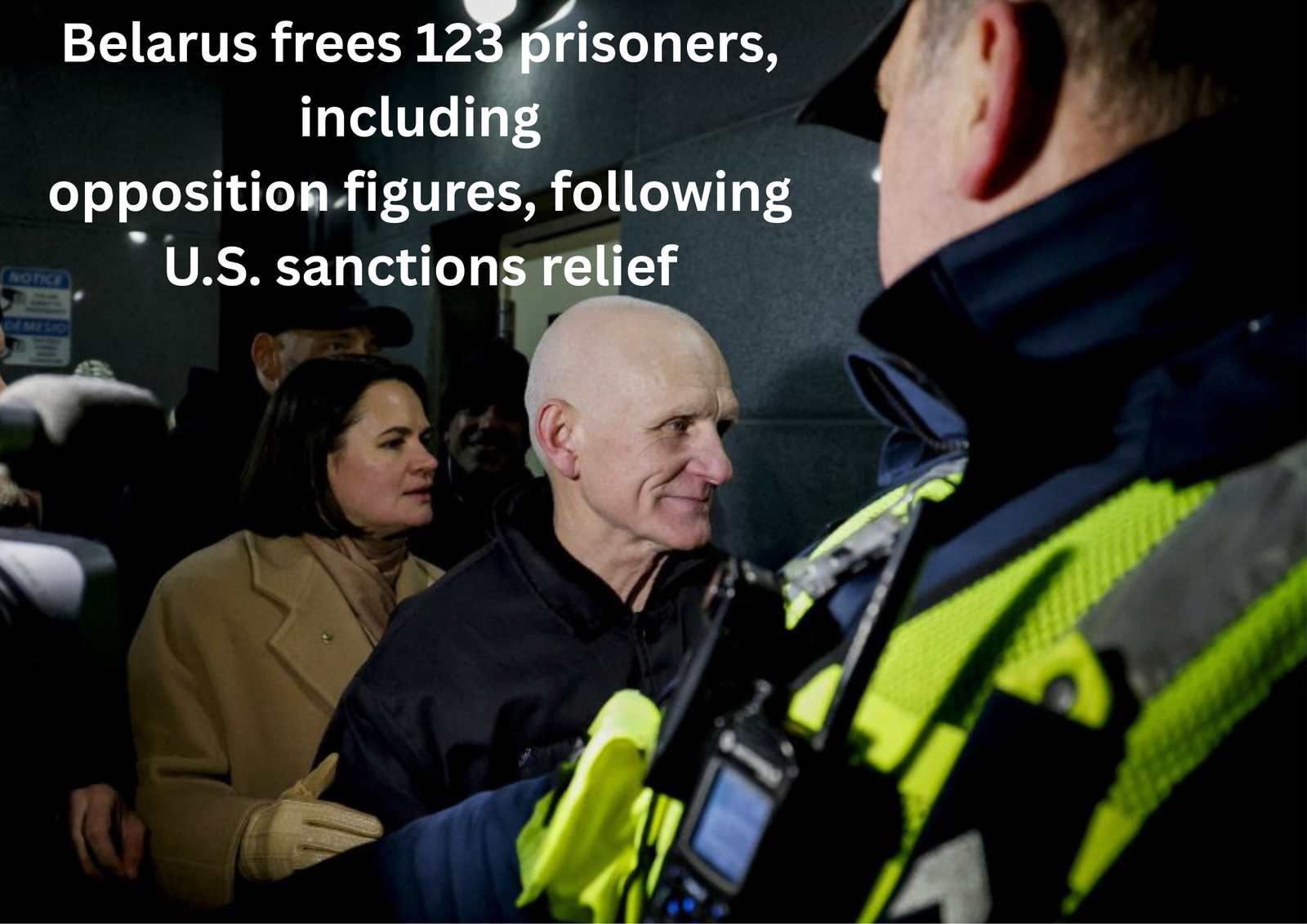
Belarusian authorities on Friday released 123 detainees widely recognized by Western governments and rights organizations as political prisoners, marking a rare and significant development in the country’s long-running standoff with the West. The move followed a negotiated arrangement with the United States that included the partial lifting of economic sanctions imposed on Minsk.
The releases, carried out over the course of the day, included some of the most prominent figures jailed after Belarus’s contested 2020 presidential election. Among those freed were Nobel Peace Prize recipient Ales Bialiatski, a veteran human rights advocate, and Maria Kolesnikova, a leading opposition figure whose arrest became a symbol of resistance to President Alexander Lukashenko’s rule.
Bialiatski, founder of the Viasna Human Rights Centre, had been serving a decade-long sentence on charges related to taxes. International observers and legal experts consistently described the case as politically motivated, noting that his conviction followed years of documenting abuses by the Belarusian state. He was awarded the Nobel Peace Prize in 2022 while still behind bars.
Kolesnikova, a central organizer of the mass protests that erupted after the 2020 election, had been sentenced to 11 years in prison. Her detention drew global attention after she publicly destroyed her passport to prevent security services from forcing her into exile, a gesture that cemented her status as one of the movement’s most defiant voices.
According to Belarusian rights monitors, the broader list of those released included journalists, civil society activists, and individuals detained during demonstrations or related crackdowns over the past five years. Family members gathered outside detention facilities in Minsk as the first group was released in the morning, with additional detainees freed in subsequent stages later in the day.
U.S. officials confirmed that the prisoner release was linked to sanctions relief, describing the agreement as conditional and based on verified actions taken by Belarus. While Washington did not disclose the full scope of the measures eased, officials characterized the changes as substantial and emphasized that further steps by Minsk would be required for additional normalization.
President Lukashenko acknowledged the negotiations publicly, framing the releases as a reciprocal act following Washington’s decision on sanctions. He portrayed the move as a pragmatic response to diplomatic engagement rather than a shift in domestic policy.
In Washington, the White House welcomed the detainees’ freedom while reiterating concerns over Belarus’s human rights record. A senior administration official said the United States would continue to press Minsk on political repression and civil liberties, even as it recognized the humanitarian significance of the releases. U.S. authorities also indicated that those freed would be permitted to seek relocation abroad if they feared renewed persecution.
Reactions among opposition figures reflected a mix of relief and caution. Speaking briefly after her release, Kolesnikova signaled continued resolve, telling supporters that the broader struggle for political change was far from over.
Analysts say the agreement highlights both the leverage and the limits of sanctions in dealing with authoritarian governments. While the release of high-profile detainees is being widely welcomed, rights groups warn that many others remain imprisoned and that lasting improvement will depend on sustained international pressure and internal reform.
For now, the mass release stands as one of the most notable gestures by the Belarusian government in recent years, offering hope to families reunited while leaving open questions about the country’s political future.


