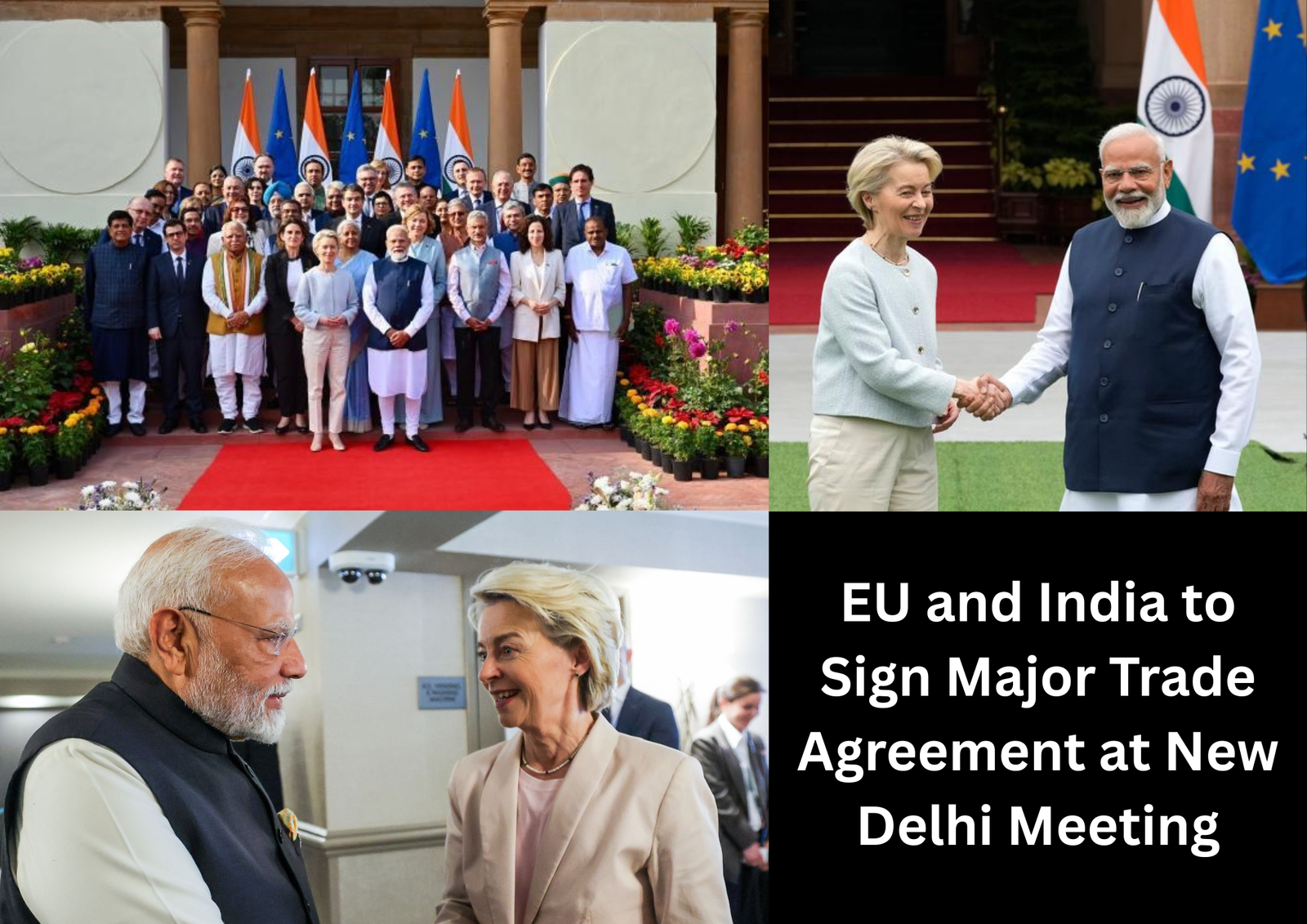
The European Union and India are preparing to formalize a long-awaited free-trade agreement during a high-level summit in New Delhi. The agreement marks a major step forward in economic and diplomatic relations between the two partners.
Senior EU leaders, including European Commission President Ursula von der Leyen and European Council President António Costa, are visiting India this week as part of the discussions. Their presence coincides with India’s Republic Day celebrations, highlighting the symbolic and strategic importance attached to the partnership.
Negotiations over the trade pact have stretched across several decades, but recent global political shifts have accelerated progress. Observers note that rising trade protectionism and tariff-driven policies from the United States have encouraged both the EU and India to deepen direct cooperation. European leaders have increasingly emphasized the need for diversified alliances and reduced dependence on any single global power.
For India, the agreement represents a significant economic milestone. Prime Minister Narendra Modi’s government views the deal as a pathway to expanded market access, increased investment, and long-term growth opportunities. From the EU’s perspective, India’s rapidly expanding economy offers a valuable strategic and commercial partner.
Beyond trade, the pact carries broader geopolitical weight. Analysts say the agreement sends a clear message that global influence is no longer limited to Washington or Beijing, as other major democracies build strong, independent alliances.
The final signing is expected to take place shortly after Republic Day ceremonies, underscoring the political commitment on both sides to usher in a new era of EU-India cooperation.
As Japan’s Last Giant Pandas Leave Ueno Zoo, Closing a Chapter in Cultural Exchange, uncover the full story behind this emotional farewell-read the complete blog for deeper insight and context.