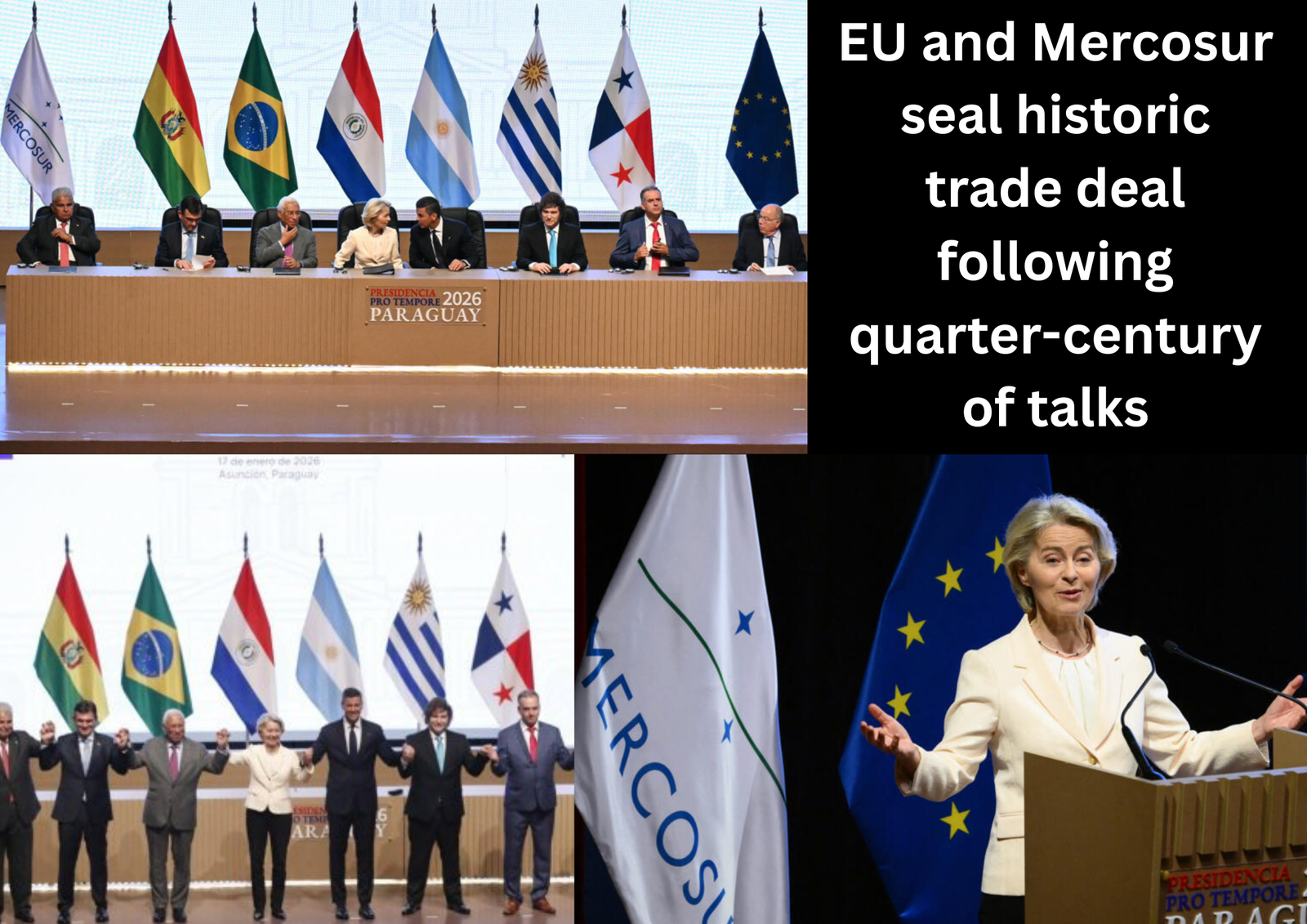
After years of stalled discussions, political friction, and repeated missed deadlines, the European Union and South America’s Mercosur bloc have finally concluded a sweeping free trade agreement. The long-awaited signing took place on Saturday in Paraguay’s capital, creating one of the world’s largest integrated trade areas covering over 700 million people and nearly one-third of global economic output.
The pact was confirmed by top EU officials including Commission President Ursula von der Leyen and European Council President Antonio Costa, alongside leaders from Argentina, Paraguay, Uruguay, and Brazil. Bolivia, which only recently joined Mercosur, attended the ceremony but is not yet formally part of the trade arrangement. Venezuela remains suspended from the bloc.
The announcement arrives at a time when many major powers are leaning toward protectionist policies. As the ceremony began, the United States unveiled a new set of tariffs targeting several European countries, underscoring the shifting nature of global trade diplomacy.
Von der Leyen used her remarks to highlight the political message behind the pact, saying Europe prefers “long-term partnerships built on fair trade rather than barriers and isolation.” Paraguayan President Santiago Peña echoed this sentiment, calling the deal a “clear sign that open and rules-based commerce can still thrive in a competitive global landscape.”
Trade Impact and Economic Scope
Under the agreement, duties on more than 90% of traded goods are expected to be lifted or phased out. European industrial and consumer goods – including vehicles, spirits, and dairy products – are positioned to gain easier access to South American markets. In exchange, agricultural products such as beef, poultry, sugar, grains, and soy will be granted expanded entry into Europe.
Negotiators settled on quotas for sensitive categories like beef and sugar, coupled with environmental requirements and financial support mechanisms for EU farmers to alleviate domestic concerns.
Political Challenges Ahead
Despite the jubilant signing ceremony, the deal is not fully enacted. It must still pass through the European Parliament and individual legislatures across the EU – considered the toughest barrier remaining. While approval in Mercosur countries is viewed as largely assured, resistance persists among some European farming groups and politicians wary of agricultural competition and environmental oversight.
EU Trade Commissioner Maroš Šefčovič said he would begin intensive consultations immediately, expressing confidence that ratification could be secured during the first half of 2026.
Brazilian President Luiz Inácio Lula da Silva, a long-time supporter of the agreement, notably did not attend the signing. His absence followed a diplomatic flare-up last month when European states postponed a planned event in Brazil to push for additional concessions on farm imports and sustainability provisions.
Argentina’s libertarian President Javier Milei – who once dismissed Mercosur as an “economic prison” – characterized the accord as evidence that market openness offers a path to prosperity. “Closing off an economy has never produced growth,” he said during his remarks.
Geopolitical Ripples
Analysts noted that the pact sends a distinct geopolitical message. By expanding connections with South America’s resource-rich economies, the EU strengthens its position in a region where both China and the United States have been expanding influence. Policy observers also pointed out ongoing debates over European regulatory expectations, which some developing nations view as intrusive or paternalistic.
Still, diplomats involved in the process called the agreement a symbol of renewed commitment to multilateral trade frameworks at a moment when such cooperation appears increasingly fragile.
After more than 25 years of negotiations, the agreement now enters its most politically sensitive stage – one that will determine whether the landmark pact becomes a lasting pillar of global commerce or another unrealized ambition of international diplomacy.
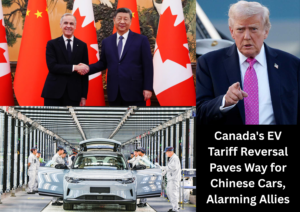
Canada’s EV Tariff Shift Opens Door to Chinese Imports, Stirring Domestic and U.S. Reactions – a development packed with implications that you should definitely read about in my other blog.