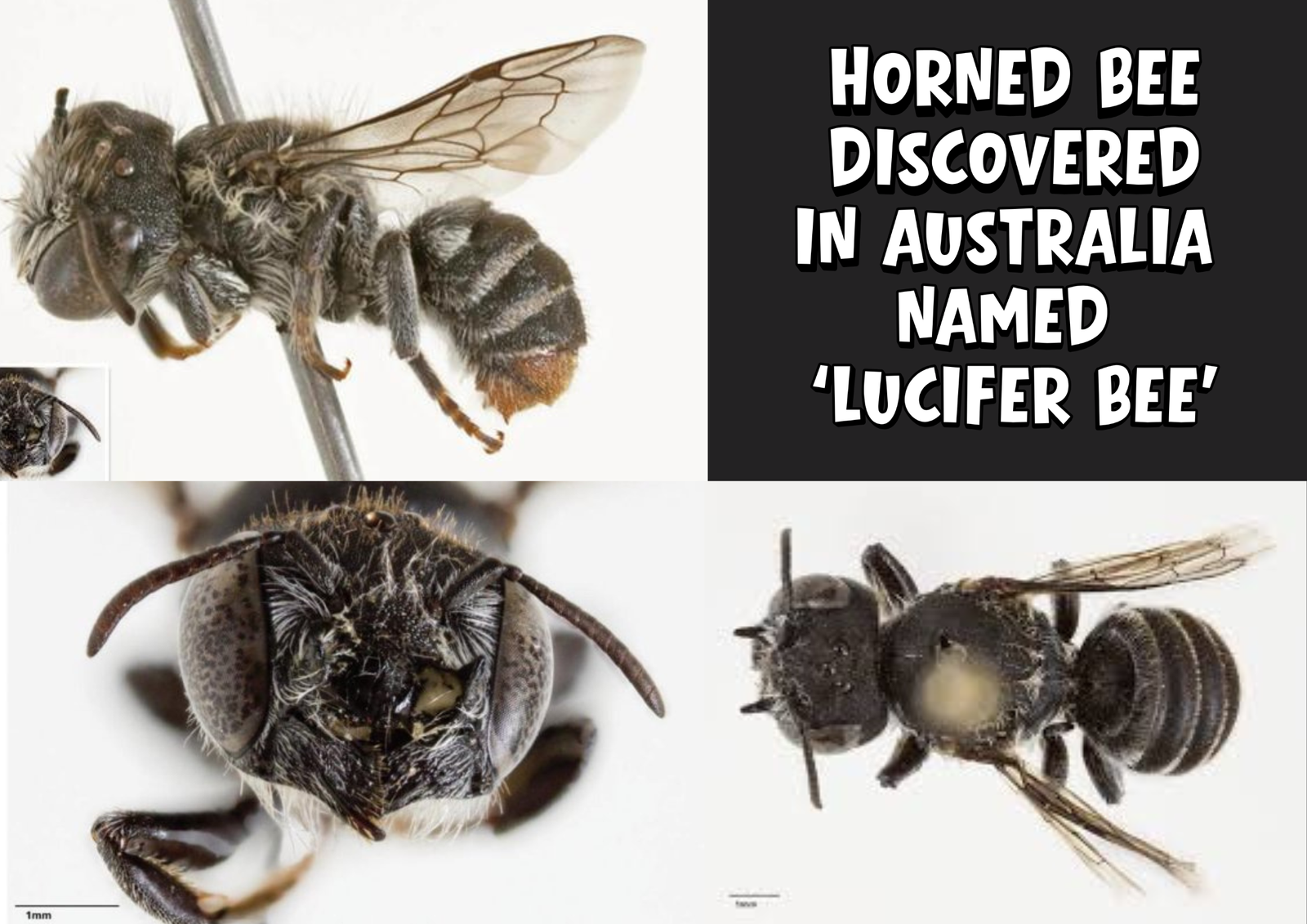
In a remarkable discovery, researchers in Western Australia have identified a new species of bee unlike any seen before-featuring tiny, horn-like structures that have earned it the nickname “Lucifer bee.”
The species was found by scientists from Curtin University’s School of Molecular and Life Sciences during a biodiversity study. The lead researcher, Dr. Kit Prendergast, described the find as “a rare glimpse into nature’s creativity,” highlighting how even familiar environments can hold unseen species.
Unlike honeybees that live in colonies, the Lucifer bee is solitary and nests in the ground. Measuring roughly the size of a housefly, the females display two small, dark horns on the lower part of their face, a feature believed to help them dig burrows into compact soil.
Researchers revealed that the newly identified bees were found in Western Australia’s Goldfields region and are distinguished by their peculiar horn-shaped facial features, which inspired the species name Megachile lucifer. The term “Lucifer,” meaning “light-bringer” in Latin, was chosen both for its linguistic roots and as a nod to the insect’s striking, almost devilish look, according to a statement from Curtin University.
Dr. Prendergast noted that such discoveries serve as a reminder of the vast number of pollinators still undocumented. “Even in well-explored habitats, we’re finding creatures that defy expectations,”
Scientists stress that native bees are vital to maintaining healthy ecosystems, as they ensure the pollination of native flora. Conservationists hope that identifying these lesser-known species will bring greater attention to the need for habitat protection and continued biodiversity research.
The discovery of the so-called “Lucifer bee” not only enriches scientific understanding but also reinforces the message that nature continues to hold mysteries waiting to be uncovered-sometimes, even with a devilish twist.