

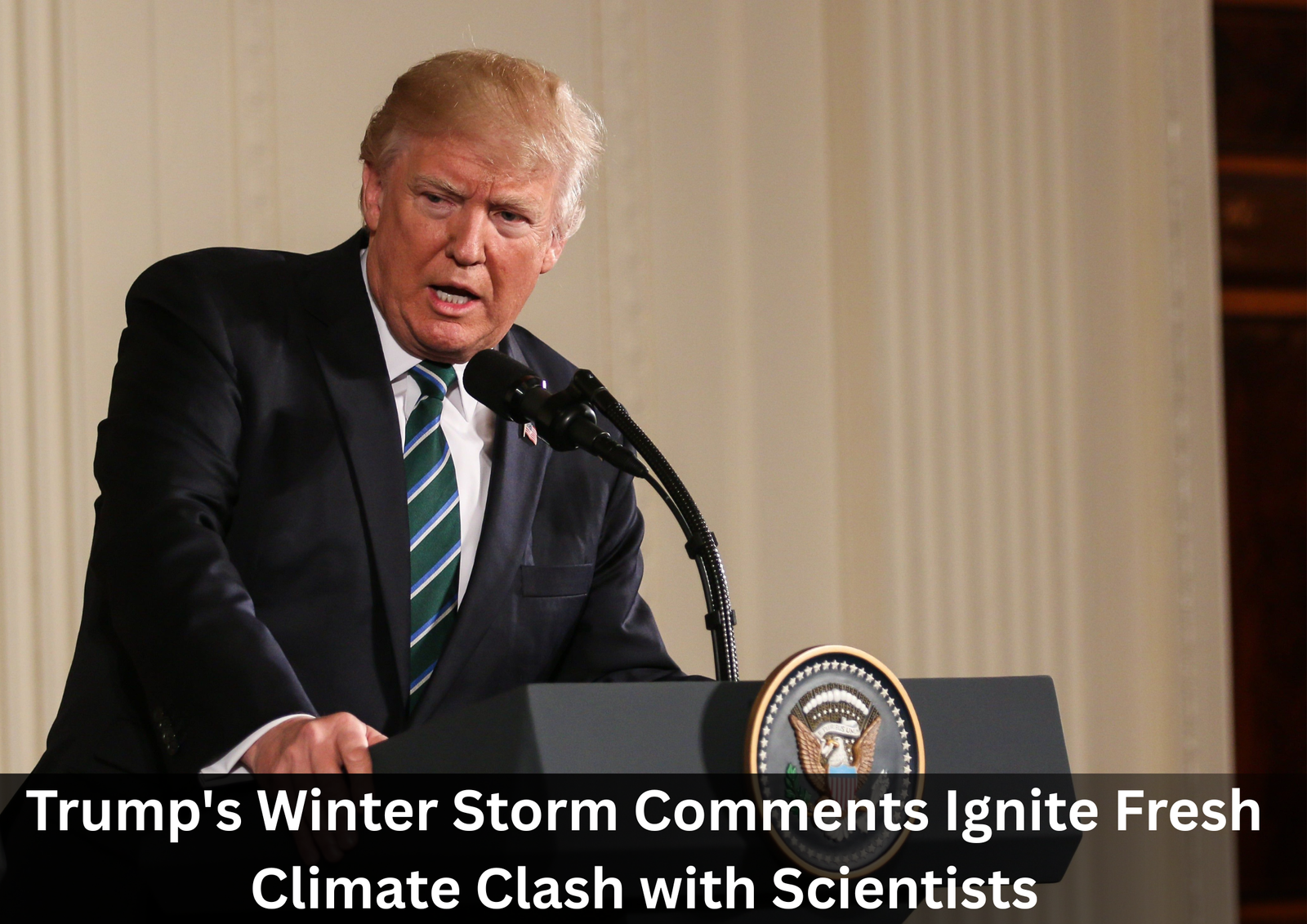
A powerful winter storm forecast to sweep across much of the United States has reignited a familiar national debate after President Donald Trump questioned the concept of climate change, citing plunging temperatures and widespread snowfall.
In a post shared Friday on his social media platform, Truth Social, the president referenced an incoming cold wave expected to affect dozens of states, asking rhetorically how such extreme cold aligns with global warming claims. The remark quickly drew attention, as similar statements from Trump in the past have sparked strong reactions from scientists and environmental experts.
A Storm With Widespread Impact
Meteorologists warn that the developing storm system could bring heavy snow, ice accumulation, and dangerously low temperatures across large portions of the country. The National Weather Service has issued multiple alerts, cautioning that prolonged exposure could lead to frostbite and hypothermia, while hazardous travel conditions may disrupt daily life.
Forecasts indicate that major population centers from the central Plains through the Northeast could see significant snowfall, while parts of the South may experience rare freezing conditions. Emergency declarations have already been issued in several states as officials prepare for possible power outages, road closures, and strained emergency services.
Scientists Clarify Weather vs. Climate
Climate researchers were quick to respond to the president’s comments, emphasizing that individual weather events do not disprove long-term climate trends. Experts explain that weather refers to short-term atmospheric conditions, while climate reflects patterns observed over decades.
According to climatologists, the presence of a severe winter storm does not contradict the broader evidence that the planet is warming. In fact, long-term data shows that global average temperatures have continued to rise, even as extreme cold events still occur episodically.
Why Cold Extremes Still Happen in a Warming World
Researchers note that climate change can influence winter weather in complex ways. One area of focus is the polar vortex – a large system of cold air that typically remains contained near the Arctic. When this system weakens or becomes unstable, frigid air can spill southward into North America.
At the same time, a warmer atmosphere is capable of holding more moisture, increasing the potential for heavier snowfall when temperatures drop below freezing. This combination can lead to intense winter storms even as overall global temperatures trend upward.
Long-Term Trends Tell a Different Story
Despite the immediate cold, historical records show that winters in the United States have generally become milder over the past several decades. Data from multiple climate research organizations indicate that cold snaps are shorter than they were in the mid-20th century, while record high temperatures now outnumber record lows by a wide margin.
Scientists also point out that while the eastern U.S. may be experiencing severe winter conditions, other regions are simultaneously reporting unusually warm winter temperatures, highlighting the uneven effects of a changing climate.
A Repeated Political Flashpoint
President Trump has long expressed skepticism toward climate science and has prioritized fossil fuel development during his time in office. His latest comments follow years of similar statements questioning global warming and criticizing renewable energy initiatives.
As the storm approaches and millions of Americans brace for hazardous conditions, experts stress that public focus should remain on safety and preparedness. Meanwhile, the broader discussion surrounding climate change continues to reflect a deep divide between political rhetoric and scientific consensus.
Looking Ahead
While the winter storm poses immediate challenges, scientists say it also serves as a reminder of the growing complexity of weather patterns in a warming world. Extreme cold, heavier snowfall, and unusual seasonal shifts are increasingly viewed as part of a broader trend tied to long-term climate change – not evidence against it.
As recovery efforts unfold, the debate over climate science is likely to persist, underscoring the ongoing tension between politics, public perception, and decades of environmental research.
Don’t miss the full details behind “Five Arrested After Shooting Injures Indiana Judge and Wife”-read this blog to understand the motives, arrests, and unfolding investigation.