
A fatal confrontation between federal immigration officers and a U.S. citizen in Minneapolis has ignited an unexpected political firestorm, drawing criticism not only from Democrats but also from prominent Republican lawmakers, gun rights groups, and leaders in the technology sector.
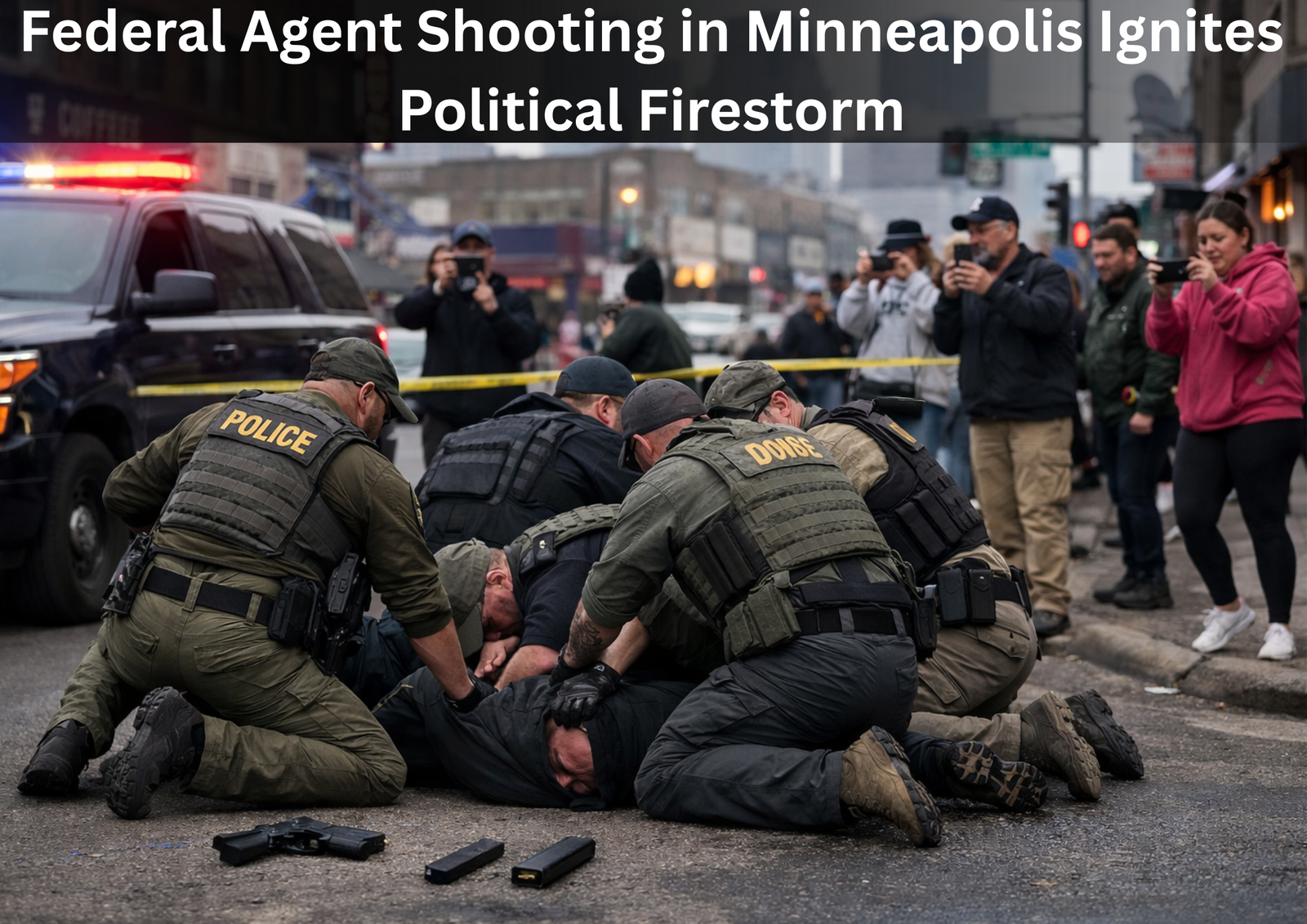
The incident, which occurred over the weekend, involved federal Border Patrol agents and resulted in the death of a 37-year-old healthcare worker who legally carried a firearm and had no prior criminal history. Video footage that later surfaced has raised serious questions about the official version of events and intensified calls for accountability at the highest levels of government.
Conflicting Accounts and Public Scrutiny
According to initial statements from federal authorities, the victim was portrayed as posing an imminent threat to officers. Senior administration officials publicly characterized the encounter as a defensive action against a dangerous individual. However, independently recorded videos tell a more complicated story.
The footage appears to show the man holding a mobile phone when agents approached him. He was later restrained on the ground, and a firearm was removed from his waistband before shots were fired. The killing marked the second fatal shooting by federal immigration agents in Minneapolis within the same month, further escalating public concern.
As the videos circulated online, criticism mounted rapidly, particularly over the speed and intensity with which federal officials labeled the victim before an investigation had begun.
Rare Republican Dissent Emerges
What has made the episode especially notable is the sharp rebuke from within the Republican Party-an uncommon development on issues related to immigration enforcement.
Several Republican senators warned that aggressive rhetoric from federal leaders could undermine public trust. One senator described the initial statements as “premature,” cautioning that credibility is lost when conclusions are drawn before facts are established. Another lawmaker emphasized that attempting to preempt investigations damages both institutional integrity and long-term political standing.
Gun rights advocates, traditionally aligned with strong border enforcement, also voiced concern. Prominent conservatives argued that legally carrying a firearm should not automatically be treated as a criminal act, especially when no evidence of hostile intent is present. A major national gun advocacy organization issued a statement condemning attempts to justify lethal force based solely on firearm possession.
Broader Concerns Over Federal Tactics
Beyond the immediate tragedy, the shooting has fueled deeper debate about federal immigration operations within U.S. cities. Several Republican officials described the situation as alarming, pointing to potential gaps in training, oversight, and operational judgment.
A governor from the Midwest labeled the incident a “serious tragedy,” noting that public confidence in federal agencies depends on transparency and restraint. Others warned that repeated incidents risk eroding trust not only in immigration authorities but in law enforcement more broadly.
Privately, some GOP strategists have acknowledged concern that the fallout could weaken the party’s traditional advantage on law-and-order issues, especially if federal actions are perceived as reckless or politically motivated.
Political Consequences Accelerate
The political repercussions were swift. A Republican candidate in Minnesota abruptly suspended his gubernatorial campaign, citing growing fear among residents and calling the federal enforcement approach in the state deeply damaging.
At the national level, the White House appeared to recalibrate its stance. The president stopped short of endorsing the officer’s actions and announced a formal review. A new senior adviser with extensive border enforcement experience was appointed to oversee the situation in Minnesota, a move widely interpreted as an effort to contain the crisis and restore confidence.
Tech Industry Voices Join the Debate
The controversy also drew an unusually vocal response from the technology sector. Engineers, executives, and investors used social media and open letters to criticize the federal response, echoing activism seen during earlier immigration debates in past administrations.
Hundreds of tech workers signed a public statement demanding an end to contracts between technology firms and immigration enforcement agencies, arguing that such partnerships enable harmful practices. High-profile technology leaders condemned the shooting in blunt terms, calling for accountability and reform.
At the same time, the reaction highlighted a divide within the industry. While many employees spoke out, several top executives were in Washington engaging in policy discussions, underscoring the complex relationship between Silicon Valley and federal power.
Unusual Investigation Structure Raises Questions
The investigation itself has taken an unconventional path. Rather than a federal agency examining the actions of its own officers independently, a local county prosecutor announced plans to review the case for potential criminal liability. Meanwhile, a division within the Department of Homeland Security is conducting the federal inquiry, an arrangement critics say raises concerns about impartiality.
Notably, the FBI has not taken the lead role, a departure from typical cases involving potential federal misconduct. Legal experts suggest this layered approach could complicate accountability and prolong public uncertainty.
Congress Steps In as Funding Looms
Lawmakers in Congress have begun asserting oversight authority. The chairs of key Homeland Security committees in both chambers have requested testimony from senior leaders across multiple immigration agencies. Cabinet-level officials are also expected to face questioning in the coming weeks.
The controversy now threatens to spill into budget negotiations. Several senators have indicated they may withhold support for critical homeland security funding unless meaningful changes are made, raising the possibility of a partial government shutdown if no agreement is reached.
A Defining Moment Ahead
As investigations unfold and political pressure intensifies, the Minneapolis shooting has become a defining test for federal law enforcement accountability, inter-party unity, and the future direction of immigration policy.
Whether the administration can regain public trust-or whether the episode marks a lasting shift in the national conversation-may depend on how transparently and decisively leaders respond in the days ahead.
As the Vaccine Policy Debate Intensifies as U.S. Medical Organizations and CDC Take Divergent Paths, this in-depth blog reveals what’s changing, why it matters, and what readers need to know next.