
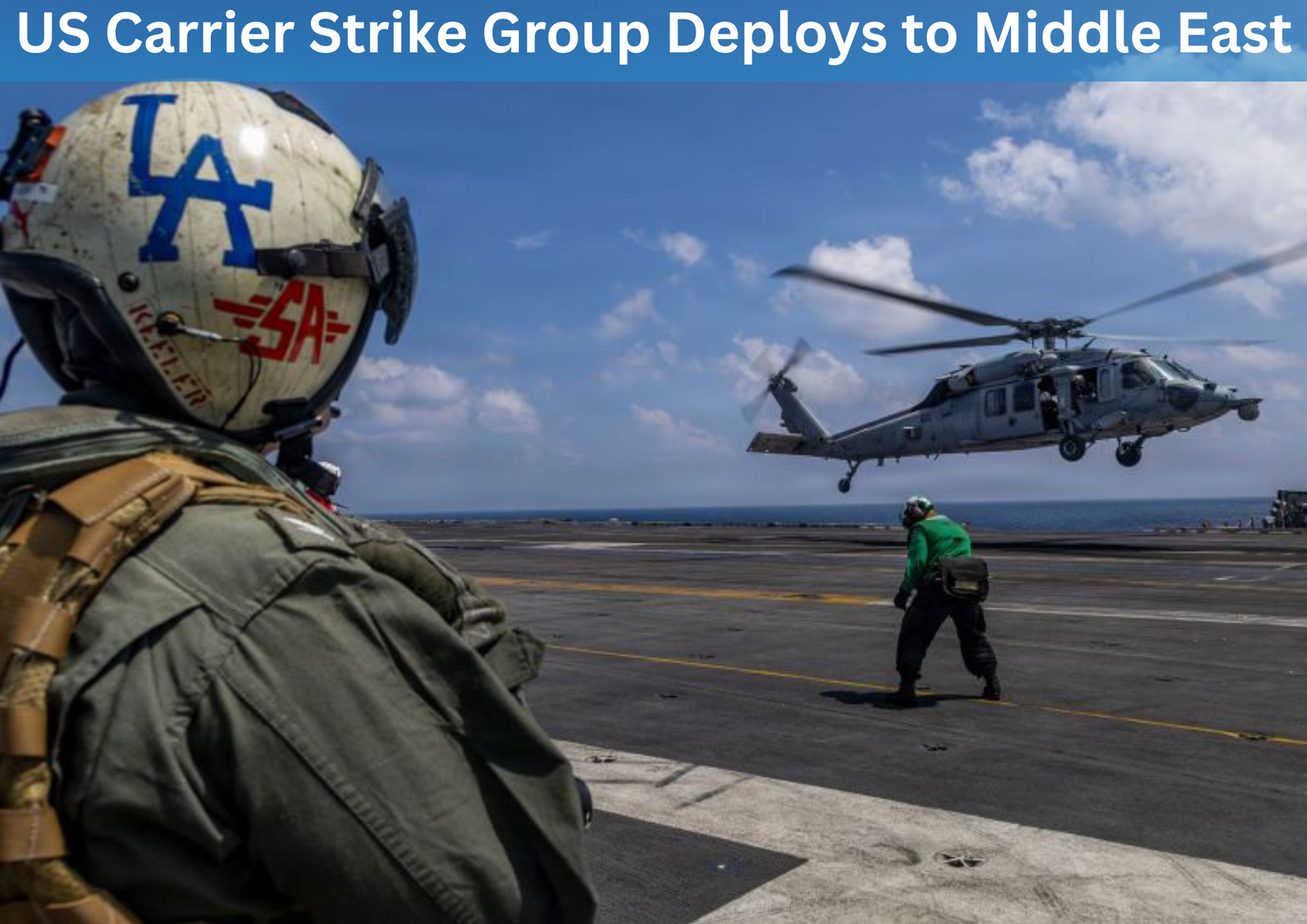
A U.S. Navy aircraft carrier strike group has moved into the western Indian Ocean, marking a significant escalation in Washington’s military posture toward Iran, even as the White House maintains that diplomatic engagement remains an option.
U.S. defense officials confirmed that the USS Abraham Lincoln, along with its accompanying cruisers, destroyers, and support vessels, has entered the operational zone overseen by U.S. Central Command. While the carrier group has not been ordered into a direct combat position, its proximity places it within rapid response range should military action be authorized.
Expanded Military Presence in the Region
Beyond the carrier deployment, the United States has increased its overall force footprint in the Middle East. Additional F-15 and F-35 fighter aircraft, aerial refueling planes, and advanced air defense systems have been dispatched to reinforce regional readiness. Senior military leaders say the buildup is intended to provide flexibility rather than signal an immediate strike.
Admiral Brad Cooper, commander of CENTCOM, recently traveled to Israel to consult with defense officials there, focusing on contingency planning and joint defensive measures in the event of an escalation involving Iran or its allies.
Washington Signals Pressure, Leaves Door Open to Talks
President Donald Trump described the situation as fluid, emphasizing that while the United States has positioned substantial military assets in the region, negotiations with Tehran have not been ruled out. According to administration officials, Iran has been repeatedly presented with U.S. conditions for renewed talks, though no public response has been received.
Those conditions reportedly include strict limits on Iran’s missile capabilities, an end to independent uranium enrichment, reduced support for armed proxy groups, and the removal of enriched nuclear material from Iranian territory.
The president linked the current standoff to last year’s brief but intense conflict between Israel and Iran, arguing that firm U.S. backing of Israel at that time disrupted what he described as an imminent regional threat.
Iran Issues Warnings as Rhetoric Intensifies
Iranian leaders have responded sharply to the U.S. military movements. Officials in Tehran warned that any attack would be met with immediate retaliation, potentially affecting American interests and allied facilities across the Middle East.
Public messaging inside Iran has also escalated. State-linked media showcased symbolic displays in central Tehran, while senior military commanders issued statements claiming U.S. assets in the region are within striking distance. Iranian officials insist that foreign military deployments will not weaken their defensive posture.
Regional Allies Voice Concern Over Wider Conflict
Iran-backed militias in Iraq and elsewhere have echoed Tehran’s warnings, calling on supporters to prepare for possible confrontation. While some of these groups have suffered setbacks in recent years, analysts note that several still retain significant operational capability.
At the same time, U.S. partners in the Gulf region are reportedly urging restraint. Regional officials fear that direct military action could trigger retaliatory strikes on U.S. bases and critical infrastructure, drawing multiple countries into a prolonged cycle of escalation.
Background: Protests and Rising Instability
The renewed tensions stem in part from Iran’s recent domestic unrest. Widespread protests that erupted in late December were met with a forceful government crackdown. Human rights organizations report thousands of deaths linked to the unrest, though Iranian authorities dispute those figures. While demonstrations have largely subsided, international scrutiny of Iran’s internal actions has intensified.
The situation also remains shaped by the aftermath of last year’s conflict involving Iran, Israel, and later the United States. Although key nuclear facilities were damaged during that period, the current status of Iran’s nuclear stockpiles remains unclear, fueling continued concern among Western intelligence agencies.
As military preparations continue and diplomatic signals remain mixed, the coming weeks are expected to play a critical role in determining whether the standoff moves toward dialogue or deeper confrontation.
Don’t miss this analysis on “Minnesota GOP Governor Hopeful Chris Madel Quits Race, Slams Federal ICE Crackdown as Constitutional Failure”-read the blog for context, reactions, and what it means next.