

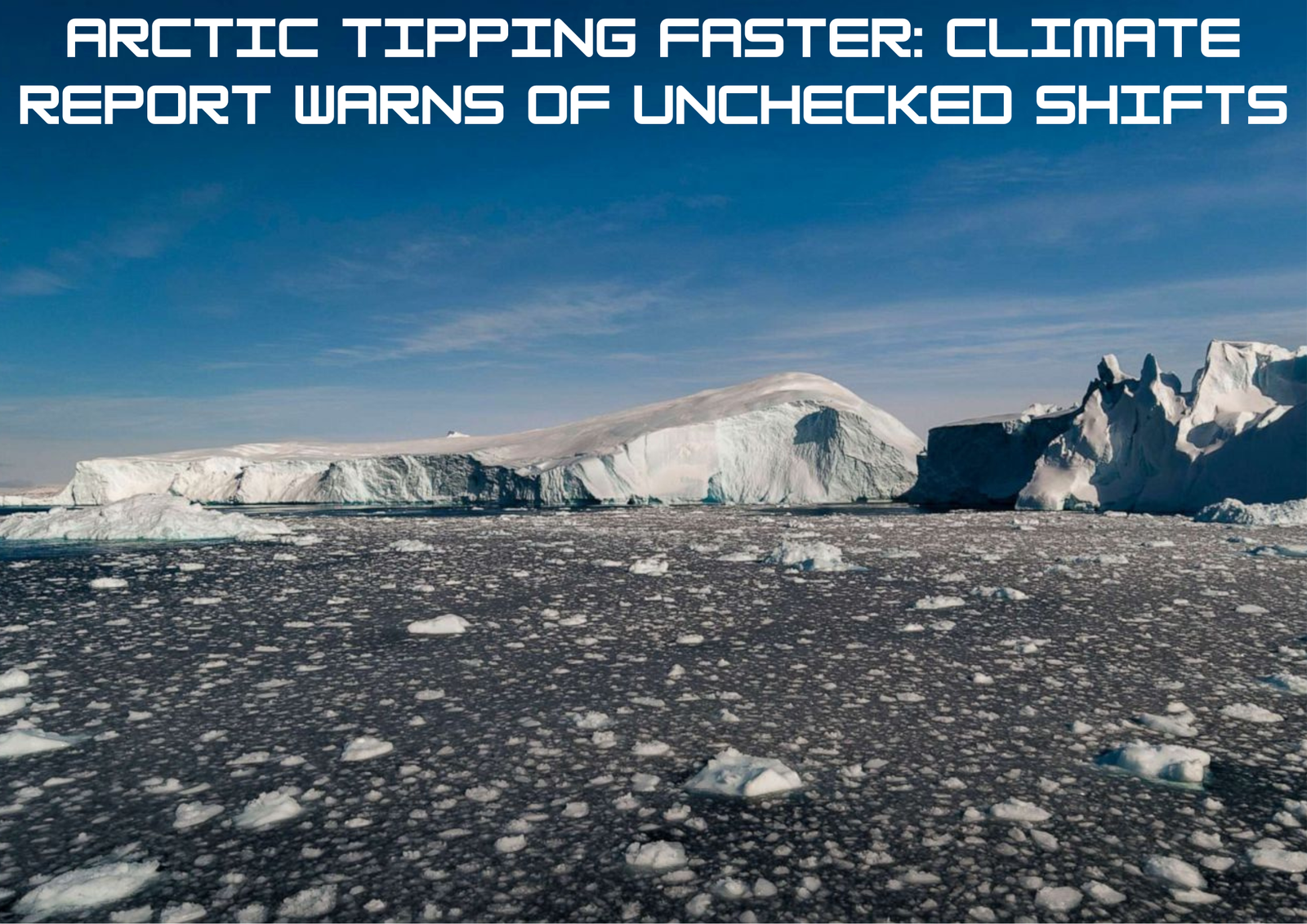
A newly released scientific assessment has found that the Arctic underwent its most extreme year of warming and rainfall on record, underscoring how rapidly the region is transforming and how those changes could affect the rest of the planet.
According to the latest Arctic Report Card, compiled by an international group of researchers working alongside U.S. government scientists and Indigenous knowledge holders, temperatures across the Arctic between late 2024 and late 2025 exceeded all previous measurements. Scientists say the region is now warming more than twice as fast as the global average, amplifying environmental changes already underway.
Researchers documented unusually warm conditions across all seasons, with autumn setting a new temperature record. At the same time, precipitation levels reached historic highs, intensifying flooding risks and reshaping river systems, coastlines, and ecosystems.
Ice and Snow Continue to Disappear
The report highlights a continuing decline in Arctic ice and snow coverage. Satellite observations show that sea ice reached its lowest-ever winter peak in early 2025, while summer ice levels remained among the smallest recorded. Long-term data indicates that summer sea ice coverage has fallen by roughly half since the late 20th century.
On land, spring snow cover has shrunk dramatically compared to historical averages, while glaciers across Alaska, Greenland, and northern Canada continue to lose mass. Scientists warn that melting ice contributes directly to rising sea levels and destabilizes landscapes that Arctic communities depend on.
Ecosystems Under Pressure
Warming temperatures are also disrupting marine and land ecosystems. As warmer ocean waters move northward, traditionally Arctic species are declining, while fish and wildlife common to southern regions are expanding into new territory. On land, longer growing seasons have increased plant growth in tundra areas, though this trend is offset by rising wildfire damage in parts of the Arctic.
The past several years have seen repeated above-average fire seasons in northern North America, releasing additional carbon into the atmosphere and accelerating climate feedback loops.
“Rusting Rivers” Signal Permafrost Breakdown
One of the most striking findings involves the emergence of bright orange rivers across parts of northern Alaska. Scientists say thawing permafrost is allowing metals such as iron to leach into waterways, altering water chemistry and harming fish populations. In some cases, entire stretches of streams have become uninhabitable for aquatic life.
These changes also raise concerns about drinking water quality for remote communities that rely on local rivers.
Growing Risks for Arctic Communities
Environmental shifts are creating new hazards for people living in the Arctic. Melting glaciers have increased the likelihood of sudden floods, while unstable slopes exposed by retreating ice have triggered landslides and even tsunamis in coastal fjords. Warmer ocean temperatures have also fueled stronger storms, bringing damaging winds and flooding to vulnerable villages.
In response, many Indigenous communities are expanding local monitoring efforts, combining scientific tools with traditional knowledge to improve preparedness and resilience.
Global Implications
Scientists emphasize that what happens in the Arctic does not stay in the Arctic. Changes in the region influence global weather patterns, ocean circulation, fisheries, and sea levels. The report’s authors warn that continued warming will have far-reaching consequences unless emissions are significantly reduced.
Despite political uncertainty surrounding climate research funding, the scientists involved say the findings are clear and urgent. The Arctic, often described as Earth’s natural cooling system, is undergoing rapid transformation-one that will shape environmental conditions worldwide in the decades ahead.