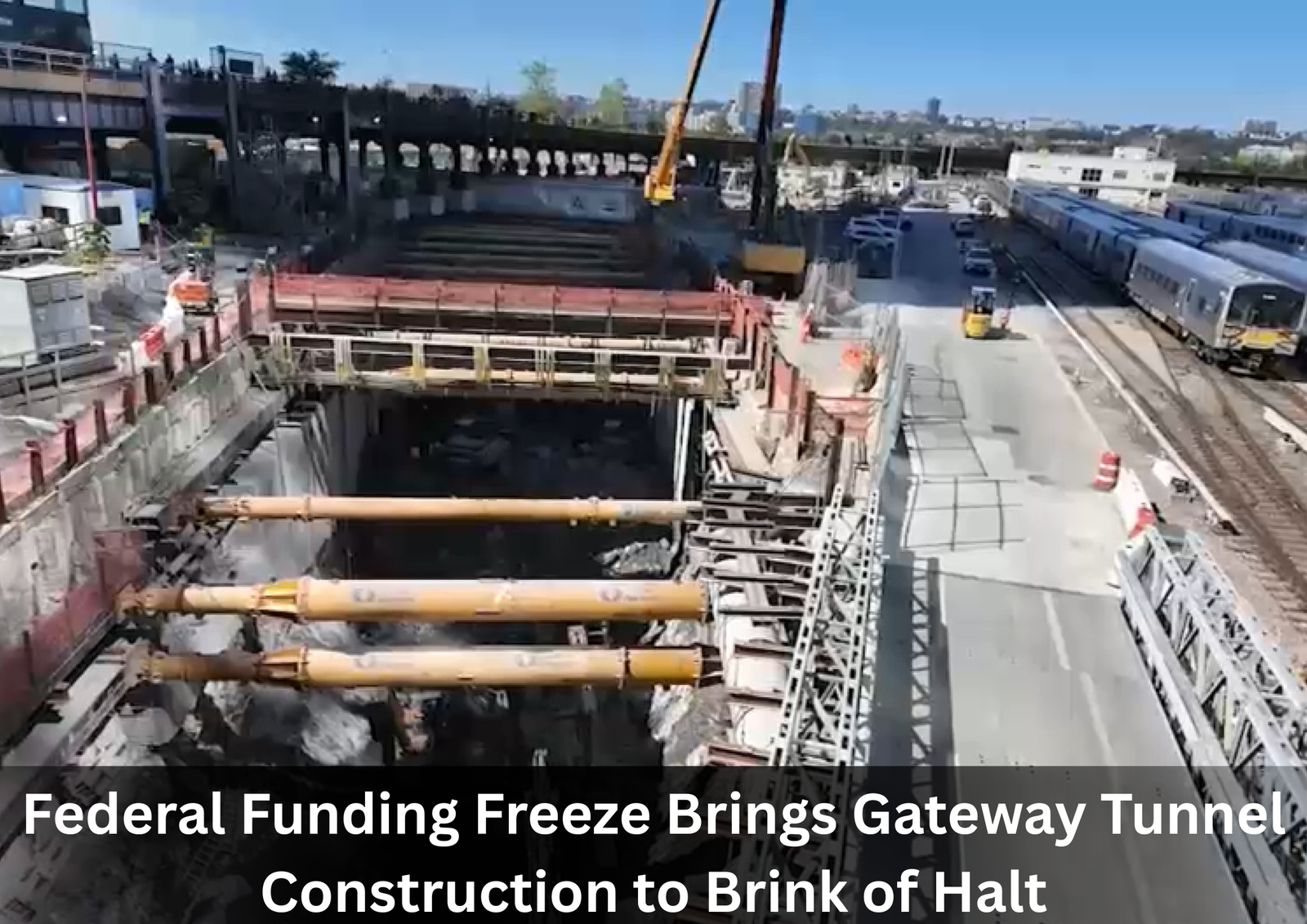
Construction on the massive Gateway rail tunnel project between New York and New Jersey is on the brink of a full shutdown as federal funding remains frozen, according to officials overseeing the effort. Without immediate action from Washington, all major construction work is expected to stop by February 6.
The Gateway Development Commission warned that the project’s remaining $500 million emergency line of credit will be exhausted within days. Once depleted, work will halt at four of the five active construction locations, affecting sites in Manhattan and northern New Jersey.
The Gateway tunnel, estimated to cost $16 billion, is one of the most significant infrastructure projects in the country. It is designed to replace the aging Hudson River rail tunnels, which were built more than a century ago and suffered extensive damage during Hurricane Sandy in 2012. The route is a vital link along the Northeast Corridor, supporting rail traffic from Boston to Washington, D.C.
About 1,000 union workers are currently employed on the project, but officials say those jobs are at immediate risk if funding is not restored. Labor leaders warn the long-term impact could be far greater, with the project ultimately expected to support tens of thousands of jobs nationwide.
The U.S. Department of Transportation has said the funding pause is tied to an ongoing review of project contracts for compliance with updated federal requirements related to women- and minority-owned businesses. Gateway officials, led by commission CEO Thomas Prendergast, say they have cooperated fully with the review process, yet funds have remained frozen since October.
President Donald Trump previously declared the project “terminated” during the fall funding standoff, publicly criticizing Democratic leaders who support the tunnel. The White House has since cited concerns over diversity-related policies at regional transit agencies as justification for continuing to withhold money.
Democratic leaders strongly pushed back this week. Senate Minority Leader Chuck Schumer called the situation “absurd,” arguing that the administration alone has the power to restart the project. New Jersey Governor Mikie Sherrill described the funding freeze as an unlawful move that threatens the state’s economy and working families, warning of massive job losses and billions in lost economic activity if construction stops.
New York Governor Kathy Hochul also condemned the delay, calling it another example of federal actions harming the region, while Senator Kirsten Gillibrand labeled the funding blockade “unacceptable.”
The White House rejected those criticisms, placing blame on Democrats for failing to reach an agreement. Administration officials argued that negotiations could move forward if lawmakers were willing to compromise on broader policy priorities.
Meanwhile, union members gathered at a Gateway Development Commission meeting in lower Manhattan to protest the funding freeze. Labor representatives accused the administration of targeting union jobs and undermining American workers.
The stakes extend beyond employment. Amtrak, which operates the existing Hudson River tunnels, has warned that a failure of just one tunnel could slash rail capacity into New York City by as much as 75 percent, triggering a severe transportation crisis for the region’s 70,000 daily New Jersey commuters.
This is not the first time the project has faced delays tied to political disputes. During Trump’s first term, funding was stalled amid negotiations over border wall financing, a pause that ultimately added billions to the project’s cost.
The current funding impasse comes as Congress once again approaches the possibility of a broader federal shutdown, with Homeland Security spending emerging as a central point of contention.
Before the freeze, the Gateway project had secured roughly $12 billion in federal commitments and was progressing on schedule, with preparations underway to assemble tunnel boring machines shipped from Germany. Officials now warn that without swift intervention, years of planning and construction momentum could be undone.
Don’t miss “Italy Reacts Strongly to Planned U.S. ICE Support Role at Milan-Cortina Winter Olympics”-read this blog for key political reactions, international tensions, and what it means ahead of the Games.