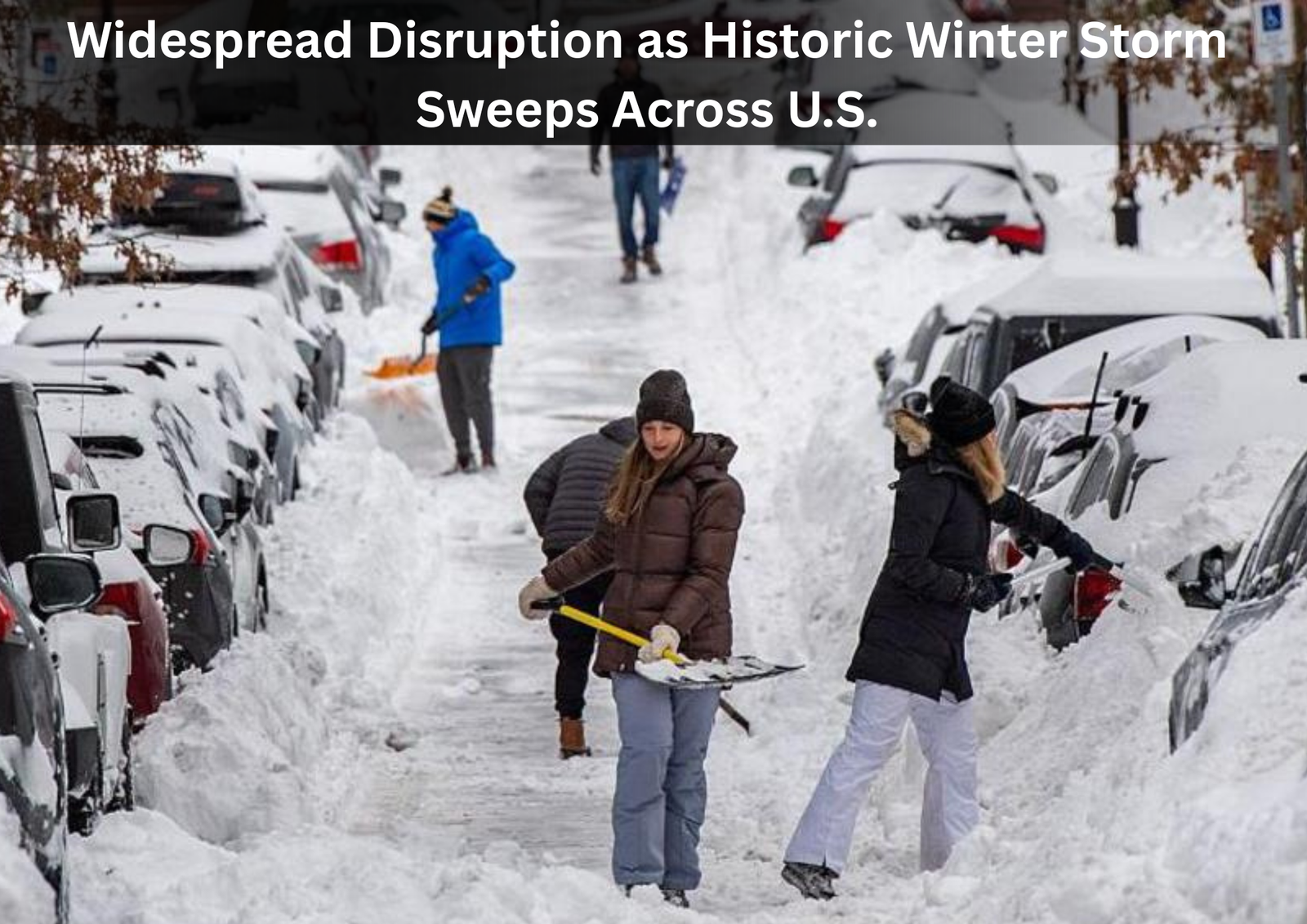
A powerful winter storm has swept across large portions of the United States, leaving behind deadly conditions, prolonged power outages, and severe disruptions to daily life. Stretching from the Southwest to the Northeast, the storm has affected millions of residents, overwhelmed infrastructure, and raised concerns about long-term recovery in some of the hardest-hit regions.
Meteorologists describe the system as one of the most impactful winter weather events in recent years, combining heavy snowfall, widespread ice accumulation, and dangerously low temperatures. Authorities report that the storm’s effects are still unfolding, with restoration efforts expected to continue for several days.
Massive Reach and Extreme Weather Conditions
The storm impacted roughly two-thirds of the country, affecting areas from New Mexico through the Midwest and into New England. At its peak, more than 100 million people were placed under winter weather warnings, while tens of millions remained under extreme cold alerts as temperatures plunged well below seasonal norms.
Snowfall totals exceeded one foot in at least 19 states. Several locations reported accumulations surpassing 20 inches, with the highest known total recorded at Bonito Lake, New Mexico, where snow reached approximately 31 inches. In the Northeast, heavy snowfall blanketed cities and suburbs alike, while parts of the South faced a more destructive threat from ice.
Forecasters warned that freezing rain and sleet created hazardous road conditions and significantly increased the risk of prolonged power outages, particularly in regions unaccustomed to such severe winter weather.
Rising Death Toll and Widespread Power Failures
Officials have linked at least 22 to 25 deaths to the storm so far, with additional cases under investigation. Fatal incidents have included exposure to extreme cold, medical emergencies during snow removal, vehicle accidents on icy roads, and several weather-related crashes. Authorities continue to review circumstances surrounding other reported fatalities to determine whether they were storm-related.
Power outages emerged as one of the storm’s most disruptive consequences. As of Monday, hundreds of thousands of homes and businesses were without electricity, with the largest concentrations in Southern states. Tennessee reported the highest number of outages, followed by Mississippi, Louisiana, and Texas. Local officials cautioned residents that repairs could take days due to damaged infrastructure, fallen trees, and ongoing icy conditions.
Energy crews have been working around the clock, but officials emphasized that safety concerns and inaccessible roads have slowed restoration efforts in many areas.
Travel Network Under Strain
Transportation systems across the country were pushed to their limits. Air travel experienced its most significant disruption in years, with more than 11,000 flights canceled nationwide in a single day. Thousands more were delayed as airports struggled with snow removal, ice accumulation, and staffing challenges.
Major hubs in the Northeast and South reported especially high cancellation rates, while airlines urged travelers to monitor schedules closely. Federal transportation officials expressed optimism that flight operations would gradually stabilize by midweek, weather permitting.
On the ground, road travel proved equally challenging. Numerous highways and local roads were rendered impassable due to ice, snowdrifts, and debris from downed trees. Emergency responders reported difficulty reaching some rural areas, particularly in parts of Mississippi and surrounding states.
Regional Impacts Highlight Severity
The southern United States experienced some of the storm’s most destructive effects due to ice buildup. Local leaders described neighborhoods littered with fallen power lines and trees, creating scenes more commonly associated with severe storms than winter weather. Schools and universities in several states suspended operations as cleanup efforts continued.
In the Northeast, heavy snow disrupted daily routines and prompted closures, though reactions were mixed. In some major cities, schools shifted to remote learning rather than declaring full closures, sparking debate among parents and students.
Meanwhile, forecasters warned that the danger was not yet over. Frigid air is expected to linger across the eastern half of the country, with below-zero temperatures forecast in parts of the Northern Plains and Northeast. Freezing conditions are also projected to extend unusually far south toward the Gulf Coast.
Economic Impact and Recovery Outlook
Preliminary estimates suggest the storm could rank among the costliest weather events in recent U.S. history. Analysts project total economic losses could exceed $100 billion when accounting for property damage, business interruptions, infrastructure repairs, and travel disruptions.
State and federal agencies have begun coordinating recovery efforts, including the deployment of National Guard units in heavily affected areas. Officials stressed that full recovery will take time, particularly in regions where ice damage has compromised electrical grids and transportation networks.
As communities begin cleanup and restoration, authorities continue urging residents to exercise caution, conserve energy where possible, and remain alert to changing weather conditions.
“Federal Enforcement Shooting in Minneapolis Sparks Political Fallout and Rare Republican Pushback – a must-read blog that sheds light on this unfolding story and why it matters.”