



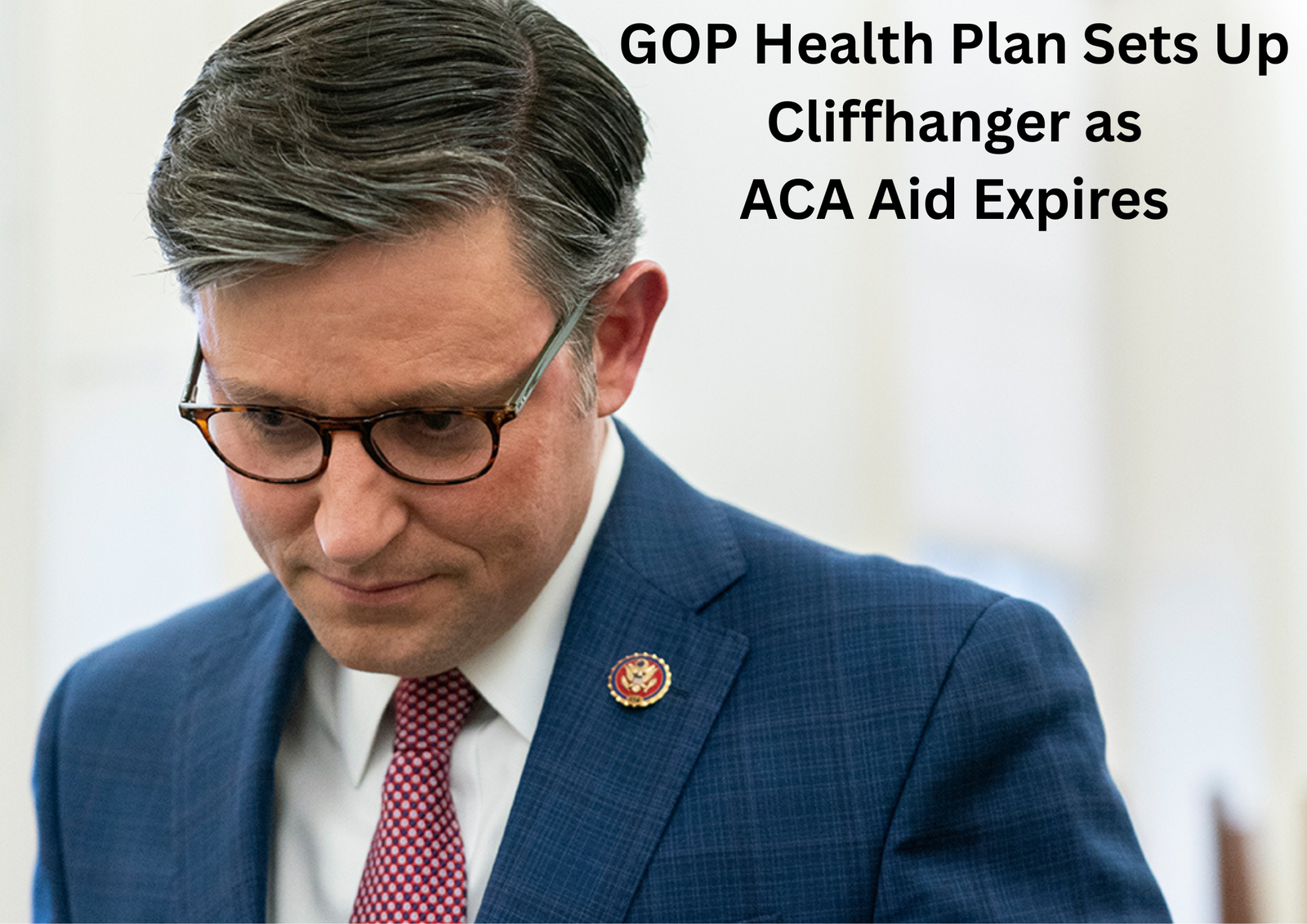
With just weeks left before enhanced Affordable Care Act (ACA) subsidies expire, divisions within the U.S. House of Representatives are deepening, creating uncertainty for millions of Americans who rely on reduced premiums for health insurance coverage.
Unless Congress intervenes before the end of December, the temporary financial assistance that has helped lower monthly insurance costs since the pandemic era will come to an end. Analysts warn that this could sharply raise premiums for more than 20 million people nationwide, with some households facing increases of around $1,000 per year. Budget officials also estimate that the lapse could push roughly two million additional people into uninsured status in 2026.
Republican Leadership Takes a Different Path
In response to the looming deadline, House Speaker Mike Johnson unveiled a comprehensive Republican health care proposal late Friday. The 111-page package, expected to be brought to the House floor during the final legislative week of the year, notably avoids extending the ACA subsidies.
Instead, the plan emphasizes structural changes aimed at lowering health care costs more broadly. Key elements include expanding Association Health Plans, which allow small businesses and independent workers to pool together for coverage; reinstating funding for cost-sharing reductions that help certain low-income enrollees manage deductibles and co-pays; and introducing stricter transparency rules for pharmacy benefit managers, who play a major role in prescription drug pricing.
Speaker Johnson argued that the proposal addresses what he described as the underlying drivers of high health care costs, rather than relying on temporary subsidies. Republican aides also point out that parts of the package have previously received bipartisan backing.
Growing Bipartisan Pushback
Despite leadership’s stance, a faction of House Republicans-primarily from competitive districts-is breaking ranks. Nearly a dozen GOP lawmakers have joined bipartisan efforts to force a vote on extending the ACA subsidies through a procedural maneuver known as a discharge petition, which bypasses leadership control.
Two such petitions are currently circulating. One, led by Republican Rep. Brian Fitzpatrick of Pennsylvania, calls for a two-year extension paired with reforms such as income limits and drug pricing oversight. Another, spearheaded by Democrats, seeks a longer extension. Nebraska Republican Rep. Don Bacon, one of the GOP supporters, has warned that failure to act could carry serious political consequences, especially for lawmakers facing tight reelection races.
To succeed, either petition would need signatures from a majority of House members-218 in total. While Democrats broadly favor extending the subsidies, party leaders have said they are still evaluating whether to support the bipartisan proposals.
Senate Gridlock and White House Signals
The dispute in the House mirrors deadlock in the Senate, where competing health care bills from both parties stalled earlier this week. Without movement in both chambers, any solution will be difficult to finalize before the deadline.
The White House has so far taken a hands-off approach. President Donald Trump has indicated that Congress should resolve the issue, while reiterating his preference for expanding Health Savings Accounts as an alternative way to support consumers directly.
Uncertain Road Ahead
As lawmakers return for what may be their final votes of the year, time is running short. Speaker Johnson plans to allow debate on an amendment related to the subsidies, though its final form remains unclear. Meanwhile, millions of Americans are left watching closely, aware that inaction could soon translate into significantly higher health insurance bills.
With partisan divisions, procedural hurdles, and a fast-approaching cutoff date, the chances of a last-minute agreement remain uncertain-raising the stakes for both policymakers and the families affected by their decisions.