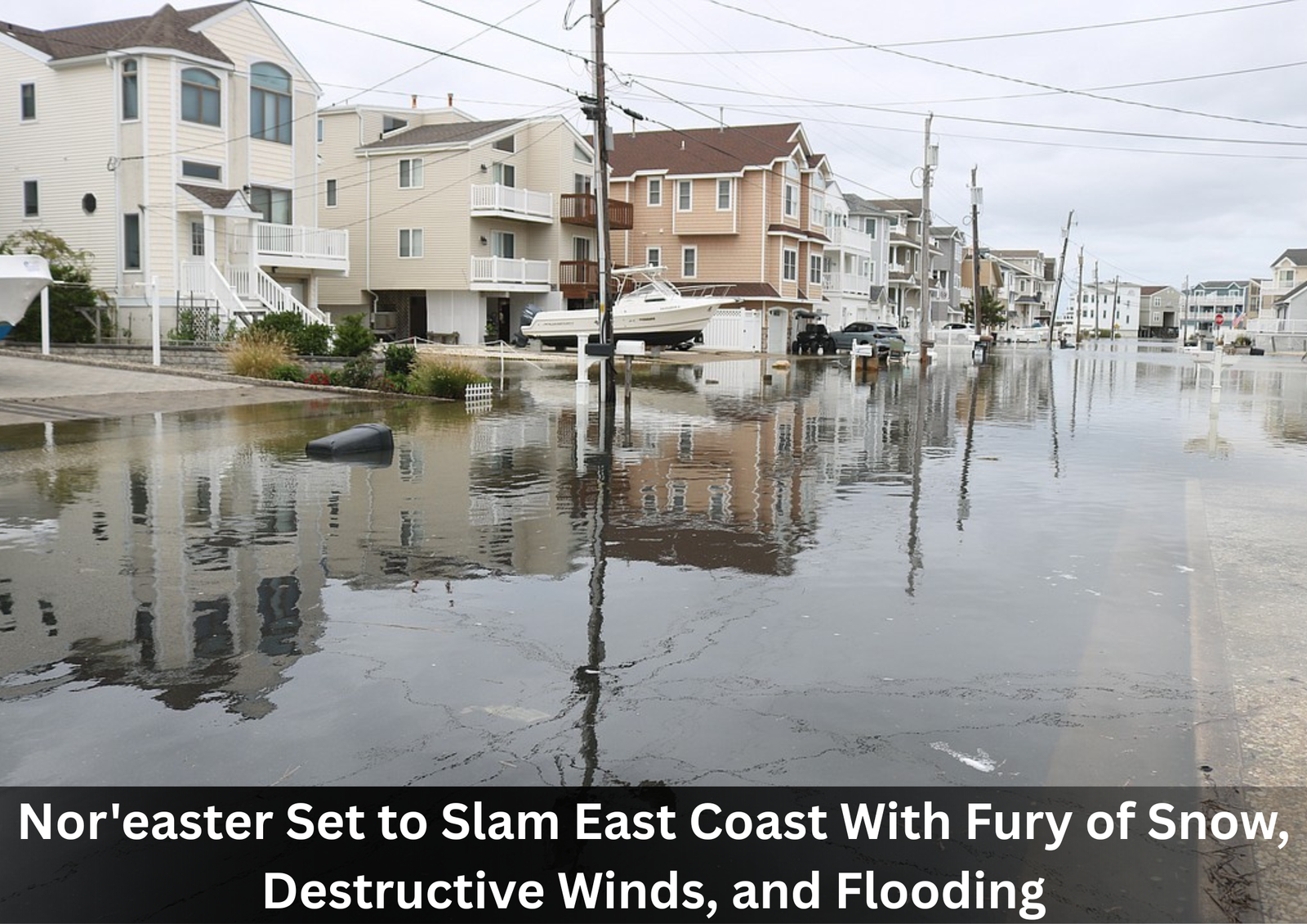
A rapidly strengthening winter storm is forecast to intensify into a powerful nor’easter this weekend, threatening large portions of the U.S. East Coast with heavy snowfall, damaging winds, coastal flooding, and dangerously cold air.
Forecasters say the system is expected to develop off the southeastern coastline late Saturday before tracking northeastward over the Atlantic. As it strengthens, the storm could undergo a rapid pressure drop, a process commonly referred to as bombogenesis, which often leads to extreme weather impacts over a short period of time.
Snowfall totals are expected to vary sharply depending on location, with coastal areas most at risk for significant accumulation. Parts of the Carolinas and sections of coastal New England could see several inches of snow, while some inland regions may receive much lighter amounts due to the storm’s offshore track.
In Massachusetts, weather officials are monitoring the potential for winter storm conditions across Cape Cod and the Islands from late Saturday night into Sunday. Forecast models suggest snow totals could exceed half a foot in some coastal communities, accompanied by strong winds that may reduce visibility and create near-blizzard conditions. Gusts exceeding 50 miles per hour could result in scattered power outages and minor tree damage. Snow amounts closer to Boston are expected to be lower, though blowing snow may still impact travel.
Delaware faces a more uncertain forecast, with sharp differences in snowfall expected across short distances. Coastal areas have the greatest chance of measurable accumulation, while inland communities may see significantly less. Strong winds could still pose hazards even in areas where snowfall remains limited, particularly if visibility is reduced during heavier bands of snow.
Beyond snowfall, coastal flooding and beach erosion remain major concerns. The combination of storm surge, powerful waves, and high astronomical tides could lead to minor to moderate flooding in vulnerable shoreline areas, particularly during peak high tide. Offshore wave heights are expected to be especially high, increasing the risk of erosion along exposed beaches.
Meteorologists emphasize that even locations receiving minimal snow should prepare for strong winds and sharply colder temperatures, driven by an Arctic high-pressure system positioned to the northwest. While the storm’s center is expected to stay offshore, its expansive wind field could still produce hazardous conditions across a wide region.
Residents along the East Coast are advised to closely monitor local forecasts, prepare for possible travel disruptions, and secure loose outdoor items ahead of the storm’s arrival.
For deeper insight into the unfolding controversy, read “Intelligence-Led Review of 2020 Election Moves Forward as Georgia Ballot Seizure Sparks National Debate” to understand why this issue matters nationwide.