


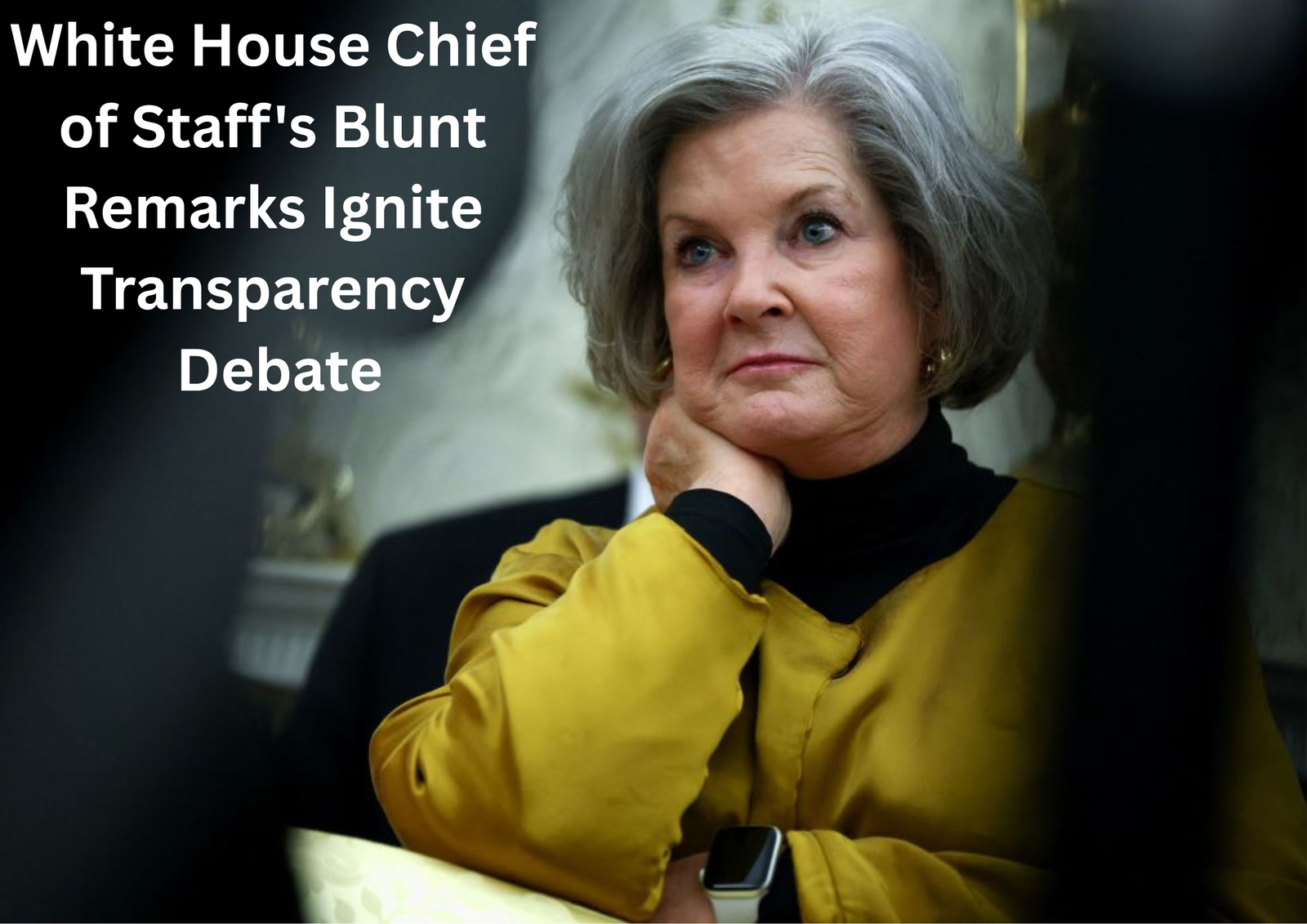
The White House is facing renewed internal debate after a series of unusually candid media interviews by Chief of Staff Susie Wiles sparked political discussion both inside and outside Republican circles. While the administration has publicly closed ranks in defense of Wiles, the episode has reignited broader questions about message discipline, transparency, and the risks of extended on-the-record access to long-form journalism.
Wiles, a veteran political strategist and a central figure in President Donald Trump’s current administration, granted multiple in-depth interviews over the past year to a national magazine. The resulting coverage offered rare insight into internal decision-making, policy disagreements, and the personal dynamics shaping the White House. Though the reporting did not allege wrongdoing, its detailed portrayals quickly became a flashpoint within conservative political circles.
Privately, several Republican operatives and aides expressed discomfort with the level of openness displayed. For many, the concern was not factual accuracy but strategic judgment. Extended interviews, critics argue, can expose internal deliberations that are usually kept behind closed doors, potentially complicating policy messaging and political positioning during a challenging economic and electoral period.
Publicly, however, the administration moved swiftly to show support. President Trump praised Wiles’ leadership and effectiveness, dismissing claims that the interviews reflected dysfunction. Senior officials and family members echoed that stance, framing the coverage as selectively framed and emphasizing internal unity. Administration allies stressed that candid discussions should not be mistaken for disloyalty or division.
The interviews touched on several sensitive policy areas, including foreign affairs, law enforcement priorities, and internal debates over economic strategy. While none of the disclosures represented official policy shifts, they offered context into how disagreements are managed at the highest levels of government. Political analysts noted that such transparency is uncommon for a sitting chief of staff, a role traditionally defined by discretion and operational control rather than public commentary.
Beyond immediate political fallout, the episode has fueled a larger conversation about modern media strategy in an era of long-form journalism and viral political narratives. Supporters of Wiles argue that open engagement with journalists can humanize leadership and counter accusations of secrecy. Critics counter that extended access increases the risk of misinterpretation, selective emphasis, and distraction from core policy goals.
The timing of the coverage added to its impact. With economic indicators drawing scrutiny and recent election results signaling voter dissatisfaction in some regions, party strategists are increasingly focused on maintaining a disciplined narrative centered on governance and economic performance. Any deviation from that focus, even through well-intentioned transparency, can become politically costly.
Observers also noted that the situation highlights a shift in political communication norms. Modern administrations operate under constant media attention, where even nuanced remarks can quickly become headline material. In this environment, the balance between openness and control has become increasingly difficult to maintain.
Despite the controversy, there are no indications that Wiles’ position is under threat. Her role in guiding recent campaigns and managing the executive office has earned her significant institutional trust. Allies suggest that the administration views the matter as a temporary distraction rather than a structural issue.
As the political landscape continues to evolve, the episode may serve as a case study in the changing relationship between power, transparency, and media access. Whether it ultimately reshapes internal communication practices remains to be seen, but it has already underscored the delicate balance senior officials must navigate when speaking candidly in the public eye.