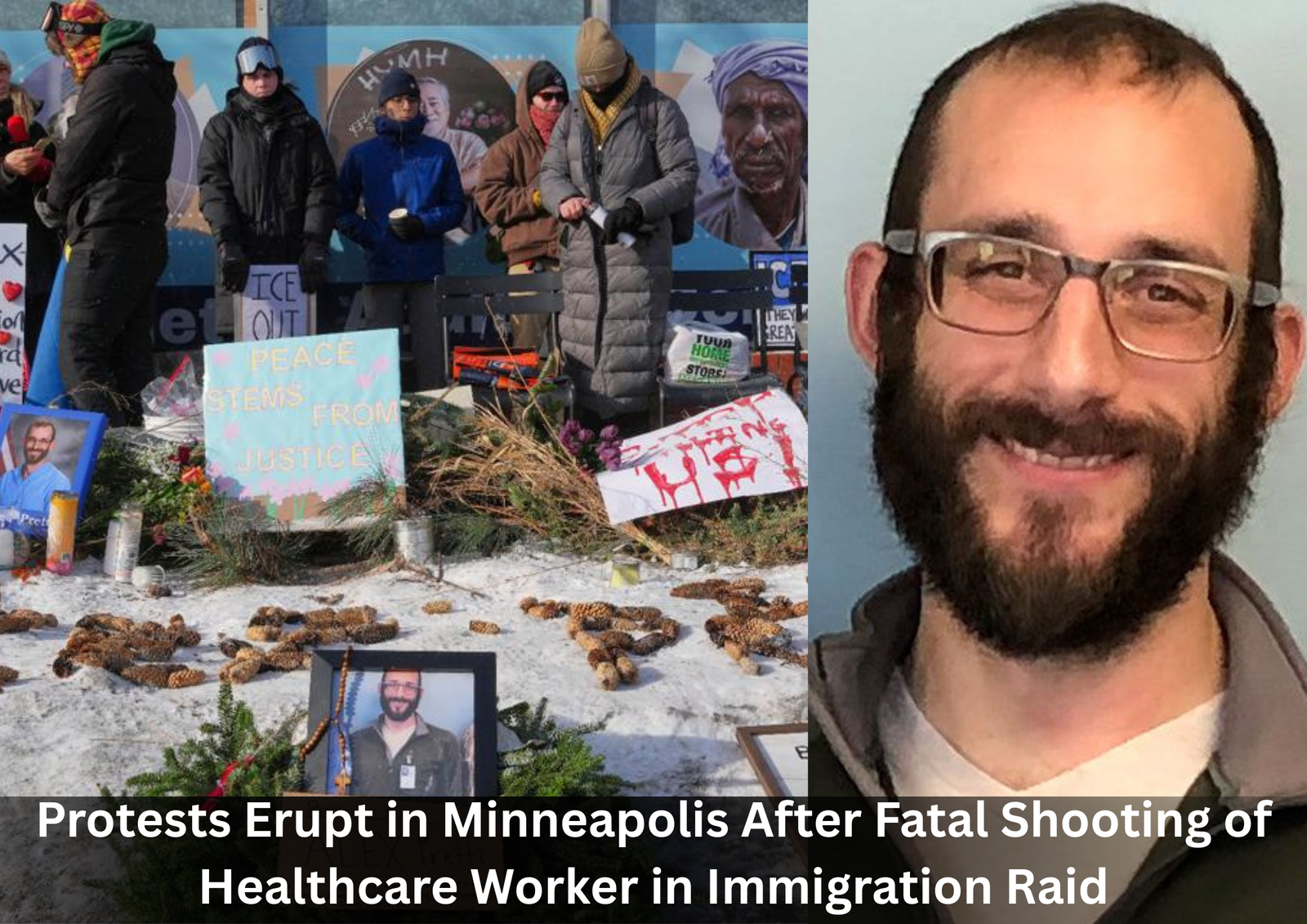
Minneapolis has become the center of national attention following the fatal shooting of a local healthcare worker during a federal immigration enforcement operation, an incident that has triggered protests, legal challenges, and growing debate over federal authority and public safety.
The victim, identified as 37-year-old Alex Jeffrey Pretti, was an intensive care unit nurse employed at the Minneapolis VA hospital. Pretti died Saturday morning after being shot by a U.S. Border Patrol agent during an operation conducted by the Department of Homeland Security (DHS) in the city’s Whittier neighborhood. The shooting marks the second fatal encounter involving federal immigration agents in Minneapolis within a three-week period.
Conflicting Accounts Emerge
Federal officials have defended the actions of the agents involved, stating that Pretti interfered with what they described as a felony immigration operation and resisted officers. According to DHS leadership, agents believed their safety was at risk during what they characterized as a volatile and rapidly escalating situation. Officials further claimed that Pretti was armed at the time of the incident.
However, these statements have been challenged by video footage captured by bystanders and reviewed by multiple national media organizations. The recordings appear to show Pretti holding a cellphone rather than a firearm while documenting the scene. In the footage, he is seen attempting to assist a woman who had been pushed to the ground during the operation moments before the shooting occurred.
The visual evidence has intensified scrutiny of the federal account and raised questions about how the situation unfolded in the moments leading up to the use of lethal force.
State and Local Leaders Respond
Minnesota Governor Tim Walz sharply criticized the federal operation, calling the shooting “deeply disturbing” and urging the federal government to suspend immigration enforcement actions in the state. In response to public unrest, the governor authorized the deployment of the National Guard to assist with crowd control and protect critical infrastructure.
Minneapolis Police Chief Brian O’Hara stated that Pretti legally possessed a permit to carry a firearm but emphasized that there was no indication he displayed or used a weapon during the encounter. City officials have reiterated that Minneapolis police were not involved in the operation and had no role in the shooting.
Mayor Jacob Frey expressed concern over the impact of federal enforcement actions on public trust and community safety, particularly when conducted without coordination with local authorities.
Legal Developments and Investigations
The incident has quickly moved into the legal arena. A federal judge issued a temporary restraining order preventing DHS from modifying or destroying evidence related to the shooting. The order came after state investigators reported being denied access to the scene, despite holding a valid search warrant.
The Minnesota Bureau of Criminal Apprehension is now conducting an independent investigation, while additional reviews are expected at both the federal and state levels. Legal experts have described the jurisdictional dispute as highly unusual and potentially significant in determining how similar cases are handled in the future.
The state attorney general’s office has also taken steps to challenge the broader federal immigration surge, seeking court intervention to limit or halt ongoing operations within Minnesota.
Bipartisan Political Reaction
Although immigration enforcement remains a divisive issue, the shooting has prompted concern from lawmakers across party lines. Several Republican senators and governors publicly called for a full and transparent investigation, signaling discomfort with how the operation was conducted and how the aftermath has been managed.
These responses underscore growing bipartisan unease over the use of force during immigration actions, particularly when civilians and bystanders are involved.
Public Protests and Community Impact
Hundreds of demonstrators gathered in downtown Minneapolis over the weekend, with additional protests reported in cities such as Chicago. Protesters included healthcare workers, veterans, educators, and community advocates, many of whom expressed fear over the expanding scope of federal immigration enforcement.
The death of Pretti has drawn comparisons to another fatal shooting earlier this month involving Renee Good, whose family has also called for an end to federal immigration activity in the city. The two incidents together have fueled public concern about accountability and oversight.
Federal Response and Ongoing Debate
President Donald Trump addressed the situation through social media, placing blame on state and city leadership and renewing calls for stricter immigration enforcement nationwide. He urged Congress to advance legislation targeting sanctuary city policies and demanded greater cooperation from local governments.
As investigations continue, key questions remain unanswered, including the precise sequence of events leading to the shooting and whether established protocols were followed. For now, Minneapolis remains on edge as residents await clarity and accountability.
The outcome of the multiple investigations could have lasting implications for federal immigration operations, state-federal relations, and the rules governing law enforcement conduct during public encounters.
Don’t miss the full story behind “Alex Honnold Scales Taipei 101 in Unprecedented Rope-Free Climb Streamed Worldwide”-read this blog to uncover the risks, reactions, and global impact.