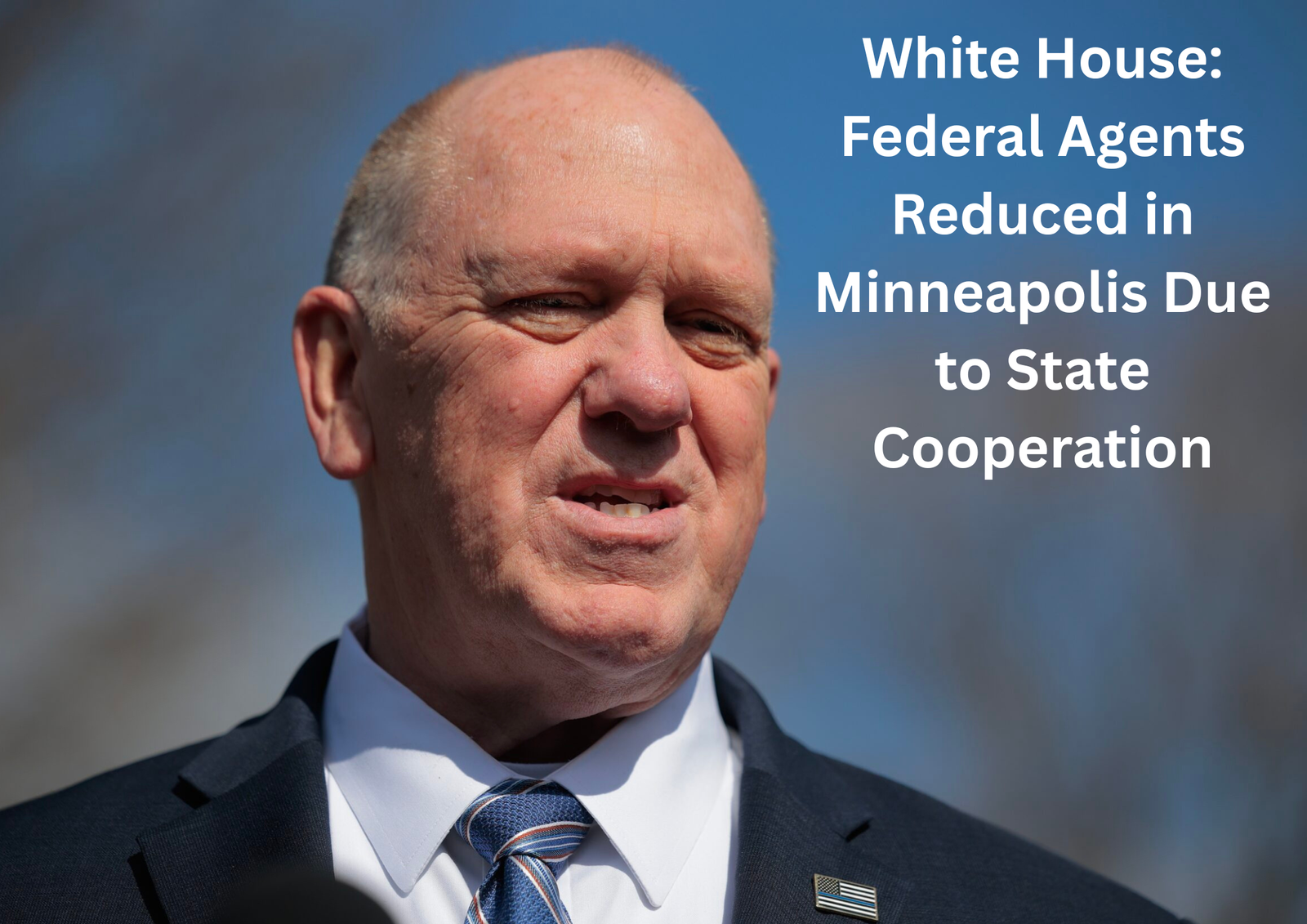
The White House’s border enforcement chief announced Thursday that the federal government is preparing a plan to scale back the presence of immigration agents in Minneapolis, though the move will depend on cooperation from Minnesota state and local authorities.
Tom Homan, appointed by President Donald Trump to oversee federal immigration efforts in the city, said the proposed reduction would follow changes in how state and county officials work with federal agencies. The announcement comes amid heightened scrutiny of “Operation Metro Surge,” a large-scale immigration enforcement initiative launched earlier this month.
The operation has drawn national attention after two U.S. citizens were fatally shot during encounters involving federal agents. Those incidents have fueled public protests, political pressure, and legal challenges aimed at halting the federal presence in the city.
Speaking at a news briefing, Homan emphasized that the mission itself is continuing, but with a revised approach. He described the strategy as a shift toward more targeted enforcement that prioritizes individuals deemed public safety threats. According to Homan, greater coordination with local detention facilities could allow federal agents to make arrests inside jails rather than on public streets, reducing the need for large enforcement teams.
Homan said discussions with state officials clarified that county facilities may notify federal authorities ahead of release dates for certain non-citizens convicted of serious crimes. He argued that such notifications would allow immigration agents to act more efficiently and safely, enabling a reduction in the number of personnel deployed across the city.
Minnesota Attorney General Keith Ellison, however, disputed the suggestion that any new agreement had been reached. In a statement, Ellison said he merely outlined existing state law, which permits information sharing in specific circumstances but does not allow individuals to be held solely on the basis of a federal immigration detainer. He also noted that county sheriffs, not the attorney general’s office, oversee local jails.
Homan acknowledged that the federal operation has created tension within Minneapolis communities, conceding that enforcement efforts have not been flawless. Still, he maintained that federal authorities will continue to pursue immigration violations, even as enforcement priorities shift toward individuals with criminal histories.
Local leaders have responded cautiously. Minneapolis Mayor Jacob Frey said he was encouraged by talk of reducing the federal footprint but reiterated his call for the operation to end altogether. Governor Tim Walz echoed that stance, saying a change in enforcement style does not address the underlying concerns raised by the surge.
The deployment of thousands of federal agents has significantly altered law enforcement dynamics in the city, where local police numbers are far lower. City and state officials have accused federal officers of overly aggressive tactics and have asked a federal court to intervene.
The controversy has also spilled into Congress, where disputes over immigration enforcement have complicated negotiations on federal spending. Lawmakers remain divided over funding for the Department of Homeland Security, with some pushing for limits on certain enforcement practices.
Homan did not specify when the drawdown might begin or how many agents could be withdrawn, stating only that planning is underway. He added that he intends to remain in Minnesota until federal officials believe the situation has stabilized.
For a detailed breakdown of the unfolding storm, don’t miss “Powerful Nor’easter Expected to Slam East Coast With Snow, High Winds, and Coastal Flooding”-read the full blog for impacts, timing, and safety insights.