


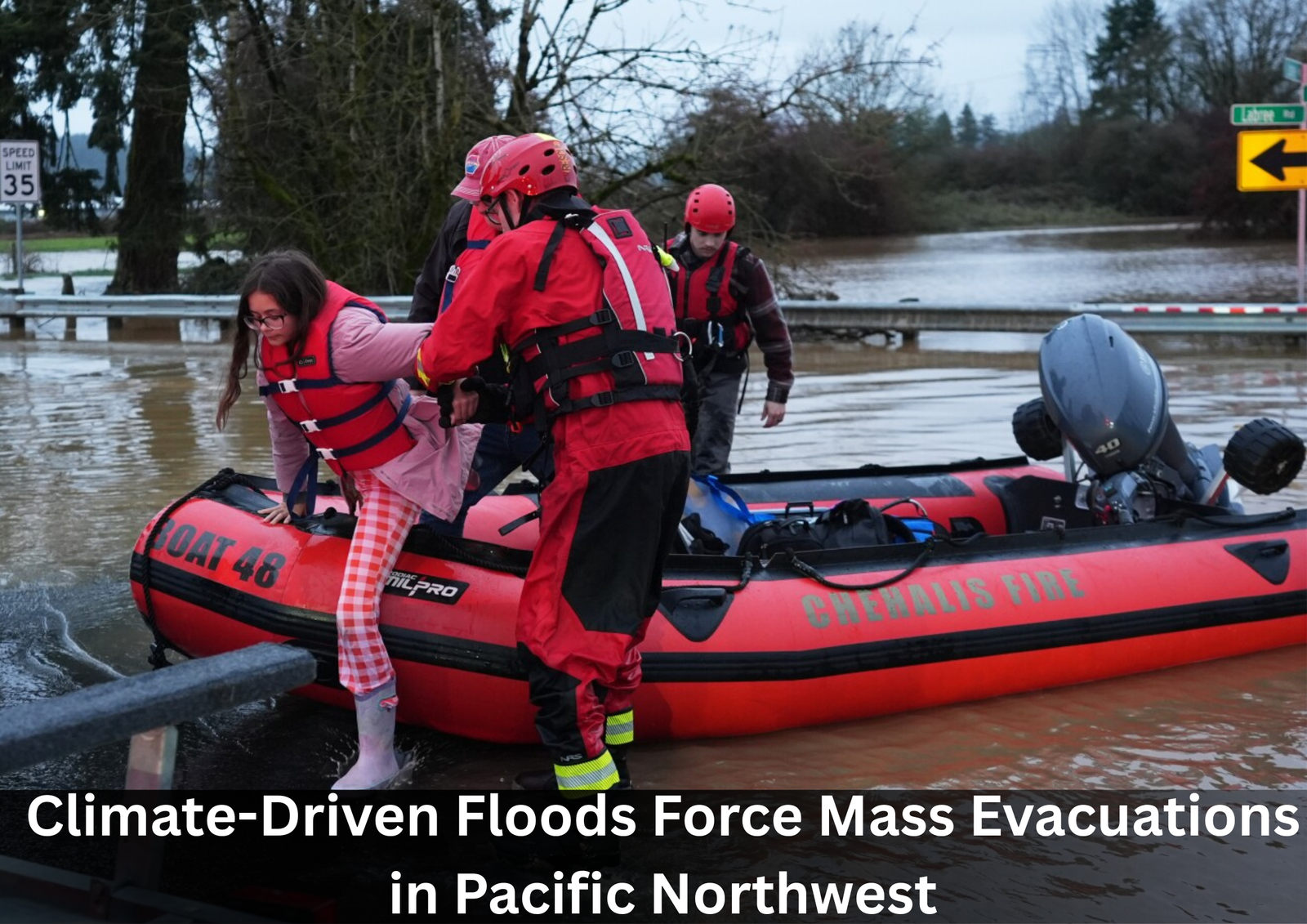
Communities across Western Washington are beginning to assess widespread damage after successive atmospheric river storms inundated river valleys, submerged neighborhoods, and forced tens of thousands from their homes. As waters slowly recede, scientists and emergency officials say the flooding underscores how a warming climate is amplifying familiar winter weather into increasingly disruptive events.
State authorities reported that evacuation orders affected roughly 100,000 residents across multiple counties at the height of the storms, with Skagit County accounting for the largest share. Emergency crews worked around the clock to assist displaced families, manage road closures, and monitor river levels that surged well beyond seasonal norms.
In towns along the Snohomish and Skykomish river systems, residents returned to waterlogged homes and businesses to begin the long cleanup. Mud-coated floors, toppled furniture, and ruined inventory were common sights. Several industrial facilities reported extensive losses after rapidly rising water overwhelmed sandbag defenses and storage areas, leaving owners uncertain about when operations might resume.
“I’ve lived here a long time, but I’ve never seen it rise this fast,” said one local resident who described watching the water climb past parked cars within hours. While property damage was extensive, officials credited early evacuation notices with preventing serious injuries or loss of life.
Meteorologists explained that the flooding was fueled by a sequence of moisture-rich storm systems known as atmospheric rivers, which funnel warm, wet air from the Pacific Ocean toward the coast. These systems are a natural part of the region’s climate, supplying a large portion of winter rainfall. However, climate researchers warn that higher global temperatures are allowing the atmosphere to hold more moisture, increasing the intensity of rainfall when such storms make landfall.
“As winters warm, more precipitation falls as rain instead of snow,” said a regional climate specialist. “That means less water is stored in mountain snowpacks and more flows directly into rivers all at once, raising flood risks.”
Environmental impacts are also raising concern. Fisheries experts say extreme river flows can severely disrupt salmon reproduction by washing away eggs, burying spawning grounds in sediment, and displacing young fish before they are ready to migrate. Rivers such as the Skagit and Stillaguamish, vital to both ecosystems and tribal communities, are considered especially vulnerable during high-flow events.
Scientists emphasize that while storms cannot be prevented, smarter land-use decisions can reduce damage. Limiting development in flood-prone areas, protecting wetlands and forests, and investing in green infrastructure-such as permeable surfaces and urban rainwater absorption systems-can help slow runoff and lessen flooding impacts.
Still, researchers caution that adaptation alone has limits. Without broader efforts to reduce greenhouse gas emissions, they say, the strength and frequency of intense rain events are likely to continue increasing, placing greater strain on communities and infrastructure.
Cleanup operations remain underway throughout affected counties, with officials urging residents to avoid closed roads and heed safety warnings as recovery continues.