


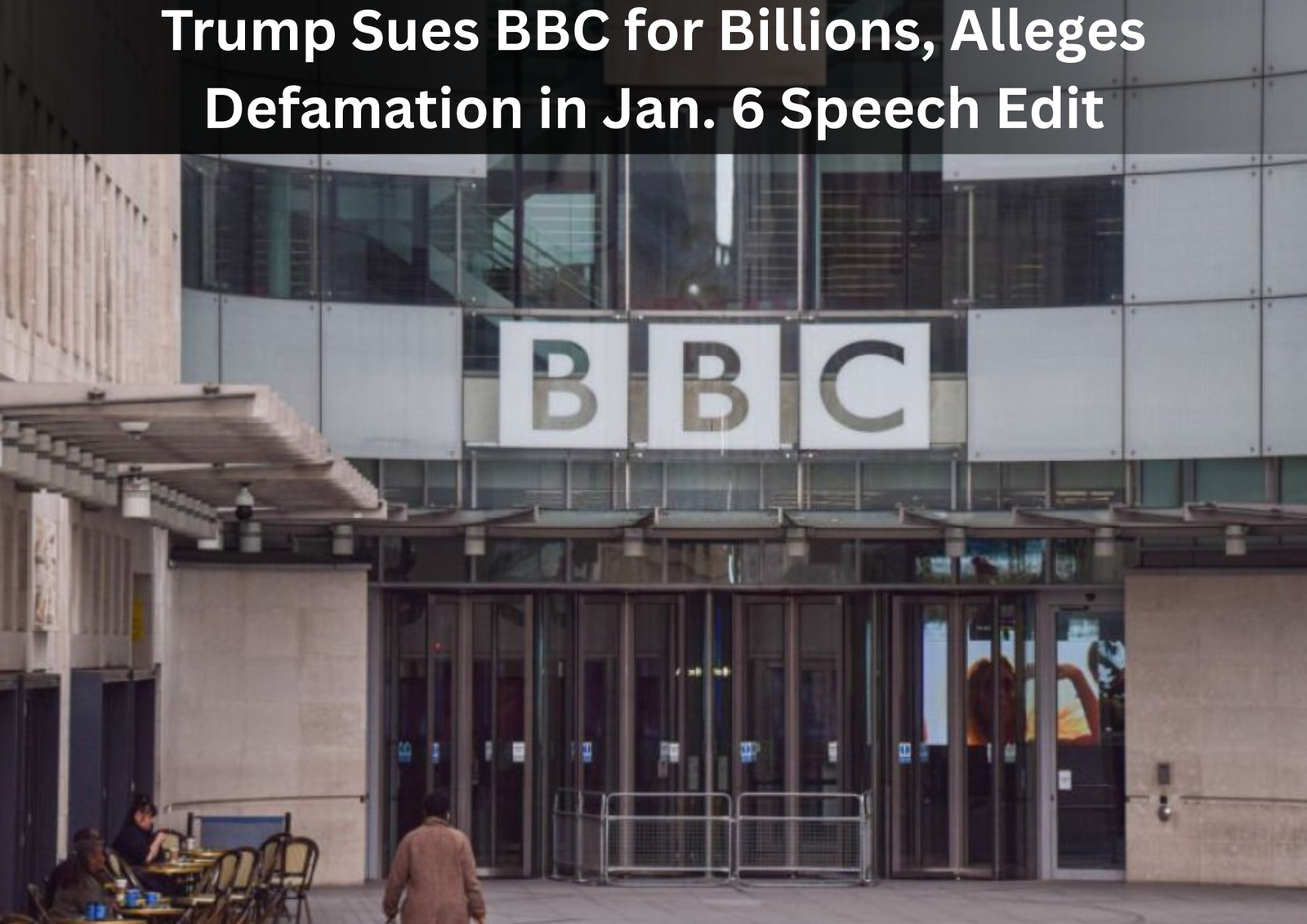
U.S. President Donald Trump has filed a sweeping defamation lawsuit against the British Broadcasting Corporation (BBC), seeking damages exceeding $5 billion. The legal action alleges the international broadcaster deliberately altered footage of Trump’s January 6, 2021 speech in a documentary released ahead of the 2024 U.S. presidential election.
The lawsuit was submitted this week in a federal court in Miami and centers on an episode of the BBC’s investigative program Panorama. According to the complaint, the documentary used edited video clips that rearranged portions of Trump’s speech in a way that falsely suggested he explicitly encouraged violence at the U.S. Capitol.
Trump’s legal team argues that the program stitched together statements made nearly an hour apart, presenting them as a single continuous message. They claim this editing removed contextual remarks in which Trump urged supporters to protest peacefully, resulting in what the lawsuit describes as a misleading and damaging portrayal.
Attorneys for Trump allege the broadcast caused significant reputational harm and accuse the BBC of reckless disregard for accuracy. The suit contends that the documentary aired at a politically sensitive moment and may have influenced public opinion during the final days of the 2024 election campaign.
The controversy has already triggered serious consequences within the BBC. Following internal reviews and public criticism, the broadcaster acknowledged an editorial error and issued a formal apology. Shortly afterward, the BBC’s Director General and the Chief Executive of BBC News both stepped down, marking one of the most significant leadership shakeups in the organization’s recent history.
Despite the apology, the BBC has rejected the claim that it committed defamation. In a statement, the broadcaster said it regrets the editing decision but maintains that the documentary does not meet the legal threshold for a defamation case under U.S. law. The BBC has also confirmed it will not rebroadcast the episode.
Legal analysts note that defamation cases involving public figures face a high burden of proof in the United States. Trump would need to demonstrate that the BBC knowingly presented false information or acted with extreme negligence. Observers also point out that the documentary did not air domestically in the U.S., which could become a key issue during proceedings.
This lawsuit adds to a growing list of legal actions Trump has pursued against media organizations in recent years. Several major outlets have previously opted for financial settlements rather than prolonged court battles.
The case is expected to draw international attention, raising broader questions about media accountability, political speech, and the limits of editorial freedom in global broadcasting.