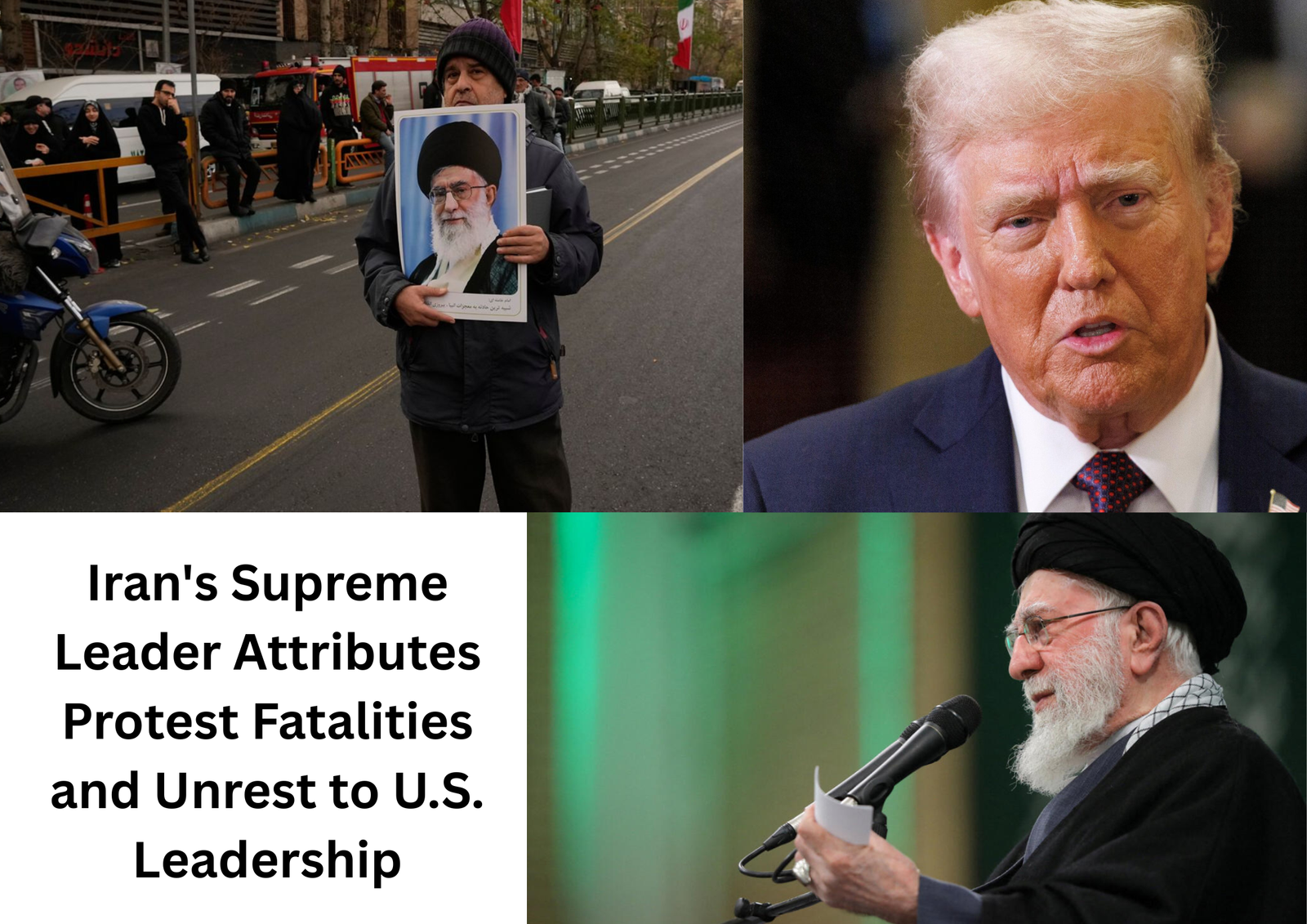
Iran’s Supreme Leader Ayatollah Ali Khamenei publicly acknowledged for the first time that thousands of people died during weeks of anti-government demonstrations that swept the country, marking an unprecedented admission in a televised speech on Saturday. Khamenei described the unrest as a U.S.-backed effort to destabilize Iran and accused U.S. President Donald Trump of encouraging demonstrators, calling him a “criminal” who sought regime change.
Khamenei alleged that protesters acted as agents of foreign powers, claiming they damaged religious sites, hospitals, banks, and public infrastructure. While he insisted Iran would pursue those responsible for the riots, he also said the government did not intend to enter a broader war. His comments followed weeks of speculation surrounding the government’s response after security forces deployed heavily across major cities.
U.S. Reaction Sharpens Rhetoric
Trump rejected the accusations in an interview published Saturday, calling the Iranian leader a “sick man” and demanding an end to what he described as “unprecedented violence” by Iranian authorities. He argued that Iran required new leadership after more than four decades under clerical rule and criticized Khamenei for allowing the country’s current economic collapse.
The exchange marked one of the sharpest rhetorical clashes since mass protests erupted late last year. In contrast, Trump had taken a softer tone a day earlier when he thanked Iranian officials on social media for what he claimed was the cancellation of mass executions. Iranian judiciary officials dismissed those remarks as misinformation and reiterated that their judicial approach toward what they described as “rioters” would remain strict.
Human Rights Groups Cite Devastating Death Toll
Human rights organizations outside Iran report a far higher casualty figure than Iranian officials have acknowledged. The U.S.-based activist network HRANA estimates that more than 3,000 people were killed in the crackdown, with thousands more arrested nationwide. Iranian officials dispute those numbers, describing them as part of a Western media campaign. They have indicated that many detainees could face capital charges under national security laws, including accusations of “waging war against God,” a crime that carries the death penalty.
While streets in Tehran have appeared calmer in recent days, opposition groups abroad had called for renewed protests through the weekend, though no significant mobilization was reported by late Saturday.
Internet Access Severely Restricted
Digital monitoring groups reported that Iranian authorities imposed a near-total shutdown of mobile networks and internet access on January 8 at the height of the unrest, cutting residents off from communication platforms and media. A brief, partial restoration was observed Saturday morning in several cities, but connectivity quickly collapsed again hours later. State news outlets defended the blackout as a national security measure aimed at preventing “terrorist coordination.”
Authorities also announced a series of arrests, including individuals they claimed were working with foreign intelligence networks. Israeli and U.S. officials have denied direct involvement in the unrest, though Israel’s Heritage Minister said in an interview that Israeli intelligence had interests “on the ground” inside Iran to degrade hostile capabilities.
Unrest Rooted in Economic Crisis
The protest movement initially erupted on December 28, fueled by growing frustration over soaring inflation, unemployment, and shortages of basic goods. Demonstrations quickly escalated into broader demands for political change and an end to clerical rule. Iranian President Masoud Pezeshkian told Russian President Vladimir Putin in a recent call that the U.S. and Israel were engineering the crisis, an accusation rejected by Washington.
While Khamenei recognized the country’s severe economic hardship in his speech, he insisted Iranians must remain united in defending the Islamic Republic. With both sides escalating rhetoric, analysts warn that the crisis could reshape Iran’s domestic and regional politics for years to come.
Federal Inquiry Targets Minnesota Officials Over Compliance With Immigration Enforcement Rules – a developing political storm you shouldn’t miss. Read the full blog for detailed insights!